
John Wooden Biography Quotes 30 Report mistakes
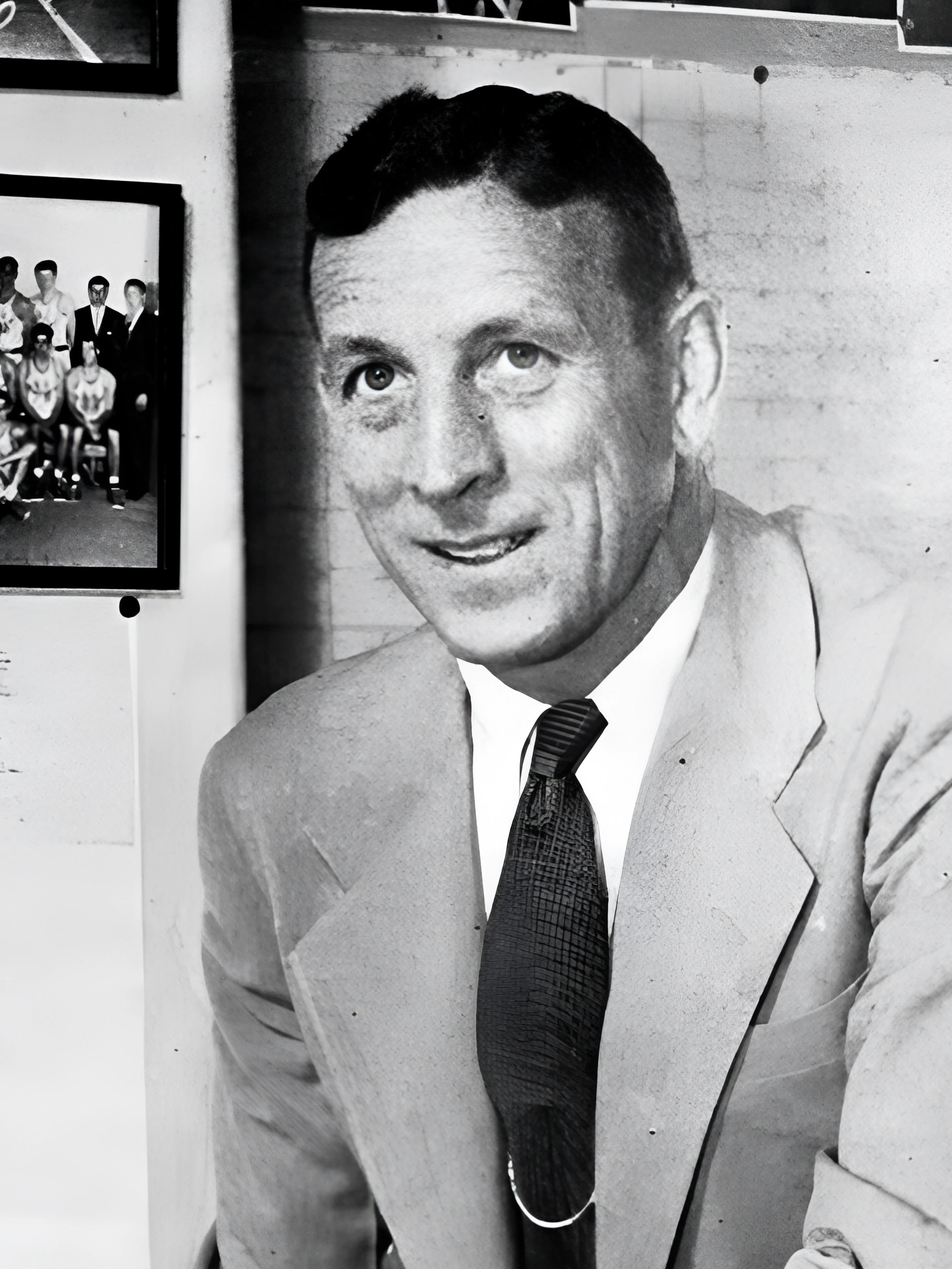
| 30 Quotes | |
| Born as | John Robert Wooden |
| Occup. | Coach |
| From | USA |
| Born | October 14, 1910 Hall, Indiana, USA |
| Died | June 4, 2010 Los Angeles, California, USA |
| Aged | 99 years |
| Cite | |
Citation Formats
APA Style (7th ed.)
John wooden biography, facts and quotes. (2026, February 11). FixQuotes. https://fixquotes.com/authors/john-wooden/
Chicago Style
"John Wooden biography, facts and quotes." FixQuotes. February 11, 2026. https://fixquotes.com/authors/john-wooden/.
MLA Style (9th ed.)
"John Wooden biography, facts and quotes." FixQuotes, 11 Feb. 2026, https://fixquotes.com/authors/john-wooden/. Accessed 25 Mar. 2026.
Early Life and Background
John Robert Wooden was born on October 14, 1910, in Hall, Indiana, and grew up in the nearby town of Martinsville in a Midwestern culture that prized thrift, steadiness, and plain speech. His father, Joshua Wooden, worked as a farmer and later as a laborer; his mother, Roxie, held the family together through lean years. When economic pressure pushed them to move west to Los Angeles in 1932, Wooden carried with him a small set of home-taught precepts about self-control, honesty, and finishing what you start - values that would later be translated into a coaching vocabulary.As a boy he learned early that praise could be scarce and that work did not guarantee comfort. That tension - between effort and outcome - became part of his inner life: a quiet insistence on personal responsibility paired with an awareness that fortune could change without warning. The Great Depression did not make him cynical; it made him methodical. He spoke later with the calm of someone who had watched a family improvise and endure, and who decided that the most reliable form of security was character.
Education and Formative Influences
At Martinsville High School, Wooden became a star guard and led his team to three straight Indiana state titles (1927-1929), then carried that success to Purdue University, where he was a three-time All-American and helped win the 1932 Helms national championship. Those years forged his belief that fundamentals and composure under pressure outlast raw talent. A defining mentor was his high school coach, Glenn "Swede" Martin, while Wooden also absorbed the moral cadence of rural Protestant Indiana - duty, restraint, and a sense that leadership is proved by daily conduct rather than speeches.Career, Major Works, and Turning Points
Wooden coached high school basketball in Kentucky and Indiana before serving as a U.S. Navy physical education instructor during World War II, an experience that sharpened his planning and his respect for routine. He then coached at Indiana State (1946-1948), where he integrated the program by recruiting Clarence Walker and took the team to the NAIA tournament, and at UCLA from 1948 to 1975, where his teams won 10 NCAA championships in 12 years, including an unprecedented seven straight (1967-1973). The era mattered: national television, postwar college expansion, and the civil rights movement reshaped campuses, and Wooden became a stable, non-theatrical authority amid growing celebrity. Turning points included the arrival of Lew Alcindor (Kareem Abdul-Jabbar), the elevation of Bill Walton, and Wooden's own decision to retire in 1975 at the summit, keeping faith with a private code rather than the lure of more records.Philosophy, Style, and Themes
Wooden's public image - the soft voice, the rolled socks, the meticulous practices - sometimes hides the intensity beneath. His coaching was a form of moral engineering: control the controllable, refine habits, and let victories be a byproduct. He distrusted frenzy and busyness, warning, “Never mistake activity for achievement”. That line reads like a self-diagnosis from a man who knew how easily ambition can masquerade as discipline; he demanded purposeful repetition, not motion for its own sake.His famous "Pyramid of Success" and his notebooks of practice plans were less about basketball than about reducing life to principles that could survive pressure. He held players to the ethics of craft: “If you don't have time to do it right, when will you have time to do it over?” In Wooden's psychology, errors were not shameful, but sloppiness was - because sloppiness implied a kind of disrespect for teammates. The same inner logic shaped his insistence on collective identity: “The main ingredient of stardom is the rest of the team”. Even with transcendent stars, he framed excellence as a social achievement, a check against ego that also protected him from the era's swelling cult of personality.
Legacy and Influence
Wooden died on June 4, 2010, in Los Angeles, having become both a sports icon and a secular moralist quoted far beyond basketball. His influence persists in coaching trees, leadership literature, and the continued use of the Pyramid of Success as a practical ethic for work, education, and public service. In a century that increasingly rewarded volume, branding, and spectacle, Wooden modeled another route: patient mastery, emotional self-government, and a definition of success rooted in preparation and character - a legacy that has made his words as durable as his championships.Our collection contains 30 quotes written by John, under the main topics: Motivational - Wisdom - Learning - Honesty & Integrity - Work Ethic.
Other people related to John: Rafer Johnson (Athlete)