
Jon Postel Biography Quotes 27 Report mistakes
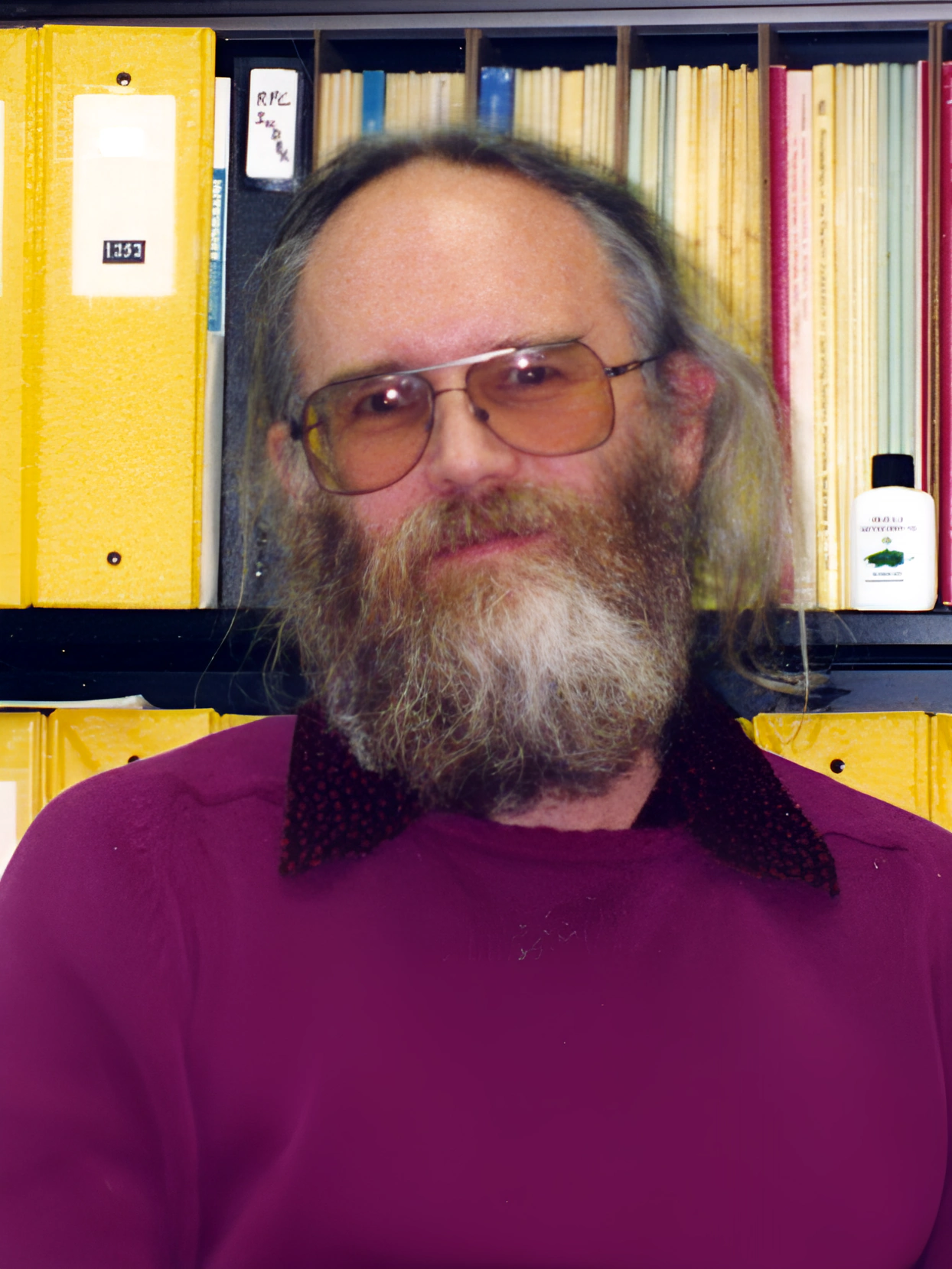
Attr: Carl Malamud, CC BY 2.0
| 27 Quotes | |
| Born as | Jonathan Bruce Postel |
| Occup. | Scientist |
| From | USA |
| Born | August 6, 1943 Altadena, California, USA |
| Died | October 16, 1998 Santa Monica, California, USA |
| Aged | 55 years |
| Cite | |
Citation Formats
APA Style (7th ed.)
Jon postel biography, facts and quotes. (2026, February 11). FixQuotes. https://fixquotes.com/authors/jon-postel/
Chicago Style
"Jon Postel biography, facts and quotes." FixQuotes. February 11, 2026. https://fixquotes.com/authors/jon-postel/.
MLA Style (9th ed.)
"Jon Postel biography, facts and quotes." FixQuotes, 11 Feb. 2026, https://fixquotes.com/authors/jon-postel/. Accessed 6 Mar. 2026.
Early Life and Background
Jonathan Bruce Postel was born on August 6, 1943, in the United States, in the long shadow of World War II and the early dawn of the Cold War. He came of age as computing shifted from room-sized, government-funded machinery to a nascent culture of networked experimentation. That generational timing mattered: Postel belonged to the cohort for whom computers were not appliances but unfinished civic infrastructure, something to be shaped by consensus, documentation, and patient stewardship.He was temperamentally suited to the unglamorous work that makes grand systems possible. Friends and colleagues repeatedly described him as quiet, meticulous, and stubborn in a principled way - the kind of person who could be both a gatekeeper and a facilitator. His inner life, as it appears through his actions, seems to have been anchored in an ethic of service: protect the commons, enforce minimal rules, and keep the machinery running even when credit and authority were contested.
Education and Formative Influences
Postel studied at the University of California, Los Angeles (UCLA), earning degrees that culminated in a PhD in computer science (1974). UCLA was one of the early ARPANET nodes, and his education unfolded inside the living laboratory of packet switching, open publication, and federally funded research tied to practical deployments. The formative influence was not only technical - protocols, operating systems, and the hard limits of early networks - but social: engineers learning to persuade peers through clear writing and interoperable code rather than institutional rank.Career, Major Works, and Turning Points
From the early 1970s onward, Postel became one of the Internet's central stewards, based largely at USC's Information Sciences Institute (ISI) in Marina del Rey, California. He edited and shaped the Request for Comments (RFC) series, turning it into the Internet's memory and legislative record; he also served for years as the Internet Assigned Numbers Authority (IANA), coordinating protocol parameter assignments, IP address space, and (later, as the system expanded) key aspects of the Domain Name System. His fingerprints are visible across core standards, including foundational work around ARPANET and Internet protocols, and his editorial discipline helped stabilize a culture where "rough consensus and running code" could scale. A late turning point came in 1998 during the transition toward ICANN and intensified political pressure around naming and numbering; in one brief, symbolic episode, he directed root server operators to point to new authority as a test of administrative feasibility, demonstrating both the delicacy of the system and how much trust had been concentrated in his careful hands. He died suddenly on October 16, 1998, at age 55, leaving an Internet that was operationally resilient yet newly aware of its governance fault lines.Philosophy, Style, and Themes
Postel's philosophy fused engineering pragmatism with a moral insistence on fairness. In the mechanics of protocols, he championed tolerance at boundaries: “Be conservative in what you do, be liberal in what you accept from others”. This was not a vague platitude but a psychological orientation - a preference for stability over ego, and for interoperability over purity. It implied humility about one's own implementations and empathy for other people's constraints, a mindset that helped the Internet grow despite messy code, diverse hardware, and imperfect institutions.The same ethic appears in his approach to naming and governance, where he resisted status games and tried to keep authority procedural rather than personal. “If you're in charge of managing domain name space you should treat everybody who asks for a registration the same. Whatever that is - whether it's nice or ugly or whatever - just be fair, treat them all the same”. Underneath is a view of the network as a public utility that must not become a moral tribunal. Yet he also understood that utility is social as much as technical: “The Internet works because a lot of people cooperate to do things together”. Postel's style - spare prose, relentless clarification, and a bias toward documentation - functioned as emotional regulation for a community that could otherwise fracture into vendor rivalry or geopolitical struggle.
Legacy and Influence
Postel's enduring influence lies less in a single invention than in a model of stewardship: the idea that open standards require custodians who are competent, transparent, and restrained. The RFC archive he tended became both technical canon and institutional conscience; IANA, shaped in his hands, became a symbol of the trust required to coordinate a global network without a global government. Engineers still cite "Postel's Law" as a design north star, and Internet governance debates still circle questions he embodied: how to combine technical coherence with legitimacy, and how to keep core resources allocated by rule rather than power. In an era that increasingly monetized and politicized the network, his life remains a case study in how quiet authority - earned through precision, fairness, and service - can scale into world-changing infrastructure.Our collection contains 27 quotes written by Jon, under the main topics: Witty One-Liners - Leadership - Decision-Making - Team Building - Coding & Programming.
Other people related to Jon: Steve Crocker (Businessman), Paul Vixie (Writer)
Jon Postel Famous Works
- 1983 RFC 854: Telnet Protocol Specification (Technical Specification)
- 1982 RFC 821: Simple Mail Transfer Protocol (Technical Specification)
- 1981 RFC 793: Transmission Control Protocol (Technical Specification)
- 1981 RFC 791: Internet Protocol (Technical Specification)
- 1980 RFC 760: DoD Standard Internet Protocol (Technical Specification)
- 1980 RFC 768: User Datagram Protocol (Technical Specification)
Source / external links