
Jordi Segués Biography Quotes 8 Report mistakes
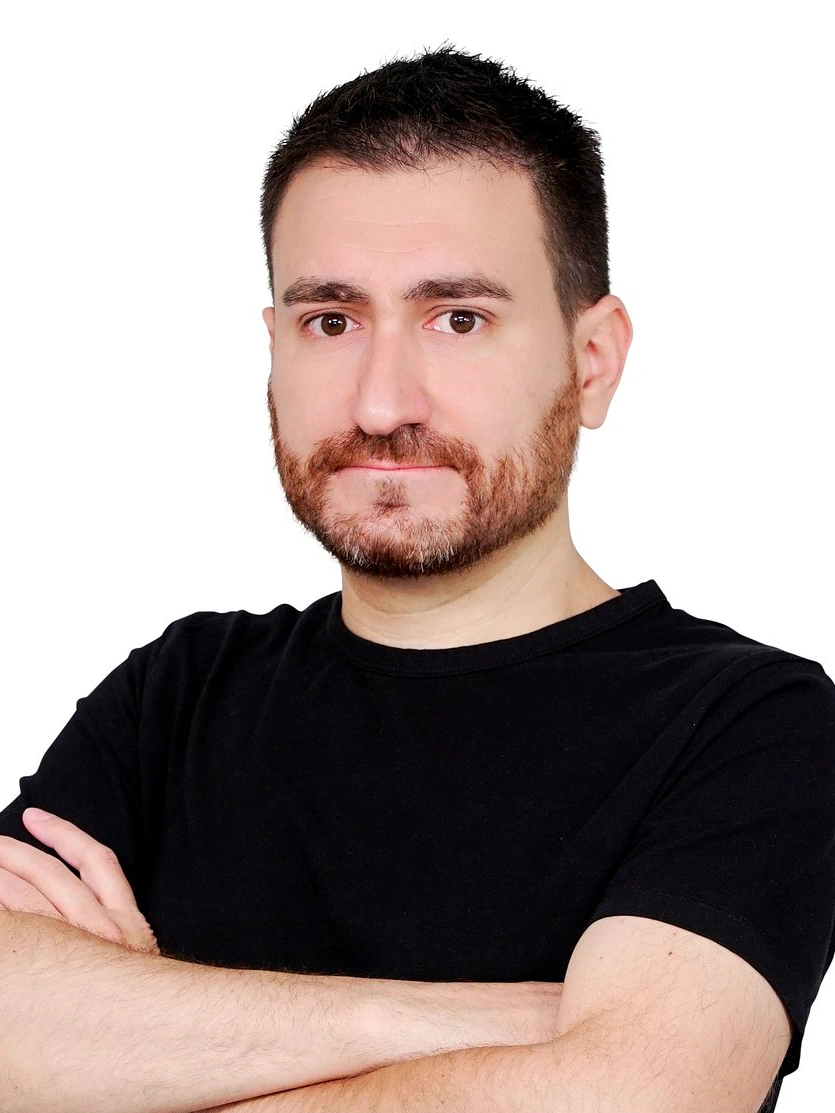
| 8 Quotes | |
| Born as | Jordi Segués Daina |
| Occup. | Entrepreneur |
| From | Andorra |
| Born | July 27, 1984 Catalonia, Spain |
| Age | 41 years |
| Cite | |
Citation Formats
APA Style (7th ed.)
Jordi segués biography, facts and quotes. (2026, February 16). FixQuotes. https://fixquotes.com/authors/jordi-segues/
Chicago Style
"Jordi Segués biography, facts and quotes." FixQuotes. February 16, 2026. https://fixquotes.com/authors/jordi-segues/.
MLA Style (9th ed.)
"Jordi Segués biography, facts and quotes." FixQuotes, 16 Feb. 2026, https://fixquotes.com/authors/jordi-segues/. Accessed 2 Apr. 2026.
Early Life and Background
Jordi Segues Daina is a Spanish artist whose public identity has been shaped as much by platform-era visibility as by any single medium. Reliable, widely published biographical specifics about his birth date, hometown, family background, and early apprenticeship are limited in the open record; what can be said with confidence is that his emergence belongs to a post-2010 Spain in which a generation of creators learned to build audiences outside the traditional gallery-critic pipeline. That historical backdrop matters: Spain in the 2010s and early 2020s saw cultural production increasingly routed through phones, short-form video, and creator economies, while conventional cultural institutions recovered unevenly from the aftershocks of the 2008 financial crisis.Within that environment, Segues Daina developed an outward-facing persona that frames art as a lived practice - daily, improvable, and inseparable from self-management. The scarcity of confirmed early-life details itself becomes revealing: his story, as the public encounters it, is less the classic arc of atelier lineage and more the contemporary arc of self-authorship. Instead of being introduced through a single breakthrough exhibition with a catalog essay, he is encountered through recurring fragments - statements, habits, and the cadence of a creator addressing an audience in real time.
Education and Formative Influences
No authoritative, consistently corroborated account of Segues Daina's formal education is broadly available, so it is risky to attribute specific schools, mentors, or degrees; however, his rhetoric and positioning align with a common formative pattern among Spanish digital-era artists: practical skills learned through iteration, self-directed study, and the feedback loops of online publics. In that ecology, influence is less a list of names than a set of pressures - algorithmic attention, rapid trend cycles, and the demand to compress ideas into legible, repeatable motifs - which can harden an artist's sensibility into something both entrepreneurial and defensive.Career, Major Works, and Turning Points
Segues Daina's career is best understood as a creator-first trajectory in which platform growth is not merely publicity but part of the work's circulation and meaning. The pivotal turn, by his own framing, is the shift from being one among many working creatives to becoming a recognizable voice who can translate personal discipline into public content, converting private process into audience-facing narrative. Because specific, dated titles and verified exhibition histories are not securely documented in widely accessible sources, the definitive turning point is less a named work than a strategic decision: to treat digital distribution as a primary stage, not an afterthought, and to build a following through consistency, self-mythmaking, and a blunt style that reads as antidote to polite cultural branding.Philosophy, Style, and Themes
Segues Daina's philosophy centers on agency under constraint - a mindset that treats circumstances as a hand dealt, but not a fate. “Life is like a poker game: you choose how the cards are played”. Psychologically, that metaphor signals an artist who has trained himself to metabolize uncertainty into decisions: you cannot select the cards, but you can select the play. It is a stance compatible with the precarities of contemporary creative labor, where income, attention, and legitimacy fluctuate, and where the artist must repeatedly recommit to making work without guaranteed institutional validation.His style of self-presentation is also structured around resilience against ridicule and an insistence on inner stability as the true measure of success. “If your own coworkers laugh at you and call you a ‘TikToker’ or ‘YouTuber’ in a mocking way, but you believe in what you do and persist, the criticism and the initial shame don’t matter”. In that sentence, shame is treated as a temporary tax paid for independence; endurance becomes a craft like any other, practiced until it no longer stings. The emotional endpoint is not applause but calm: “The most important rule, the one that guides me every day, is to have peace of mind”. Taken together, these themes outline an inner life organized around self-governance - guarding attention, refusing to outsource confidence, and treating mental quiet as the condition that allows work to continue when novelty fades.
Legacy and Influence
Segues Daina's enduring influence, even with limited publicly verified biographical detail, lies in modeling an artist identity native to the creator economy: one that fuses craft, distribution, and personal doctrine into a single package the audience can rehearse in their own lives. In the Spanish context, he represents a broader shift in how cultural legitimacy is assembled - not solely through curators and institutions, but through persistence, repeatable practice, and the capacity to speak plainly about the psychological costs of choosing an unconventional path. Whether later histories anchor him to particular works or mediums, his legacy is likely to remain tied to a modern archetype: the artist as strategist of attention, builder of audience, and custodian of peace of mind amid the noise.Our collection contains 8 quotes written by Jordi, under the main topics: Life - Deep - Mental Health - Perseverance - Business.
Source / external links