
Jose Bergamin Biography Quotes 33 Report mistakes
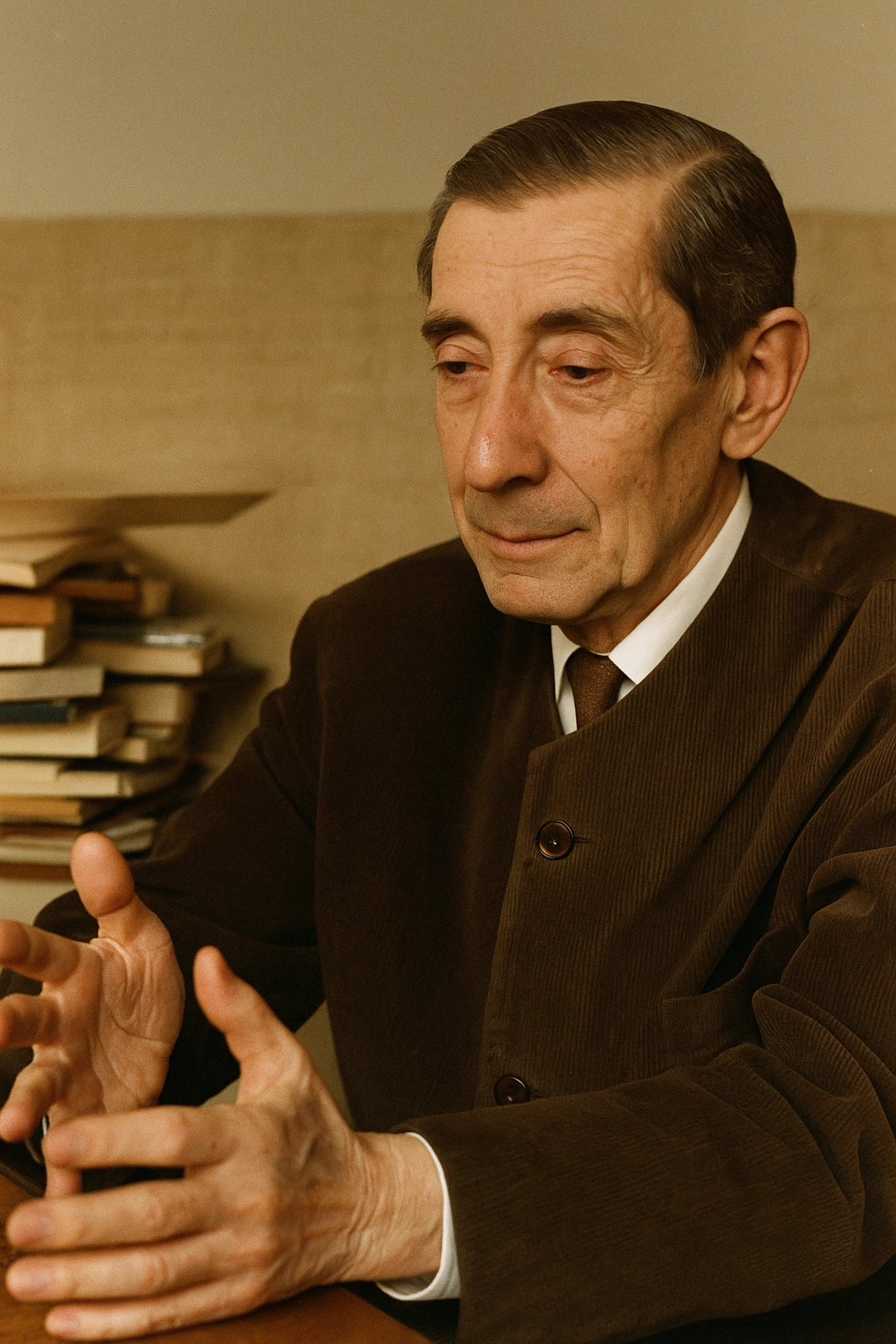
| 33 Quotes | |
| Born as | José Bergamín Gutiérrez |
| Known as | José Bergamín |
| Occup. | Writer |
| From | Spain |
| Born | 1895 Madrid, Spain |
| Died | 1983 Madrid, Spain |
| Cite | |
Citation Formats
APA Style (7th ed.)
Jose bergamin biography, facts and quotes. (2026, February 11). FixQuotes. https://fixquotes.com/authors/jose-bergamin/
Chicago Style
"Jose Bergamin biography, facts and quotes." FixQuotes. February 11, 2026. https://fixquotes.com/authors/jose-bergamin/.
MLA Style (9th ed.)
"Jose Bergamin biography, facts and quotes." FixQuotes, 11 Feb. 2026, https://fixquotes.com/authors/jose-bergamin/. Accessed 5 Mar. 2026.
Early Life and Background
Jose Bergamin Gutierrez was born in Madrid in 1895 into a Spain still bruised by the 1898 "Disaster" and newly obsessed with national regeneration. His family belonged to the educated bourgeois world that fed Madrid's newspapers, cafes, and tertulias; the capital's mixture of Catholic ritual, political agitation, and literary ambition formed the background noise of his childhood. From early on he absorbed a sense that language in Spain was never merely aesthetic - it was also moral and civic, a way of taking sides.He came of age as the country lurched between modernization and reaction: labor unrest, the shadow of colonial loss, and the later authoritarian drift that culminated in Primo de Rivera's dictatorship (1923-1930). Bergamin's temperament - simultaneously devout and contrarian - fit the era's tensions. He developed a habit of paradox and provocation, not as salon cleverness but as a strategy for survival in a culture where orthodoxy and dissent both demanded absolute loyalty.
Education and Formative Influences
He studied law in Madrid, but his true education occurred in the city's intellectual networks and in his reading of Spanish mystics and moralists (especially the tradition of Quevedo-like barbed wit) alongside modern European currents. The older "Generation of 1898" and the rising poets and essayists who would be grouped as the Generation of 1927 taught him that Spain's crisis could be argued as theology, politics, or style - and often all at once. Catholic thought, the discipline of the essay, and the immediacy of journalism fused in him early, sharpening his instinct to write as if every sentence were a moral wager.Career, Major Works, and Turning Points
Bergamin became a central essayist, aphorist, editor, and cultural organizer between the 1920s and 1930s, moving easily between criticism, polemic, and literary patronage; he helped shape the public conversation in magazines and publishing ventures that brought new poetry and ideas into view. During the Second Republic (1931-1936) and the Civil War (1936-1939), he aligned with the Republican cause while maintaining an independent Catholic conscience, a combination that made him both indispensable and difficult. The Franco victory pushed him into a long exile - in France and across Latin America, notably Mexico - where he continued to publish essays, theater, and political writing, defending a Spain of memory against an official Spain of victory. In later years he returned intermittently to Spain, still writing with undiminished severity, a figure at once revered and argued over until his death in 1983.Philosophy, Style, and Themes
Bergamin's inner life was built around contradiction: a Catholic imagination that distrusted complacent piety, and a political conscience that distrusted triumphant slogans. He wrote in aphorisms and compressed essays because he believed clarity could be violent - a blade rather than a blanket. His best pages feel like courtroom cross-examinations of the self: faith interrogated by history, and history interrogated by faith. The Civil War and exile intensified this habit. Loss did not sentimentalize him; it trained him to prefer moral exactness to consolation, and to treat literature as an act of witness rather than self-expression.His themes recur as paradoxes: grace that arrives like accident, dignity that hides inside humility, and art that refuses advertising. “Happiness is always a coincidence”. For Bergamin, that is not hedonism but a theology of contingency - joy as something received, not manufactured, and therefore never owned. “True art tries not to attract attention in order to be noticed”. The line captures his suspicion of spectacle, sharpened by propaganda and personality cults; he wanted the work to be seen precisely because it did not beg to be seen. And he treated failure as a moral apprenticeship rather than a humiliation: “To be ready to fail is to be prepared for success”. Behind the aphorism sits a psychological posture forged in defeat and displacement - the refusal to let outcomes define conscience.
Legacy and Influence
Bergamin endures as a key moral intelligence of 20th-century Spanish letters: a bridge between the avant-garde brilliance of the 1927 circle and the scarred ethical literature of war and diaspora. He influenced later essayists and poets through his model of the writer as citizen without becoming a party instrument, and through a style that makes thought audible as drama. In an age of loud certainties, his lasting gift is the disciplined paradox - a way of speaking about Spain, faith, and power that remains unsettling precisely because it will not offer easy reconciliation.Our collection contains 33 quotes written by Jose, under the main topics: Witty One-Liners - Motivational - Wisdom - Art - Justice.
Source / external links