
Jose Luis Rodriguez Zapatero Biography Quotes 18 Report mistakes
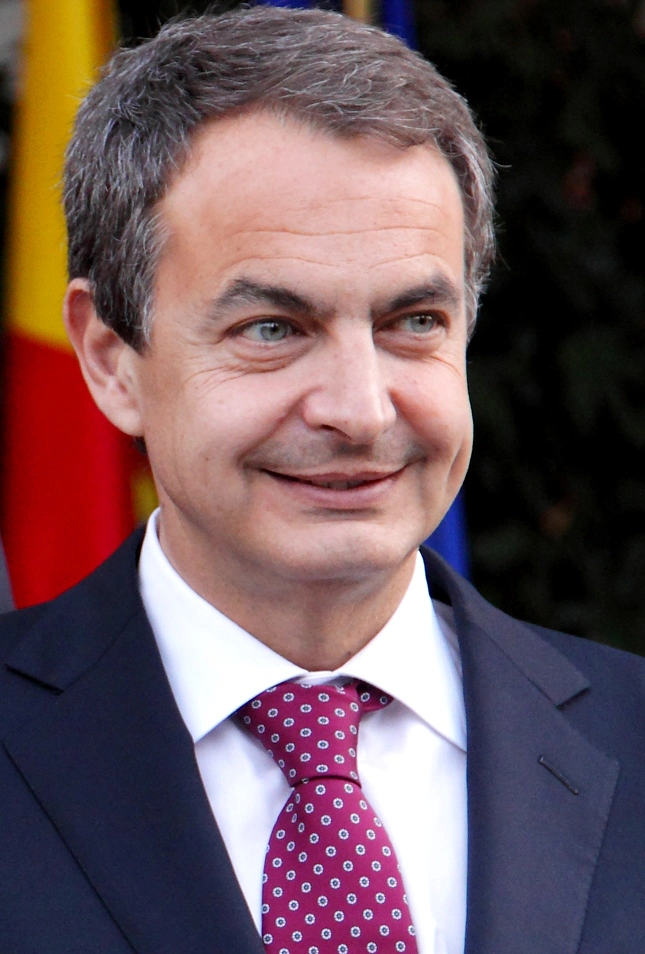
Attr: Government of Spain
| 18 Quotes | |
| Occup. | Politician |
| From | Spain |
| Born | August 4, 1960 La Felguera, Asturias, Spain |
| Age | 65 years |
| Cite | |
Citation Formats
APA Style (7th ed.)
Jose luis rodriguez zapatero biography, facts and quotes. (2026, February 11). FixQuotes. https://fixquotes.com/authors/jose-luis-rodriguez-zapatero/
Chicago Style
"Jose Luis Rodriguez Zapatero biography, facts and quotes." FixQuotes. February 11, 2026. https://fixquotes.com/authors/jose-luis-rodriguez-zapatero/.
MLA Style (9th ed.)
"Jose Luis Rodriguez Zapatero biography, facts and quotes." FixQuotes, 11 Feb. 2026, https://fixquotes.com/authors/jose-luis-rodriguez-zapatero/. Accessed 5 Mar. 2026.
Early Life and Background
Jose Luis Rodriguez Zapatero was born on August 4, 1960, in Valladolid, Castile and Leon, in a Spain still ruled by Francisco Franco. His family story carried an enduring moral weight: his paternal grandfather, a Republican army captain, was executed during the Spanish Civil War. That private grief, transmitted through family memory rather than slogans, helped form a politician unusually attentive to the long tail of violence and the fragile legitimacy of state power.He grew up as Spain lurched from dictatorship to constitutional monarchy after 1975. The Transition brought the 1978 Constitution, contested regional identities, and the constant pressure of ETA terrorism. For Zapatero's generation, democracy was not an inheritance but a daily construction, and his later rhetoric often treated institutions, rights, and procedures as the real "nation-building" - the civic scaffolding that prevents old resentments from hardening into destiny.
Education and Formative Influences
Zapatero studied law at the University of Leon, where he joined the Spanish Socialist Workers' Party (PSOE) in 1979, a moment when Spanish socialism was modernizing under Felipe Gonzalez and when democratic politics still felt experimental. He entered public life through party organization rather than celebrity, shaped by parliamentary norms and the practical ethics of coalition-making in a country learning to trust ballots more than myths.Career, Major Works, and Turning Points
Elected to the Congress of Deputies for Leon in 1986, Zapatero rose steadily and became PSOE secretary-general in 2000 after the party's electoral defeats. The turning point that carried him to the premiership came in March 2004: the Madrid train bombings shattered Spain, and the election days later swept him into office amid public anger over the Iraq War and the Aznar government's credibility. As prime minister (2004-2011), he ended Spain's troop deployment in Iraq, pursued an ETA ceasefire process that later collapsed, steered a reformist domestic agenda, and confronted the global financial crisis that struck Spain's housing and labor model with punishing force. By 2011, unemployment and austerity pressures overwhelmed his political capital, and he declined to run again, handing PSOE into a difficult decade of opposition and fragmentation.Philosophy, Style, and Themes
Zapatero's politics were built less on charismatic command than on a conviction that democracy is an ethical practice. “I said when I came into office that I don't want to be a great leader; I want to be a good democrat”. The line is revealing: it frames leadership as restraint, and it also hints at his inner preoccupation with legitimacy - the fear that power, if personalized, becomes brittle in a society whose recent past proved how easily authority can turn predatory. His preferred tools were law, parliamentary negotiation, and symbolic acts designed to widen who counts as fully protected by the state.His foreign-policy identity was similarly moralized and procedural. “You can't bomb a people just in case”. The statement condensed a broader skepticism toward preventive war and toward security doctrines that sacrifice civilian life to hypothetical futures, and it positioned Spain as a voice for multilateralism after the trauma of 2004. Yet he also argued that the deepest defense against extremism is democratic self-discipline: “The risk of a terrorist victory is greater when in fighting terror, democracy betrays its own essence”. Psychologically, this points to a leader who saw terrorism not only as violence to be defeated but as a provocation to overreaction - and who feared that the state, under stress, might imitate the very contempt for limits it condemns.
Legacy and Influence
Zapatero remains a defining figure of post-Transition Spain: admired by supporters for expanding civil rights and recentering Spain's international posture, criticized by opponents for misjudgments in negotiating atmosphere with ETA and for the government's delayed recognition of the economic storm. His tenure sits at the hinge between two eras - the optimistic Europe of the early 2000s and the harsher decade of crisis and polarization that followed - and his enduring influence lies in keeping democratic ethics at the center of political self-interpretation: a reminder that, in Spain's modern story, the method matters as much as the outcome.Our collection contains 18 quotes written by Jose, under the main topics: Justice - Freedom - Equality - Peace - Honesty & Integrity.
Other people related to Jose: Jose Maria Aznar (Statesman)
Source / external links