
Jose Ortega Y Gasset Biography Quotes 34 Report mistakes
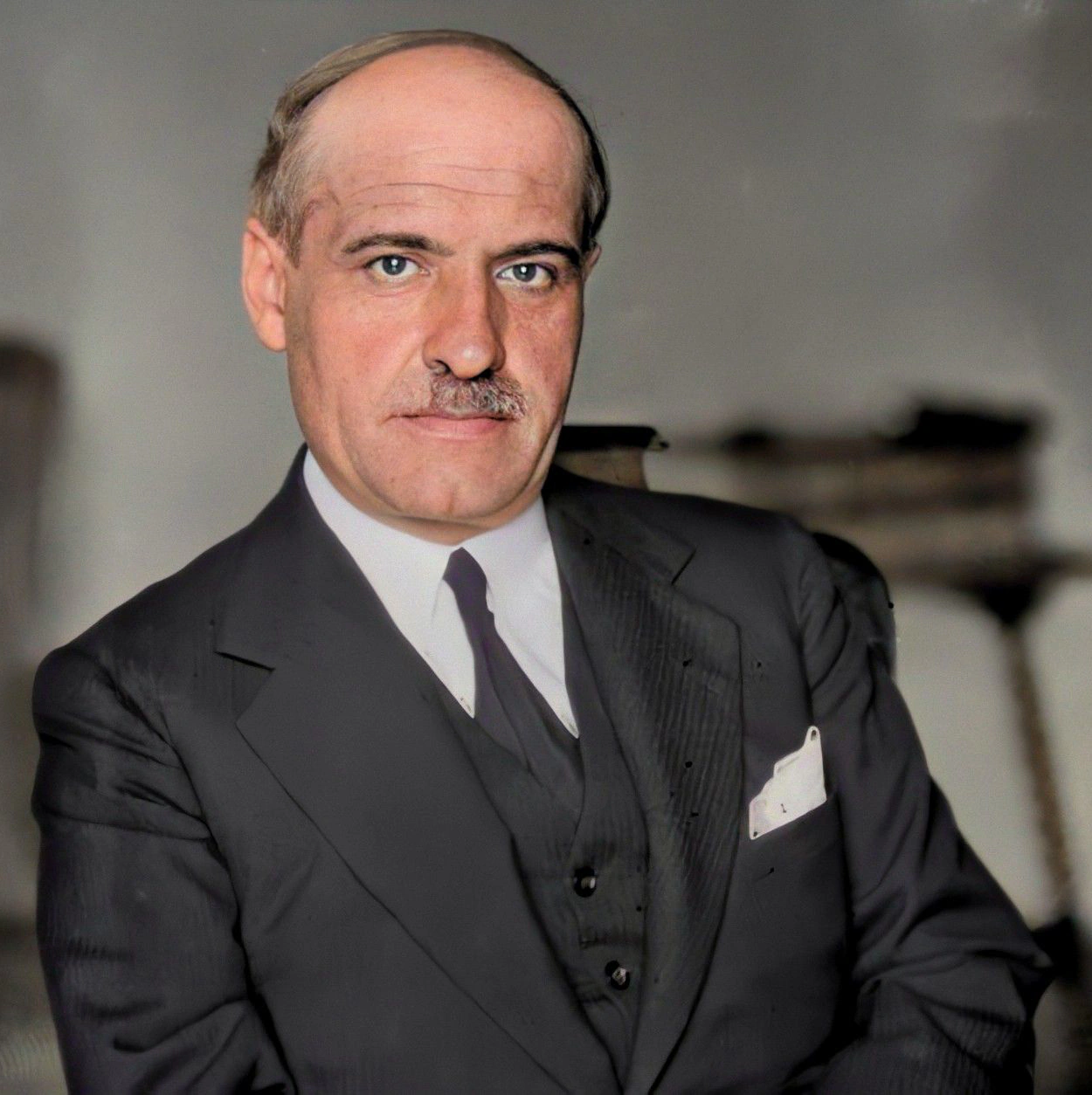
| 34 Quotes | |
| Occup. | Philosopher |
| From | Spain |
| Born | May 9, 1883 |
| Died | October 18, 1955 |
| Aged | 72 years |
| Cite | |
Citation Formats
APA Style (7th ed.)
Jose ortega y gasset biography, facts and quotes. (2026, February 11). FixQuotes. https://fixquotes.com/authors/jose-ortega-y-gasset/
Chicago Style
"Jose Ortega Y Gasset biography, facts and quotes." FixQuotes. February 11, 2026. https://fixquotes.com/authors/jose-ortega-y-gasset/.
MLA Style (9th ed.)
"Jose Ortega Y Gasset biography, facts and quotes." FixQuotes, 11 Feb. 2026, https://fixquotes.com/authors/jose-ortega-y-gasset/. Accessed 5 Mar. 2026.
Early Life and Background
Jose Ortega y Gasset was born on 1883-05-09 in Madrid into a liberal, newspaper-centered milieu that trained him early in the intimacy between ideas and public life. His father, Jose Ortega Munilla, was a journalist and director at El Imparcial, and through his mother, Dolores Gasset, he belonged to a family that helped shape Spain's modern press. That household placed politics, literature, and the crisis of Spanish identity at the dinner table, especially after the 1898 loss of Cuba, Puerto Rico, and the Philippines - a national trauma that made questions of decline, regeneration, and European modernity unavoidable for an ambitious young mind.Raised amid the tensions of Restoration Spain, Ortega absorbed both the privileges and obligations of a class that believed the country could be remade through education and civic seriousness. His inner life formed in a capital where rhetoric often substituted for reform, and where the gap between a sophisticated elite and a stagnant political machine fostered his lifelong suspicion of complacency. From the start, he measured a person's dignity less by inherited status than by whether one answered the demands of the historical moment.
Education and Formative Influences
Ortega studied philosophy at the University of Deusto and later at the Central University of Madrid, then completed crucial work in Germany (notably in Leipzig, Berlin, and Marburg) in the first decade of the 1900s. There he encountered Neo-Kantian rigor, the emerging authority of the sciences, and the modern university as an institution of national renewal - experiences that convinced him Spain needed intellectual discipline, not romantic improvisation. German idealism and method did not make him a system-builder; they sharpened his sense that philosophy had to be historically awake, publicly engaged, and capable of diagnosing the spiritual climate of an age.Career, Major Works, and Turning Points
Back in Madrid, Ortega became professor of metaphysics at the University of Madrid (1910) and increasingly a public intellectual through essays, lectures, and cultural institutions, including the influential Revista de Occidente (founded 1923), which introduced Spanish readers to key currents of European thought and literature. His early programmatic work Meditaciones del Quijote (1914) announced a perspective rooted in lived experience; Espana invertebrada (1921) analyzed Spain's political fragmentation; and La rebelion de las masas (1930) brought him world attention by diagnosing the rise of the "mass man" and the fragility of liberal civilization. He helped found the Agrupacion al Servicio de la Republica and briefly served as a deputy in 1931, but the polarization of the Second Republic, followed by the Spanish Civil War (1936-1939), drove him into long exile (including France, Argentina, and Portugal). He returned to Spain after World War II, working in a constrained intellectual environment until his death in Madrid on 1955-10-18.Philosophy, Style, and Themes
Ortega called his mature position "ratiovitalismo" and "perspectivism": reason must be rooted in life, and truth appears through situated viewpoints rather than from nowhere. His most famous psychological axiom, “I am I plus my circumstances”. , is not a slogan of resignation but a theory of moral agency under pressure - the self is not an isolated essence but a task carried out within given limits, and failure to engage those limits becomes a form of ethical collapse. This is why his essays keep returning to vocation, responsibility, and the need for cultivated minorities: he feared that modern societies could multiply comfort while dissolving the inner disciplines that make freedom possible.His style fused philosophical analysis with journalistic speed and literary cadence, built to persuade readers who might never open a treatise. The sentence was his instrument of diagnosis - crisp, aphoristic, and staged for the public sphere - because he believed attention itself is destiny: “Tell me to what you pay attention and I will tell you who you are”. In Ortega, wonder is not decorative; it is method and self-rescue, as when he insists, “To be surprised, to wonder, is to begin to understand”. Even his political warnings in The Revolt of the Masses are ultimately psychological: he tracked how ease, technology, and bureaucracy could produce a type that inherits civilization's benefits while refusing the strenuous inner work of maintaining it.
Legacy and Influence
Ortega became one of the central Spanish thinkers of the 20th century, a bridge between European philosophy and Iberian civic debate, and a model of the essay as a tool for cultural self-critique. His vocabulary of circumstance, perspective, and mass society influenced later discussions of modernity, liberalism, and identity across Europe and Latin America, and his institutional work helped professionalize Spanish intellectual life after decades of isolation. If his political interventions were often frustrated by events, his enduring impact lies in the moral tone of his thought: a demand that individuals and nations confront their historical situation lucidly, choose their vocation, and accept that culture survives only when enough people treat freedom as a demanding practice rather than an entitlement.Our collection contains 34 quotes written by Jose, under the main topics: Ethics & Morality - Wisdom - Truth - Art - Justice.
Jose Ortega Y Gasset Famous Works
- 1958 Man and Crisis (Book)
- 1957 What is Philosophy? (Book)
- 1930 The Revolt of the Masses (Book)
- 1925 The Dehumanization of Art and Other Essays on Art, Culture, and Literature (Book)
- 1914 Meditations on Quixote (Book)
Source / external links