
Josef Albers Biography Quotes 31 Report mistakes
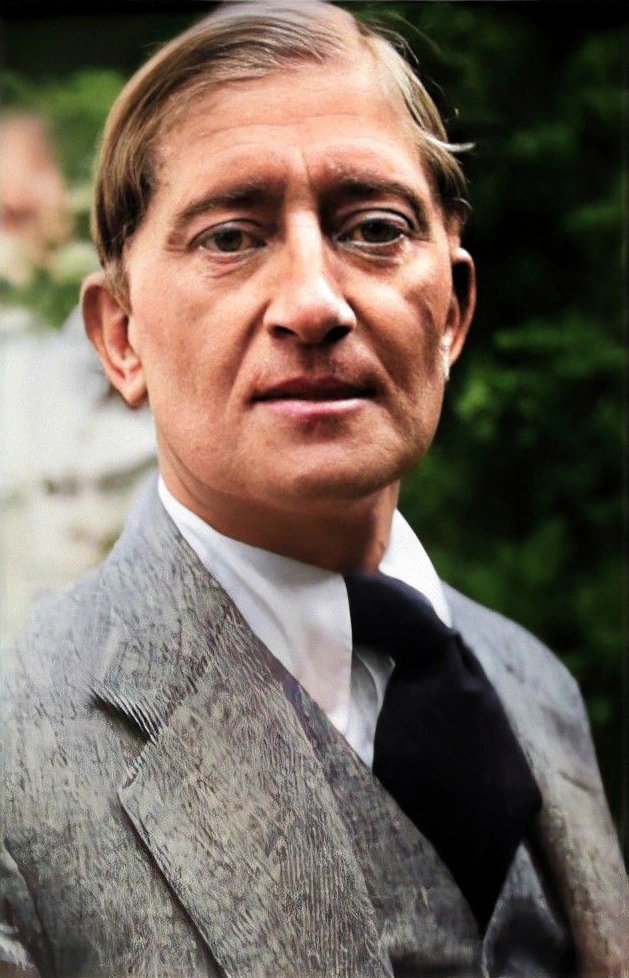
| 31 Quotes | |
| Occup. | Artist |
| From | Germany |
| Born | March 19, 1888 Bottrop, Germany |
| Died | March 26, 1976 New Haven, Connecticut, USA |
| Aged | 88 years |
| Cite | |
Citation Formats
APA Style (7th ed.)
Josef albers biography, facts and quotes. (2026, February 11). FixQuotes. https://fixquotes.com/authors/josef-albers/
Chicago Style
"Josef Albers biography, facts and quotes." FixQuotes. February 11, 2026. https://fixquotes.com/authors/josef-albers/.
MLA Style (9th ed.)
"Josef Albers biography, facts and quotes." FixQuotes, 11 Feb. 2026, https://fixquotes.com/authors/josef-albers/. Accessed 25 Mar. 2026.
Early Life and Background
Josef Albers was born on March 19, 1888, in Bottrop in Germany's Ruhr region, a landscape of coal, craft, and strict Catholic routines that shaped his lifelong respect for discipline and plain materials. His family belonged to the skilled trades; later he recalled a lineage of making and building - “My father's parents were carpenters. They were also builders partly. They were painters”. The remark is less genealogy than self-portrait: Albers would always treat art as constructed experience, not romantic confession.He grew up as the German Empire industrialized and then convulsed into World War I, an era that taught him to distrust easy certainties and to prize methods that could survive upheaval. Long before he became a modernist icon, he worked as a schoolteacher and drafted designs with the precision of a craftsman. That early vocational identity - teacher, artisan, organizer of attention - never left him, even when fame arrived.
Education and Formative Influences
Albers trained for teaching and art in Germany, including study in Berlin, Essen, and Munich, and he later described the teacher-training atmosphere bluntly: “I was at the Royal Art School. That was a preparatory school specially for art teachers... we had there terribly stiff training”. The stiffness had consequences: it fed his preference for exact exercises, repetition, and proof-by-demonstration. When he entered the Bauhaus in Weimar in 1920, he found a place where craft, architecture, and modern perception could merge, and he absorbed its ethos of materials, economy, and social purpose while developing a personal skepticism toward dogma.Career, Major Works, and Turning Points
At the Bauhaus he moved from student to master, teaching the Vorkurs and later glass workshop, collaborating with figures like Walter Gropius, Paul Klee, and Wassily Kandinsky; his glass assemblages and stained-glass designs explored flat geometry, light, and modular construction. The Nazi closure of the Bauhaus in 1933 forced a decisive migration: Albers and his wife, textile artist Anni Albers, relocated to the United States, where he became a foundational faculty member at Black Mountain College in North Carolina, shaping a generation of American artists with rigorous visual problems rather than stylistic prescriptions. In 1950 he joined Yale University as chair of design, and from the 1950s onward he pursued the serial paintings that made his name globally, especially the long-running "Homage to the Square" (1950-1976), a laboratory of nested forms and calibrated color interactions that traveled widely in exhibitions and culminated in his influential book "Interaction of Color" (1963).Philosophy, Style, and Themes
Albers treated perception as an unstable event and made paintings that behave like experiments: a few squares, a limited palette, and an insistence that the viewer test what the eye thinks it knows. “In visual perception a color is almost never seen as it really is - as it physically is. This fact makes color the most relative medium in art”. That sentence functions as both aesthetic credo and psychological clue. He distrusted the ego's certainty, preferring situations where the world contradicts you gently but relentlessly, training humility through looking. His art is not about color as decoration but about color as evidence - how context produces sensation, how neighboring hues change weight, temperature, and depth, and how the mind invents solidity from flat paint.His teaching extended that ethic into a moral practice of attention. “I have taught my students not to apply rules or mechanical ways of seeing”. The paradox is characteristic: he used strict exercises to break students of rigid habits, pushing them toward direct experience rather than inherited formulas. This is why his geometric severity reads, on close view, as surprisingly human - a record of doubt, adjustment, and patience. He spoke like someone who believed that art and thought share a single engine of inquiry: “Instead of art I have taught philosophy... All my doing was to make people to see”. The square, for him, became a neutral stage on which perception reveals its biases, and repeated motifs became a way to dramatize change without narrative - the quiet drama of the mind revising itself.
Legacy and Influence
By the time of his death on March 26, 1976, Albers had become a central bridge between European modernism and postwar American art, influencing Color Field painting, Minimalism, Op art, and design pedagogy without belonging neatly to any one camp. His legacy rests less on a signature image than on a method: the conviction that seeing is learned, that color is relational, and that disciplined experiments can yield poetic surprise. Museums still hang the "Homage to the Square" series as if it were cool abstraction, but its deeper impact is warmer and more radical - it asks viewers to notice themselves noticing, and it gave artists and teachers a durable language for how perception, context, and feeling interlock.Our collection contains 31 quotes written by Josef, under the main topics: Wisdom - Art - Friendship - Learning - Honesty & Integrity.
Other people related to Josef: Kenneth Noland (Artist), Max Bill (Architect), Chuck Close (Artist)
Source / external links