
Joseph Campbell Biography Quotes 28 Report mistakes
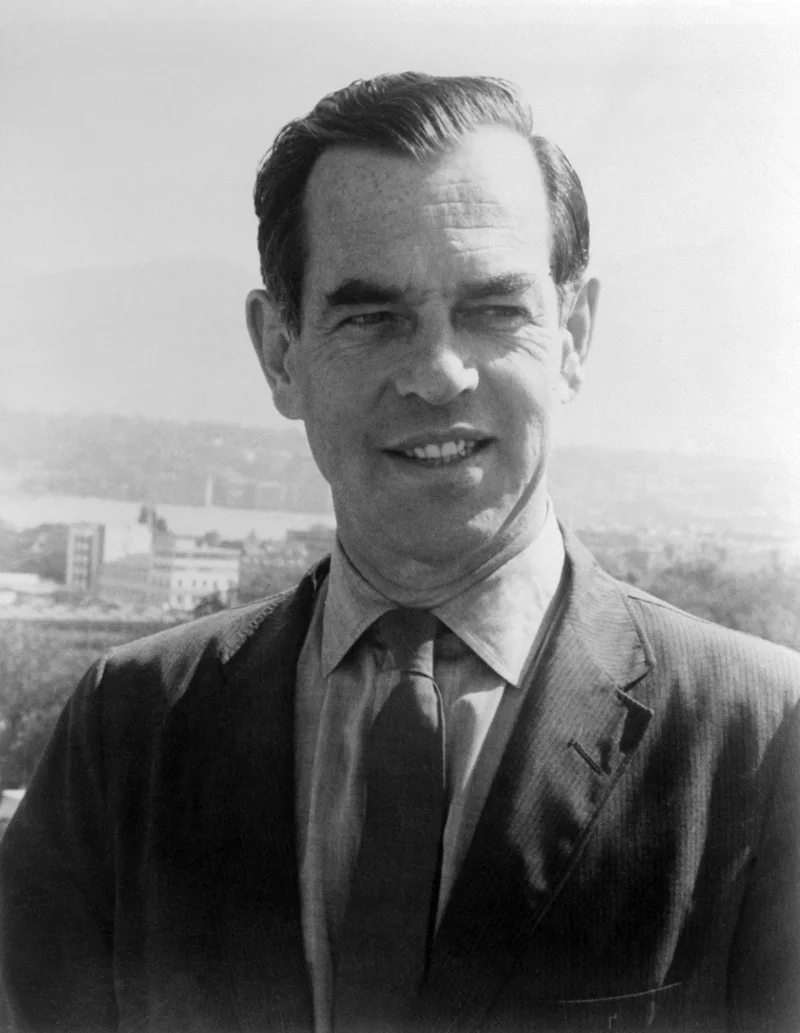
Attr: Golden Globes
| 28 Quotes | |
| Born as | Joseph John Campbell |
| Occup. | Author |
| From | USA |
| Born | March 26, 1904 White Plains, New York, USA |
| Died | October 31, 1987 Honolulu, Hawaii, USA |
| Aged | 83 years |
| Cite | |
Citation Formats
APA Style (7th ed.)
Joseph campbell biography, facts and quotes. (2026, February 11). FixQuotes. https://fixquotes.com/authors/joseph-campbell/
Chicago Style
"Joseph Campbell biography, facts and quotes." FixQuotes. February 11, 2026. https://fixquotes.com/authors/joseph-campbell/.
MLA Style (9th ed.)
"Joseph Campbell biography, facts and quotes." FixQuotes, 11 Feb. 2026, https://fixquotes.com/authors/joseph-campbell/. Accessed 12 Feb. 2026.
Early Life and Background
Joseph John Campbell was born on March 26, 1904, in White Plains, New York, into an Irish Catholic family whose piety, parishes, and rites gave him an early feel for the power of symbol. The United States of his childhood was modernizing fast - immigration, mass media, and new sciences were remaking the old moral map - yet Campbell was drawn less to certainty than to the question underneath it: why different cultures tell different sacred stories, and why those stories still move the nervous system like music.A formative jolt came in boyhood when he encountered Native American artifacts and stories, an experience he later described as a lifelong opening to comparative imagination. Even before he had a scholarly vocabulary, he was learning that myth was not merely "false belief" but a language for terror, wonder, taboo, and aspiration. That intuition would become his inner compass through the upheavals of the twentieth century, including the Great Depression and two world wars, when inherited narratives were both urgently needed and widely distrusted.
Education and Formative Influences
Campbell studied at Dartmouth College and then Columbia University, where he received a BA (1925) and MA (1927) in English literature; he also traveled in Europe, absorbing modernist art and the ferment of new ideas. A decisive influence was the emergence of depth psychology - especially Carl Jung's model of archetypes and the collective unconscious - alongside Campbell's voracious reading of James Joyce, Thomas Mann, and comparative religion. The Depression years became his private crucible: after returning to the United States, he lived for a time in near-monastic self-directed study, reading for hours daily and testing the idea that myth could be approached not as dogma but as a map of inner experience.Career, Major Works, and Turning Points
In 1934 Campbell joined Sarah Lawrence College, where he taught literature and mythology for decades, refining his gift for turning scholarship into spoken narrative. He edited and popularized key materials (including The Portable Arabian Nights) and published The Hero with a Thousand Faces (1949), the book that formalized his "monomyth" of departure, initiation, and return; later works such as The Masks of God (1959-1968), Myths to Live By (1972), and The Inner Reaches of Outer Space (1986) expanded his comparative reach. A turning point in public visibility came posthumously with the PBS series and book The Power of Myth (1988), drawn from conversations with Bill Moyers and recorded shortly before Campbell's death on October 31, 1987, in Honolulu, Hawaii - a setting that quietly fit a thinker who spent his life crossing cultural oceans.Philosophy, Style, and Themes
Campbell's central claim was that myth is not primitive science but a symbolic technology for living - a set of images that educate desire, reconcile us to mortality, and guide passage through psychological thresholds. His most quoted line, "Myths are public dreams, dreams are private myths". , is less a slogan than a diagnosis: the same patterning intelligence speaks in nighttime images and in collective ritual, and ignoring it leaves a person at the mercy of it. He wrote and lectured as a synthesizer, stitching epics, folktales, scriptures, and modern literature into a single comparative conversation, always asking what a story does to the soul rather than whether it is "fact".Psychologically, Campbell was both romantic and disciplined: he wanted fervor without fundamentalism, ecstasy without coercion. "Follow your bliss and the universe will open doors where there were only walls". captures his therapeutic emphasis on vocation as an inward call, but in context it is not escapist; it is a demand to align life with the deep energies that make endurance possible. Likewise, "It is by going down into the abyss that we recover the treasures of life. Where you stumble, there lies your treasure". frames suffering as initiation, not punishment - an ethic shaped by an era that had seen mechanized war, ideological mass movements, and the fragility of meaning. His style could be sweeping and sometimes overconfident in its universalizing reach, yet its aim was humane: to restore to modern individuals the courage to face dread, loss, and change without surrendering imagination.
Legacy and Influence
Campbell's influence radiated far beyond academia: his articulation of the hero's journey helped shape modern storytelling, notably in film and popular narrative craft, and his lectures made comparative mythology feel like a practical psychology rather than an antiquarian hobby. Admirers credit him with giving secular modernity a spiritual grammar; critics argue that his syntheses sometimes flattened cultural difference and that his interpretive authority could outrun the evidence. Still, the endurance of his work lies in its wager that symbols matter because inner life matters - that beneath politics and fashion, humans remain creatures of story, and that learning to read those stories is a form of freedom.Our collection contains 28 quotes written by Joseph, under the main topics: Motivational - Ethics & Morality - Wisdom - Love - Meaning of Life.
Other people related to Joseph: Bill Moyers (Journalist), George Lucas (Director), John Bradshaw (Philosopher), James G. Frazer (Scientist)
Joseph Campbell Famous Works
- 1988 The Power of Myth (with Bill Moyers) (Book)
- 1986 The Inner Reaches of Outer Space: Metaphor as Myth and as Religion (Book)
- 1974 The Mythic Image (Book)
- 1972 Myths to Live By (Collection)
- 1969 The Flight of the Wild Gander: Explorations in the Mythological Dimension (Collection)
- 1968 The Masks of God: Creative Mythology (Book)
- 1964 The Masks of God: Occidental Mythology (Book)
- 1962 The Masks of God: Oriental Mythology (Book)
- 1959 The Masks of God: Primitive Mythology (Book)
- 1949 The Hero with a Thousand Faces (Book)