
Joseph Joubert Biography Quotes 36 Report mistakes
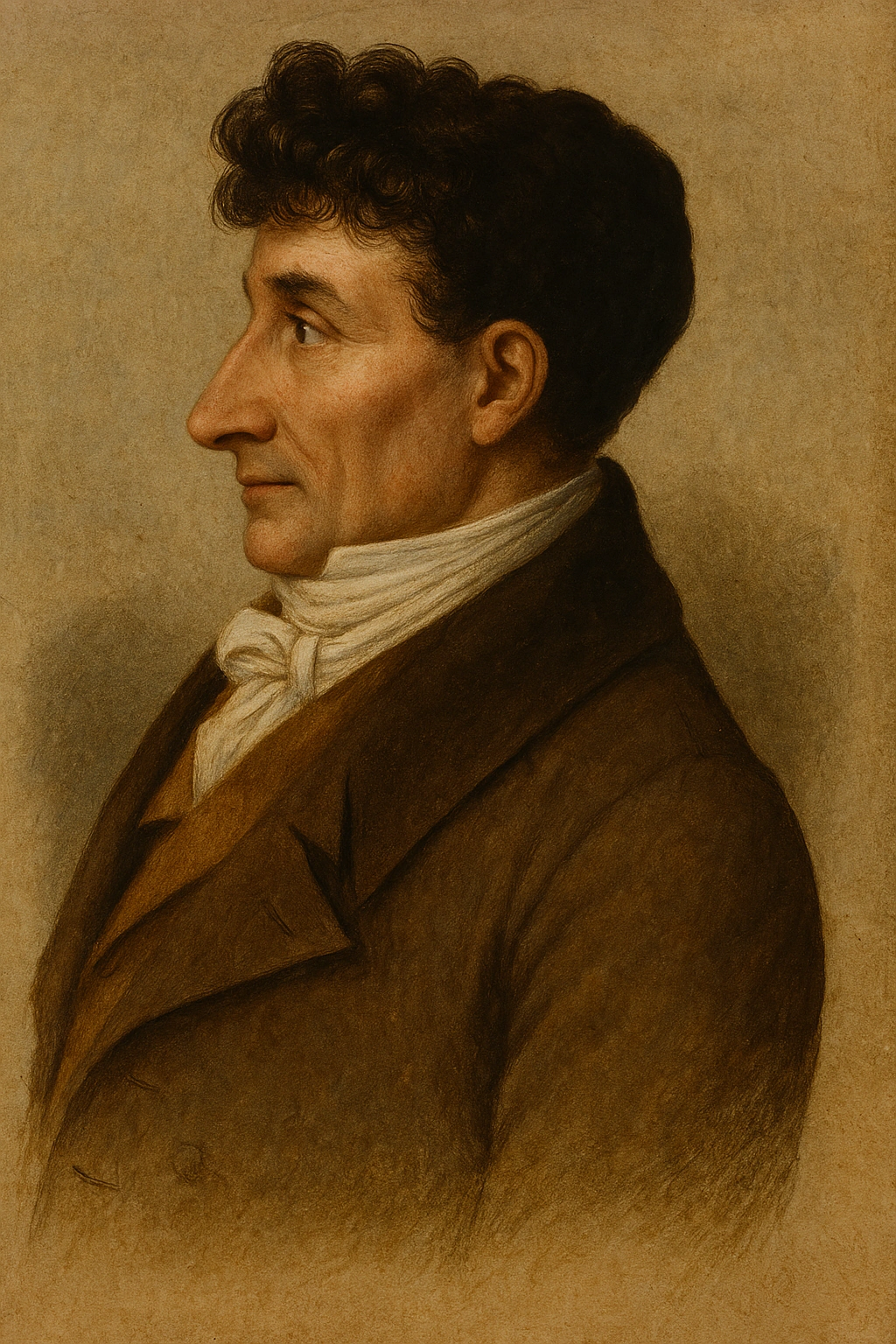
| 36 Quotes | |
| Occup. | Writer |
| From | France |
| Born | May 7, 1754 Montignac, France |
| Died | May 4, 1824 Paris, France |
| Aged | 69 years |
| Cite | |
Citation Formats
APA Style (7th ed.)
Joseph joubert biography, facts and quotes. (2026, February 11). FixQuotes. https://fixquotes.com/authors/joseph-joubert/
Chicago Style
"Joseph Joubert biography, facts and quotes." FixQuotes. February 11, 2026. https://fixquotes.com/authors/joseph-joubert/.
MLA Style (9th ed.)
"Joseph Joubert biography, facts and quotes." FixQuotes, 11 Feb. 2026, https://fixquotes.com/authors/joseph-joubert/. Accessed 24 Mar. 2026.
Early Life and Background
Joseph Joubert was born on May 7, 1754, in Montignac in the Perigord (today Dordogne), a provincial France still governed by ancien-regime hierarchies and Catholic habit. His father was a surgeon, and the household expected competence, discretion, and moral seriousness - traits that later resurfaced in Joubert's distaste for noise, polemic, and the vanity of public authorship. From the start he belonged to the kind of educated provincial bourgeoisie that could rise through teaching and administration rather than birth, yet he carried a lifelong suspicion of worldly success, as if visible triumph always risked inner loss.Montignac offered him something equally formative: distance. Far from Parisian salons, he learned to prize inwardness and attentive reading, the slow cultivation of judgment, and a sense that character was formed by habits rather than proclamations. This temperament - reflective, scrupulous, resistant to final answers - helps explain why his later fame would come less from published books than from the private notebooks where he tested thoughts the way a musician tests phrases, seeking tone before volume.
Education and Formative Influences
Educated with the Doctrinaires, Joubert became a teacher at their college in Toulouse, absorbing classical rhetoric and moral philosophy while resisting the era's taste for system. The Enlightenment surrounded him, but he was drawn to its ethical questions more than its swagger: the pull between reason and faith, the claims of sensibility, and the desire to reconcile clarity with reverence. In the 1770s and early 1780s he moved toward Paris, where friendship and conversation - rather than careerism - became his true university; he read widely, practiced aphoristic composition, and learned to treat literature as a form of conscience.Career, Major Works, and Turning Points
Joubert never constructed a conventional literary career, and that refusal is the defining turning point of his life. He wrote constantly yet published almost nothing, preferring fragments, maxims, and essais in miniature that could be revised without end; his "works" were notebooks, letters, and the influence he exerted in private circles. In Paris he formed a lasting bond with the writer Louis de Fontanes and entered the orbit of figures later central to French letters, including Chateaubriand. The Revolution, which demanded declarations and sides, confirmed his preference for moderation and moral psychology over slogans; under Napoleon and the early Bourbon Restoration he held modest educational-administrative roles linked to letters and instruction, but his real labor remained the quiet craft of thought. After his death on May 4, 1824, his reputation crystallized when Chateaubriand edited and published the posthumous Pensees (1838), shaping Joubert into the archetype of the inward French moralist - a writer whose primary public act was the refusal to simplify.Philosophy, Style, and Themes
Joubert's inner life turns on a paradox: he distrusted both cynicism and certainty. He sought a mind trained in direction, not intoxicated by speed - “The direction of the mind is more important than its progress”. That sentence is less advice than autobiography: he feared that rapid intellectual conquest could hollow out the soul, and so he disciplined himself toward orientation - toward what to love, what to honor, and what to doubt - even when conclusions remained provisional. In his notebooks, thought is an ethical exercise, a daily attempt to keep judgment from becoming cruelty or pride.His style is the literature of hesitation made luminous: short forms that protect complexity, phrases polished until they can carry both tenderness and steel. He believed that visible reality is not self-sufficient, and his religious imagination functioned as an antidote to reductionism: “Without the spiritual world the material world is a disheartening enigma”. This is the psychology of a man for whom meaning must be felt as well as inferred, and who experienced disenchantment as a kind of moral danger. Even his social ethic is inwardly diagnostic - politeness, in his view, is not etiquette but a sign of reverence for persons: “Politeness is the flower of humanity”. Taken together, these themes make him a bridge between Enlightenment lucidity and Romantic interiority, arguing - softly but insistently - that intelligence without gentleness is incomplete.
Legacy and Influence
Joubert's influence has been disproportionate to his output because he offered a model of authorship as self-formation. The posthumous Pensees, assembled from papers never intended as a book, fed a long French tradition of moralistes while also speaking to modern readers who distrust ideological noise and crave precision of feeling. Writers and critics have returned to him as a patron of the unfinished - a master of the fragment that does not evade responsibility but resists premature closure. In an era that rewarded proclamation, Joubert chose refinement; in a culture tempted by certainty, he left a literature of calibrated conscience, teaching that the most enduring work may be the one that disciplines the mind to remain humane.Our collection contains 36 quotes written by Joseph, under the main topics: Ethics & Morality - Wisdom - Justice - Writing - Leadership.
Frequently Asked Questions
- Joseph Joubert to teach is to learn twice: The quote “To teach is to learn twice” is often attributed to Joseph Joubert, expressing the idea that teaching deepens one’s own understanding.
- Joseph Joubert books: Joseph Joubert’s thoughts were published posthumously, most notably in the collection “Pensées de Joubert” (Thoughts of Joubert).
- Joseph Joubert pronunciation: In French, Joseph Joubert is pronounced roughly “zho-ZEFF zhoo-BEHR.”
- Joseph Joubert Composer: Joseph Joubert was not a composer; he is known as a French writer and philosopher of aphorisms.
- How old was Joseph Joubert? He became 69 years old
Source / external links