
Joseph Rotblat Biography Quotes 31 Report mistakes
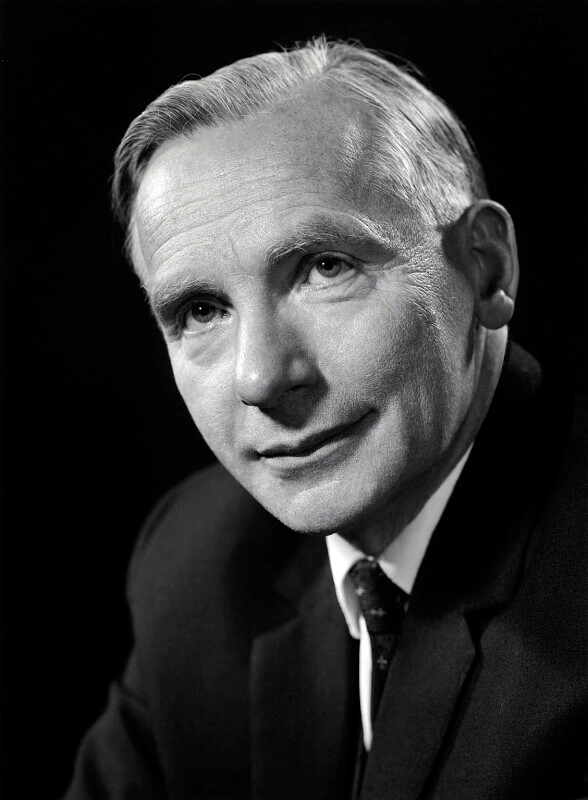
| 31 Quotes | |
| Born as | Jozef Rotblat |
| Occup. | Physicist |
| From | Poland |
| Born | November 4, 1908 Warsaw, Poland |
| Died | August 31, 2005 London, England |
| Aged | 96 years |
| Cite | |
Citation Formats
APA Style (7th ed.)
Joseph rotblat biography, facts and quotes. (2026, February 11). FixQuotes. https://fixquotes.com/authors/joseph-rotblat/
Chicago Style
"Joseph Rotblat biography, facts and quotes." FixQuotes. February 11, 2026. https://fixquotes.com/authors/joseph-rotblat/.
MLA Style (9th ed.)
"Joseph Rotblat biography, facts and quotes." FixQuotes, 11 Feb. 2026, https://fixquotes.com/authors/joseph-rotblat/. Accessed 12 Feb. 2026.
Early Life and Background
Joseph Rotblat was born Jozef Rotblat on 1908-11-04 in Warsaw, then in the Russian partition of Poland, into a Jewish family whose fortunes rose and fell with the shocks of early-20th-century Eastern Europe. World War I and the collapse of empires formed the backdrop of his boyhood, and he grew up amid material constraint and political uncertainty, conditions that pushed him toward practical skill as much as abstract study. Even before he became a public voice on nuclear danger, he carried a private memory of how quickly civic order could be broken by violence and nationalism.That early sensitivity hardened into a lifelong moral seriousness after the German invasion of Poland in 1939. Rotblat left for Britain just before the catastrophe fully closed, expecting to reunite with his wife, Tola Gryn, once circumstances allowed; instead, she was killed in the Holocaust. The loss was not merely biographical tragedy - it became an emotional hinge in his life, tying his scientific identity to a relentless skepticism toward state promises and to an acute awareness of what happens when modern systems turn human beings into targets.
Education and Formative Influences
Rotblat trained first in Warsaw, advancing from technical work into physics at the Free University of Poland and then doctoral research at the University of Warsaw, where he studied nuclear physics as it rapidly matured into a decisive field. In 1939 he went to Liverpool to work with James Chadwick, discoverer of the neutron, entering the British scientific establishment at the moment when fission moved from laboratory novelty to geopolitical emergency. The era taught him that physics was no longer only a quest for knowledge - it had become a lever on history.Career, Major Works, and Turning Points
During World War II Rotblat joined the wartime effort that fed into the Manhattan Project and worked at Los Alamos, but he became increasingly alarmed as the project shifted from fear of a German bomb to the strategic calculus of postwar power; in 1944 he took the rare step of resigning and returning to Britain, a decision that later drew suspicion during the Cold War but defined his public identity. After the war he built a distinguished medical-physics career at St Bartholomew's Hospital Medical College in London, contributing to radiation measurement and the safer clinical use of isotopes, while also turning his authority toward nuclear responsibility. He helped catalyze the Russell-Einstein Manifesto (1955) and became a central organizer of the Pugwash Conferences on Science and World Affairs (from 1957), using sustained, discreet dialogue between scientists and officials to reduce nuclear risks - work recognized when Rotblat and Pugwash received the 1995 Nobel Peace Prize.Philosophy, Style, and Themes
Rotblat's guiding belief was that scientific achievement without ethical self-scrutiny could become a form of complicity. He refused the comforting idea that "pure" research absolves the researcher, insisting that power created in laboratories reappears in policy, doctrine, and procurement. In his own story, the arc from promising nuclear physicist to dissenter and peace-builder was not a rejection of science but an attempt to rescue its human meaning - a stance he summarized in the personal credo, "I saw science as being in harmony with humanity". The phrase reads like autobiography: science as vocation, humanity as the measure, and harmony as a condition that must be actively defended, not assumed.His rhetoric about nuclear weapons was spare, diagnostic, and resistant to euphemism, shaped by a temperament that preferred moral clarity to ideological theater. He argued that deterrence is not a stable peace but a temporary, hazardous arrangement, and he punctured the self-justifying logic of nuclear states by noting, "We are told that the possession of nuclear weapons - in some cases even the testing of these weapons - is essential for national security. But this argument can be made by other countries as well". That symmetry was central to his psychology: the fear that hypocrisy, once institutionalized, spreads itself as policy. Beneath the analysis sat an existential warning rooted in wartime experience and scientific knowledge: "I have to bring to your notice a terrifying reality: with the development of nuclear weapons Man has acquired, for the first time in history, the technical means to destroy the whole of civilization in a single act". For Rotblat, the point was not dread for its own sake, but accountability - scientists must anticipate the human end of the chain of causation they help forge.
Legacy and Influence
Rotblat's enduring influence lies in the model he offered: a first-rate scientist who treated conscience as part of professional competence and who built institutions, not just arguments, to reduce risk. Pugwash helped normalize the idea that unofficial, technically informed dialogue can support arms control, from test-ban thinking to later confidence-building measures, and his insistence on scientific responsibility became a touchstone for later debates on dual-use research, biosecurity, and emerging technologies. He remains one of the clearest examples of a 20th-century intellectual who converted personal loss and historical catastrophe into a disciplined ethic of prevention, aiming to make the future less hostage to the weapons his own field helped unleash.Our collection contains 31 quotes written by Joseph, under the main topics: Ethics & Morality - Science - Peace - War.