
Joseph Smith, Jr. Biography Quotes 30 Report mistakes
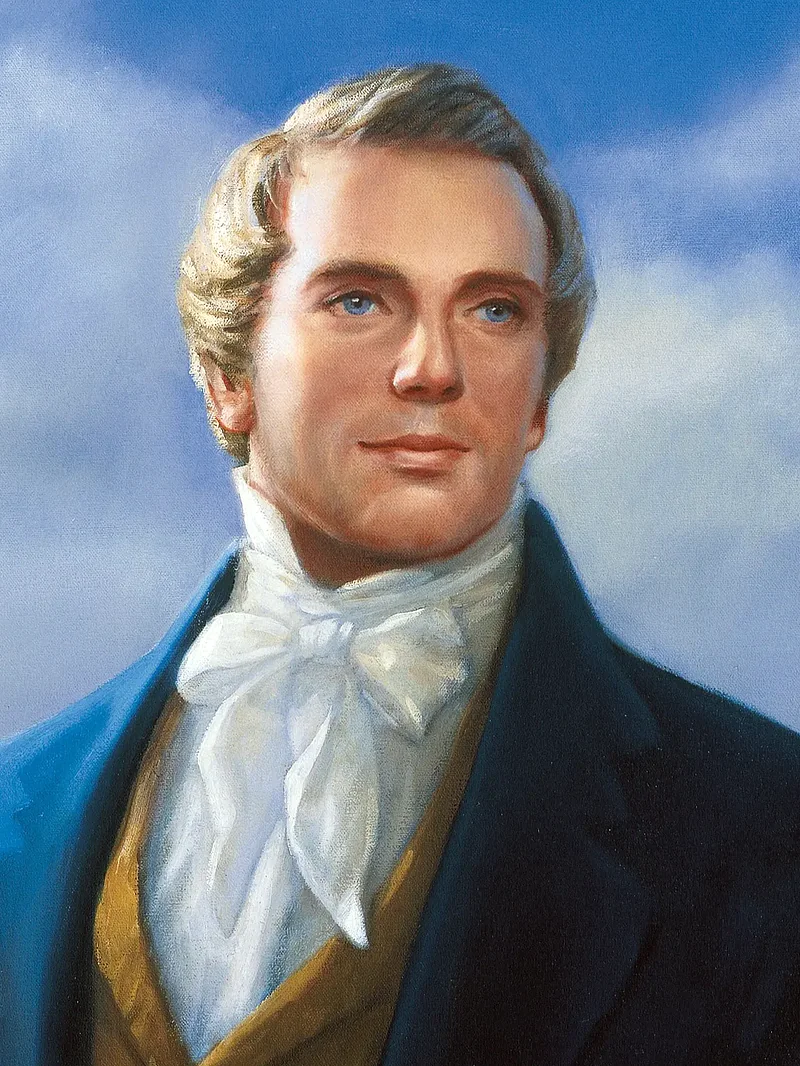
| 30 Quotes | |
| Born as | Joseph Smith Jr. |
| Known as | Joseph Smith |
| Occup. | Clergyman |
| From | USA |
| Born | December 23, 1805 Sharon, Vermont |
| Died | June 27, 1844 Carthage, Illinois |
| Cause | assassination |
| Aged | 38 years |
| Cite | |
Citation Formats
APA Style (7th ed.)
Joseph smith, jr. biography, facts and quotes. (2026, February 11). FixQuotes. https://fixquotes.com/authors/joseph-smith-jr/
Chicago Style
"Joseph Smith, Jr. biography, facts and quotes." FixQuotes. February 11, 2026. https://fixquotes.com/authors/joseph-smith-jr/.
MLA Style (9th ed.)
"Joseph Smith, Jr. biography, facts and quotes." FixQuotes, 11 Feb. 2026, https://fixquotes.com/authors/joseph-smith-jr/. Accessed 26 Mar. 2026.
Early Life and Background
Joseph Smith Jr. was born on December 23, 1805, in Sharon, Vermont, to Joseph Smith Sr. and Lucy Mack Smith, a family of modest means shaped by repeated moves and economic instability. After crop failures and debt, the Smiths relocated through New England and, by 1816-1817, settled near Palmyra and Manchester in western New York, an area roiled by revivalism and experimentation in what later historians called the Burned-over District.Childhood illness and hardship sharpened Smith's sense that ordinary life could turn on unseen forces. A severe infection in his leg led to painful surgery and a long recovery, leaving him with a physical reminder of vulnerability and a practical education in endurance. Family discussions mixed Bible reading, folk beliefs, and restless seeking, a household atmosphere that made divine intervention feel less like an abstraction than a possibility pressing at the edge of daily necessity.
Education and Formative Influences
Smith had limited formal schooling and described himself as lacking polish, yet he absorbed the King James Bible, frontier disputation, and the language of itinerant preaching. The competing sects around Palmyra taught him how persuasion worked, while treasure-seeking circles and local seer traditions gave him a vocabulary of visions and sacred objects that he later reframed as revelation. His formative claim was the "First Vision" (reported in multiple accounts) of God and Jesus Christ, followed by angelic instruction from Moroni and the discovery of golden plates, experiences that placed him at the volatile intersection of popular religion, anti-elite suspicion, and the hunger for fresh scripture.Career, Major Works, and Turning Points
In 1830 Smith published the Book of Mormon and organized the Church of Christ (later the Church of Jesus Christ of Latter-day Saints), rapidly drawing converts and equally rapid hostility. The movement migrated from New York to Kirtland, Ohio, and Independence, Missouri, where violence and expulsion shaped a communal identity of persecution and covenant; in Kirtland he launched a banking venture that collapsed in 1837, fueling dissent. After a brutal winter flight, he built Nauvoo, Illinois, with an ambitious city charter, a militia (the Nauvoo Legion), and an expanding theological program that included new scripture and temple rites, while secretly introducing plural marriage. Political entanglement and fears of theocratic power culminated in the destruction of the Nauvoo Expositor in 1844, Smith's arrest, and his killing by a mob at Carthage Jail on June 27, 1844, leaving succession crises and a legacy of martyrdom.Philosophy, Style, and Themes
Smith's inner life reads as a continual negotiation between the ineffable and the administrative. He spoke as a revelator who felt overwhelmed by what he believed he had seen and tasked with translating it into institutions, ordinances, and texts a frontier people could carry. That strain appears in his insistence that revelation was both real and paced: “I could explain a hundred fold more than I ever have of the glories of the kingdoms manifested to me in the vision, were I permitted, and were the people prepared to receive them”. The sentence is not merely boastful; it is psychological self-defense, a way to justify partial disclosure and to interpret resistance as immaturity rather than refutation.His style blended expansive cosmology with practical moral engineering. He treated truth as something mobile and harvestable, not the property of a single tradition: “One of the grand fundamental principles of Mormonism is to receive truth, let it come from whence it may”. That openness helped him appropriate biblical primitivism, restorationist impulses, Masonic forms, and new ritual creativity into a coherent project of re-sacralizing everyday life - marriage, family, economics, and the dead. It also fed his confidence under siege; he framed setbacks as tests of covenant stamina: “Never be discouraged. If I were sunk in the lowest pits of Nova Scotia, with the Rocky Mountains piled on me, I would hang on, exercise faith, and keep up good courage, and I would come out on top”. The bravado masked a leader keenly aware that charisma alone could not hold a people together without narrative, discipline, and a shared horizon of salvation.
Legacy and Influence
Smith's death froze him in the American imagination as both prophet and provocateur, while his followers carried his system west under Brigham Young, embedding his revelations in temple worship, genealogical labor, and a global missionary enterprise. The Book of Mormon remains his most visible artifact, but his broader influence lies in how he expanded the grammar of American religion - new scripture, continuing revelation, sacred history mapped onto the continent, and a church that could function as city, economy, and family network. He also left enduring controversies: polygamy, political power, and disputes over translation and historical claims. Yet even critics often concede his generative force - a clergyman who, in less than fifteen years of public leadership, created a durable tradition whose institutions and stories still shape millions of lives.Our collection contains 30 quotes written by Joseph, under the main topics: Truth - Never Give Up - Friendship - Leadership - Honesty & Integrity.
Other people related to Joseph: Orson Pratt (Theologian), Charles Anthon (Writer), Fawn M. Brodie (Author)