
Joseph Wood Krutch Biography Quotes 18 Report mistakes
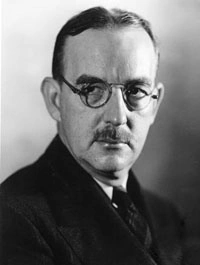
| 18 Quotes | |
| Occup. | Environmentalist |
| From | USA |
| Born | November 25, 1893 |
| Died | May 22, 1970 |
| Aged | 76 years |
| Cite | |
Citation Formats
APA Style (7th ed.)
Joseph wood krutch biography, facts and quotes. (2026, February 11). FixQuotes. https://fixquotes.com/authors/joseph-wood-krutch/
Chicago Style
"Joseph Wood Krutch biography, facts and quotes." FixQuotes. February 11, 2026. https://fixquotes.com/authors/joseph-wood-krutch/.
MLA Style (9th ed.)
"Joseph Wood Krutch biography, facts and quotes." FixQuotes, 11 Feb. 2026, https://fixquotes.com/authors/joseph-wood-krutch/. Accessed 5 Mar. 2026.
Early Life and Background
Joseph Wood Krutch was born on November 25, 1893, in Knoxville, Tennessee, into a late-Victorian America that still measured progress by smokestacks and railroad mileage. The South he grew up in was regional and rhetorical - steeped in old certainties, yet drawn toward national modernity - and that tension would later become one of his signature subjects: what is gained by "advancement", and what, quietly, is lost.Even before he became known as a literary critic and environmental voice, Krutch cultivated the habits of a moral observer. He watched people closely, but he also watched landscapes, seasons, and animals with the same seriousness, as if they, too, were characters with claims upon human attention. That double gaze - cultural and natural - formed the emotional core of his work: a skepticism toward easy optimism, paired with a stubborn readiness for wonder.
Education and Formative Influences
Krutch studied at the University of Tennessee and then at Columbia University, where he completed a PhD and entered the intellectual atmosphere of early-20th-century New York, when Darwin, Freud, and industrial capitalism were reshaping how Americans talked about mind, meaning, and fate. He absorbed the discipline of criticism and the looseness of the essay tradition, learning to test ideas against lived experience rather than against doctrine. The First World War and the postwar disillusionment did not make him fashionable in the way of some contemporaries, but they deepened his suspicion of mechanistic accounts of human life - and later, of mechanistic attitudes toward the nonhuman world.Career, Major Works, and Turning Points
After teaching literature, Krutch became a prominent critic and essayist, writing for national magazines and serving as drama critic for The Nation in the 1920s, a perch from which he watched American culture negotiate between art and mass entertainment. His early books, including The Modern Temper (1929), articulated an influential critique of scientific reductionism and the thinning of experience in an age of machines. A turning point came as his attention shifted from the stage and the city toward deserts, canyons, and wild animals - a personal reorientation that became a public argument in works such as The Desert Year (1951) and The Great Chain of Life (1956). Living for long stretches in the American Southwest, he helped translate ecological concern into a literary, ethically charged idiom before environmentalism had a mass name.Philosophy, Style, and Themes
Krutch wrote essays that behave like conversations with a demanding conscience. He distrusted both sentimentality and swagger, preferring the plain force of a carefully turned sentence that can carry irony without cruelty. Across decades he returned to a central anxiety: modern life trains people to treat the world as raw material. His barbed moral logic made that habit look absurd as well as dangerous, as when he observed, “When a man wantonly destroys one of the works of man we call him a vandal. When he destroys one of the works of god we call him a sportsman”. The point is not only hypocrisy; it is a diagnosis of a psyche that needs permission to dominate, and a society willing to rename violence to preserve comfort.Yet Krutch was never simply a scold. He argued that a durable ethics begins in perception - in recovering a kind of attention that modern "knowledge" often dulls. “It is not ignorance but knowledge which is the mother of wonder”. For him, the best knowledge does not close the world; it re-opens it, making the living intricacy of deserts, animals, and seasons feel more, not less, mysterious. This is why his environmental writing is not primarily technical; it is existential. “If we do not permit the earth to produce beauty and joy, it will in the end not produce food, either”. Beauty, in his thought, is not decoration but a sign of relationship - a measure of whether humans still belong to the places they inhabit.
Legacy and Influence
Krutch died on May 22, 1970, just as modern environmentalism was becoming a nationwide movement, and his work stands as one of its crucial literary bridges: a link between earlier nature writing and the later, policy-driven era. He influenced readers who wanted more than data - who wanted a vocabulary for reverence without piety, and for criticism without cynicism. By insisting that the fate of wild places is also the fate of human character, he left behind not a program but a standard: the world is not only useful, and our language should not make it so.Our collection contains 18 quotes written by Joseph, under the main topics: Witty One-Liners - Ethics & Morality - Wisdom - Truth - Nature.
Joseph Wood Krutch Famous Works
- 1957 The Great Chain of Life (Book)
- 1954 The Measure of Man (Book)
- 1949 The Twelve Seasons: A Perpetual Calendar for the Country (Book)
- 1948 Henry David Thoreau (Book)
- 1944 Samuel Johnson (Book)
- 1929 The Modern Temper (Book)
Source / external links