
Joyce Jillson Biography Quotes 3 Report mistakes
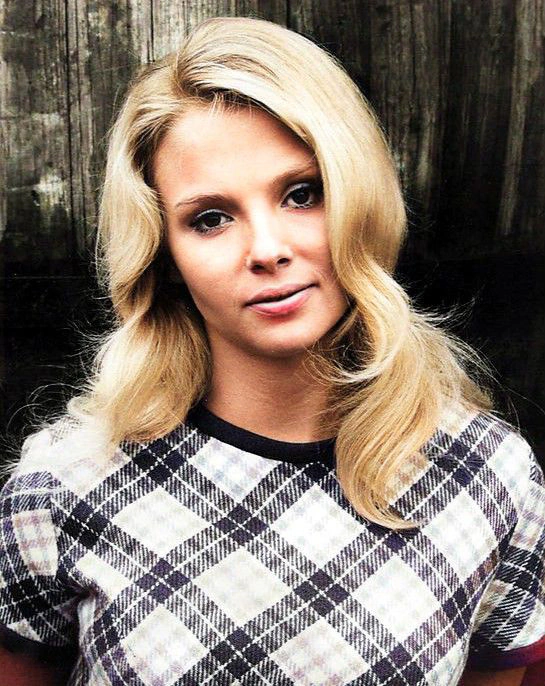
Attr: ABC Television
| 3 Quotes | |
| Born as | Joyce Linda Twitchell |
| Occup. | Celebrity |
| From | USA |
| Born | December 26, 1946 Los Angeles, California, USA |
| Died | October 1, 2004 Los Angeles, California, USA |
| Cause | Cancer |
| Aged | 57 years |
| Cite | |
Citation Formats
APA Style (7th ed.)
Joyce jillson biography, facts and quotes. (2026, February 11). FixQuotes. https://fixquotes.com/authors/joyce-jillson/
Chicago Style
"Joyce Jillson biography, facts and quotes." FixQuotes. February 11, 2026. https://fixquotes.com/authors/joyce-jillson/.
MLA Style (9th ed.)
"Joyce Jillson biography, facts and quotes." FixQuotes, 11 Feb. 2026, https://fixquotes.com/authors/joyce-jillson/. Accessed 28 Mar. 2026.
Early Life and Background
Joyce Jillson was born Joyce Linda Twitchell on December 26, 1946, in the United States, coming of age in the long afterglow of World War II prosperity and the social turbulence that followed. Her early years unfolded alongside the rise of television as a national hearth, a medium that trained Americans to read personality as performance and to treat public life as intimate theater. That cultural shift mattered for Jillson, whose later career would hinge on being both visible and interpretable - a face and a voice that audiences felt they could "know".She moved through a mid-century America that placed strict expectations on women while simultaneously marketing glamour as a form of power. The push and pull between those forces - restraint versus display, domestic scripts versus self-invention - became a practical education in image-making. Friends and colleagues later described her as alert to social cues and unusually willing to treat everyday life as material, suggesting an inner restlessness: a desire not merely to be seen, but to be read accurately on her own terms.
Education and Formative Influences
Public details of Jillson's formal schooling are limited, but her formative education was clearly vocational and cultural: the discipline of show business, the booming marketplace of self-help spirituality, and the 1970s-1990s entertainment press that rewarded quick, quotable certainty. She learned to translate intuition into consumable guidance, blending pop psychology with the era's fascination for astrology and personality typing, and she absorbed the talk-show economy that prized a confident tone over exhaustive proof.Career, Major Works, and Turning Points
Jillson built a public identity as an American astrologer, personality, and author, gaining broad recognition through media appearances and widely circulated columns and books that linked celebrity culture to astrological interpretation. Her work thrived in an environment where audiences wanted both access to fame and a framework to explain it - a chart for the chaotic. A key turning point was her successful positioning as a "celebrity astrologer", a role that required more than prediction; it demanded narrative skill, an ability to make a public figure's choices feel fated yet understandable, and a performer's timing when delivering judgments that had to sound bold without sounding cruel.Philosophy, Style, and Themes
Jillson's public philosophy treated personality as legible - something that could be mapped, teased out, even staged - and that sensibility carried a playful but strategic moral code. Her humor often worked like social instruction, a way to set boundaries while keeping the room entertained. “There are times not to flirt. When you're sick. When you're with children. When you're on the witness stand”. The line reads like a throwaway joke, but psychologically it signals a mind that saw charm as a tool best used with situational awareness - intimacy governed by context, not impulse.She also wrote with surprising tenderness about animals, and those passages reveal a complementary side: less interested in controlling destiny than in honoring dependency and temperament. “Cats, for the most part, seem indifferent to human activities that do not revolve around their needs and wants. They all but roll their eyes at the owners who expect their cats to do things for them”. Here her theme is humility before another being's nature, a corrective to human vanity. Yet she could pivot to deliberate caretaking as identity: “Be sure to incorporate your pooch into your daily activities to make her feel like a true family member... These small, considerate actions will make you an ideal petowner”. Read together, the animal writing mirrors her broader approach to people and fame - accept what cannot be changed, and then build rituals that create belonging.
Legacy and Influence
Jillson died on October 1, 2004, but her career remains a telling artifact of late-20th-century American media, when astrology functioned as both entertainment and emotional technology. She helped popularize a style of astrological commentary that was less mystical sermon than social decoding - a way to talk about desire, misbehavior, compatibility, and ambition in a culture saturated with celebrity narratives. In doing so, she left a template for later lifestyle astrologers: combine wit with reassurance, deliver interpretation as story, and treat the audience's private anxieties as worthy of public language.Our collection contains 3 quotes written by Joyce, under the main topics: Witty One-Liners - Dog - Cat.
Source / external links