
Jules Verne Biography Quotes 9 Report mistakes
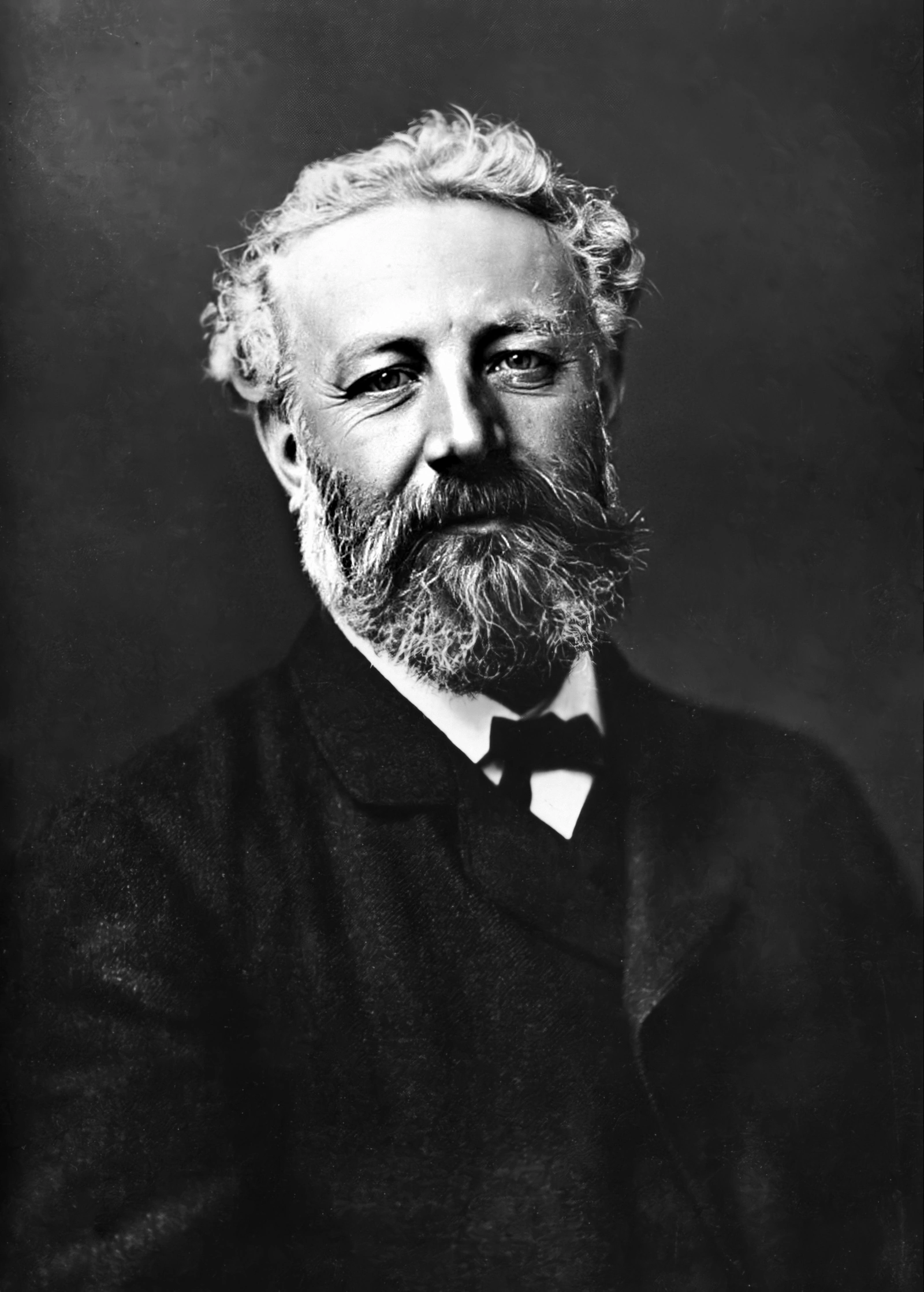
| 9 Quotes | |
| Occup. | Author |
| From | France |
| Born | February 8, 1828 |
| Died | March 24, 1905 |
| Aged | 77 years |
| Cite | |
Citation Formats
APA Style (7th ed.)
Jules verne biography, facts and quotes. (2026, February 11). FixQuotes. https://fixquotes.com/authors/jules-verne/
Chicago Style
"Jules Verne biography, facts and quotes." FixQuotes. February 11, 2026. https://fixquotes.com/authors/jules-verne/.
MLA Style (9th ed.)
"Jules Verne biography, facts and quotes." FixQuotes, 11 Feb. 2026, https://fixquotes.com/authors/jules-verne/. Accessed 6 Mar. 2026.
Early Life and Background
Jules Gabriel Verne was born on 1828-02-08 in Nantes, a busy Atlantic port where shipyards, river traffic on the Loire, and stories from sailors made distance feel tangible. His father, Pierre Verne, was a lawyer of the provincial bourgeoisie; his mother, Sophie Allotte de la Fuye, came from a family with maritime connections. In that household, prudence and respectability were expected, yet the city itself offered a counter-education in tides, trade, and departure - a daily theater of elsewhere.The often-repeated tale that the boy tried to run away to sea is more legend than document, but it captures a genuine tension that shaped him: a powerful appetite for movement confined by duty. Verne grew up in the decades after Napoleon, when France was modernizing unevenly and the sciences were becoming public spectacles. Even as his imagination turned outward, his private anxieties - about money, parental approval, and social standing - anchored him to the very class he would later both celebrate and satirize.
Education and Formative Influences
He studied at the Lycee Royal in Nantes and was sent to Paris to read law in 1847, fulfilling his father's plan, but Paris in the 1840s and early 1850s offered more intoxicants than jurisprudence: theaters, salons, and the aftershocks of the 1848 Revolution. He gravitated toward literature, wrote plays and operetta libretti, and met figures around Alexandre Dumas, who encouraged his stage ambitions. Just as importantly, he educated himself in geography, engineering, and popular science, absorbing the era's faith that measurement could tame the unknown - a faith he would later complicate with moral doubt and awe.Career, Major Works, and Turning Points
After early theatrical efforts and a period of financial strain, Verne found his defining path through publisher Pierre-Jules Hetzel, who shaped the project that became Voyages extraordinaires. The breakthrough Five Weeks in a Balloon appeared in 1863, followed by the great sequence: Journey to the Center of the Earth (1864), From the Earth to the Moon (1865), Twenty Thousand Leagues Under the Seas (1869-1870), and Around the World in Eighty Days (1872). He settled in Amiens, served on the municipal council, and wrote with the regularity of a professional craftsman, producing novels that translated contemporary advances - steam, telegraphy, metallurgy, cartography - into plot engines. Yet his life was not placid: his health declined in later years, and in 1886 his nephew Gaston shot him, leaving him with a limp; the incident, along with Hetzel's death in 1886, darkened the late work, where utopias fray into cautionary tales.Philosophy, Style, and Themes
Verne's signature method was to fuse documentary density with adventure architecture. He wrote like a man building a machine: the narrative is driven by timetables, inventories, bearings, and margins of error, but the goal is psychological as much as technical - to make readers feel the pressure of the unknown on a rational mind. His characters often stage an inner debate between curiosity and control, and his own imagination repeatedly tests the limits of mastery. “Science, my lad, is made up of mistakes, but they are mistakes which it is useful to make, because they lead little by little to the truth”. That sentence reveals Verne's temperament: optimistic about method, wary of certainty, and fascinated by how error educates desire.The sea, for him, was both laboratory and confession booth, a place where the self could expand beyond social role while still obeying physical law. “The sea is everything. It covers seven tenths of the terrestrial globe. Its breath is pure and healthy. It is an immense desert, where man is never lonely, for he feels life stirring on all sides”. This is not mere scenery; it is a moral psychology of solitude without isolation, a dream of freedom that remains answerable to reality. Hence his recurring insistence on limits: “We may brave human laws, but we cannot resist natural ones”. In Captain Nemo, in obsessed engineers, in explorers driven by pride, Verne dramatized the 19th century's central paradox - the hunger to transcend the human, and the inescapability of consequence.
Legacy and Influence
Verne died in Amiens on 1905-03-24, having helped invent modern science fiction while insisting, against pure fantasy, on a world that could be mapped, calculated, and ethically argued with. His novels seeded generations of readers with a taste for exploration and systems thinking, influencing writers from H.G. Wells to later French and global speculative traditions, as well as cinema, comics, and popular conceptions of submarines, spaceflight, and global travel. Just as enduring is his inner portrait of the modern mind: thrilled by progress, haunted by its costs, and forever trying to turn wonder into knowledge without losing the soul to the machinery of achievement.Our collection contains 9 quotes written by Jules, under the main topics: Wisdom - Nature - Freedom - Science - Cat.
Other people related to Jules: Ray Bradbury (Writer), Mike Todd (Producer), Gavin Bryars (Composer), Alberto Santos Dumont (Aviator), Michael Todd (Producer)
Jules Verne Famous Works
- 1874 The Mysterious Island (Novel)
- 1873 Around the World in Eighty Days (Novel)
- 1870 Twenty Thousand Leagues Under the Sea (Novel)
- 1865 From the Earth to the Moon (Novel)
- 1864 Journey to the Center of the Earth (Novel)
Source / external links