
Julia Gillard Biography Quotes 13 Report mistakes
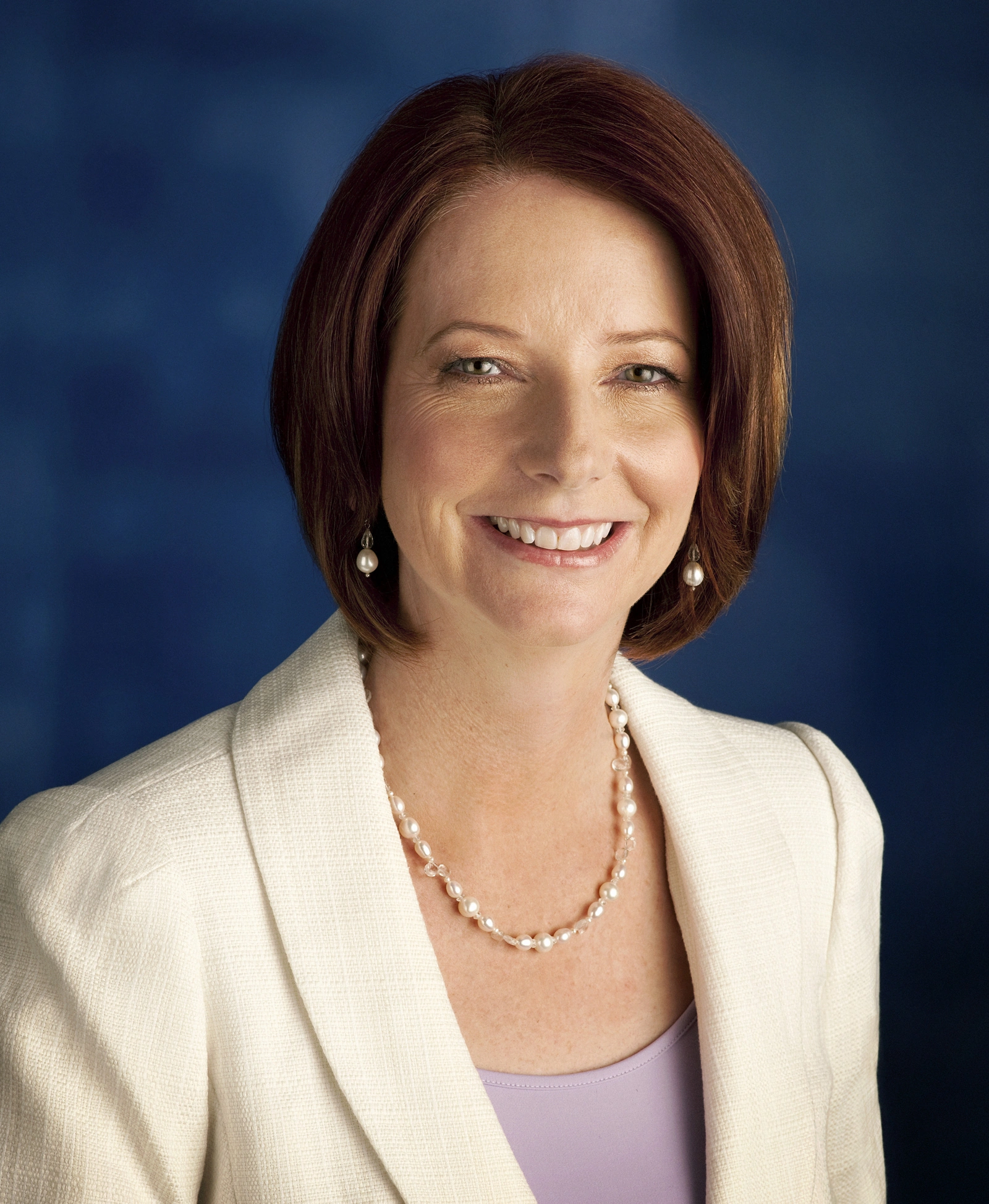
| 13 Quotes | |
| Born as | Julia Eileen Gillard |
| Occup. | Statesman |
| From | Australia |
| Born | September 29, 1961 Barry, Wales, United Kingdom |
| Age | 64 years |
| Cite | |
Citation Formats
APA Style (7th ed.)
Julia gillard biography, facts and quotes. (2026, February 11). FixQuotes. https://fixquotes.com/authors/julia-gillard/
Chicago Style
"Julia Gillard biography, facts and quotes." FixQuotes. February 11, 2026. https://fixquotes.com/authors/julia-gillard/.
MLA Style (9th ed.)
"Julia Gillard biography, facts and quotes." FixQuotes, 11 Feb. 2026, https://fixquotes.com/authors/julia-gillard/. Accessed 5 Mar. 2026.
Early Life and Background
Julia Eileen Gillard was born on September 29, 1961, in Barry, Wales, to John and Moira Gillard, and arrived in Adelaide as a child when her family emigrated to Australia in the mid-1960s. The move from postwar Britain to suburban South Australia - a place of expanding public education and new opportunities - became an early lesson in mobility and reinvention, themes that later surfaced in her politics as both personal history and national story.She grew up conscious of the precariousness that can sit behind ordinary lives: her father worked in aged care management, and the family weathered economic uncertainties that sharpened her interest in work, wages, and the institutions that buffer risk. Gillard never married and had no children, a fact that made her a lightning rod in a culture that still expected leaders to fit familiar domestic molds; over time, she responded by grounding her public identity in competence, discipline, and a lawyerly insistence on process.
Education and Formative Influences
Educated at Mitcham Demonstration School and Unley High School in Adelaide, Gillard moved to Melbourne to study at the University of Melbourne, completing a BA and an LLB, and later became active in student politics during the era of Hawke-Keating reform debates. The combination of legal training and factional labor politics shaped her temperament: argument over assertion, negotiated outcomes over romantic gestures, and a deep belief that government can broaden life chances when it invests in skills and rules that make markets fairer.Career, Major Works, and Turning Points
After working as a solicitor at Slater and Gordon, and serving as chief of staff to Victorian opposition leader John Brumby, Gillard entered federal Parliament in 1998 as Labor member for Lalor. She rose through the shadow ministry and, after Labor's 2007 victory under Kevin Rudd, became Deputy Prime Minister and Minister for Education and Workplace Relations, driving major schooling and training reforms. In June 2010 she replaced Rudd as Prime Minister, leading a minority government after the 2010 election and navigating intense parliamentary arithmetic to pass signature measures including the National Disability Insurance Scheme framework, the Clean Energy legislative package (carbon pricing), a mining tax compromise, and education funding negotiations that evolved into the Gonski reforms. Her tenure was marked by the Afghanistan commitment, the pivot to Asia, and a bruising domestic climate in which leadership instability, media trench warfare, and party-room maneuvering culminated in her replacement by Rudd in June 2013.Philosophy, Style, and Themes
Gillard's inner life as a political actor was defined by an unusual combination: emotional reserve paired with moral certainty about institutions. She preferred systems to slogans, and her best moments were forensic - marshalling evidence, bargaining in detail, and defending legitimacy when the ground was shifting. That temperament helped her govern in minority, but it also made her vulnerable to an electorate that often seeks a more confessional kind of authenticity. The gendered scrutiny she endured sharpened her sense that power is not merely held but narrated; she answered by refusing melodrama and by insisting that seriousness, not performative warmth, is a democratic virtue.Her governing philosophy joined social-democratic inclusion to a globalized view of national interest. She treated education as an economic and civic engine, arguing that “Our future growth relies on competitiveness and innovation, skills and productivity... and these in turn rely on the education of our people”. Prosperity, in her framing, was not charity but design: “My guiding principle is that prosperity can be shared. We can create wealth together. The global economy is not a zero-sum game”. On security and alliances she was equally explicit, seeking certainty amid volatility and telling both domestic audiences and world capitals, “Australia will stand firm with our ally the United States”. Across these themes ran a consistent psychological thread - a belief that adulthood in politics means facing risk without flinching, and building durable rules that outlast any single leader.
Legacy and Influence
Gillard left office with her reputation split between policy achievement and political trauma, yet time has elevated the durability of her institutional work: the NDIS became a cornerstone of Australian social policy, her education agenda reset the national conversation about needs-based funding, and her period of minority government demonstrated that legislative productivity is possible outside majority rule. Internationally, she helped anchor Australia's alliance posture while accelerating engagement with Asia, and after politics she expanded her influence through the Gillard Foundation and as chair of Beyond Blue, as well as roles in global education advocacy and governance. Her enduring impact lies in a model of leadership that treats competence as ethics - a wager that careful architecture, not charisma, is what ultimately changes lives.Our collection contains 13 quotes written by Julia, under the main topics: Witty One-Liners - Leadership - Learning - Peace - Embrace Change.
Other people related to Julia: Jay Weatherill (Politician)
Source / external links