
Juvenal Biography Quotes 17 Report mistakes
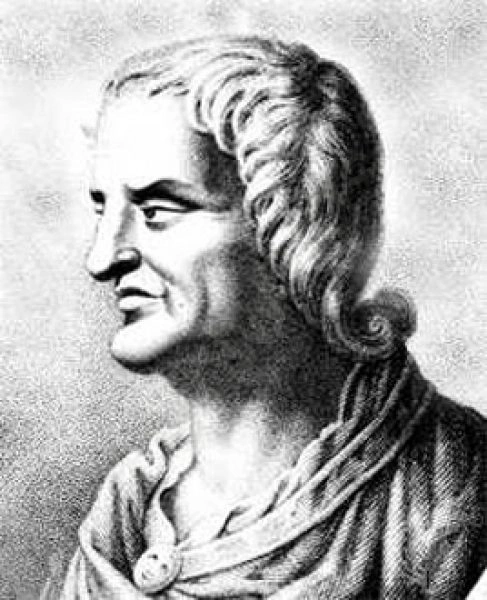
| 17 Quotes | |
| Occup. | Poet |
| From | Rome |
| Born | 55 AC |
| Died | 135 AC |
| Cite | |
Citation Formats
APA Style (7th ed.)
Juvenal biography, facts and quotes. (2026, February 11). FixQuotes. https://fixquotes.com/authors/juvenal/
Chicago Style
"Juvenal biography, facts and quotes." FixQuotes. February 11, 2026. https://fixquotes.com/authors/juvenal/.
MLA Style (9th ed.)
"Juvenal biography, facts and quotes." FixQuotes, 11 Feb. 2026, https://fixquotes.com/authors/juvenal/. Accessed 5 Mar. 2026.
Early Life and Background
Decimus Junius Juvenalis - Juvenal - was born around AD 55, probably in or near the Italian town of Aquinum, and made his adult life in Rome, the imperial capital whose noise, patronage networks, and moral contradictions would become the raw material of his art. Later biographical notices paint him as the son of a wealthy freedman and suggest a comfortable but not aristocratic start: close enough to power to see its machinery, far enough below it to feel the daily abrasions of status. His lifetime spanned the end of the Julio-Claudian shadow and the consolidation of the Flavian and adoptive emperors - an age of imperial spectacle, legalism, and social mobility bought at the price of anxiety.Rome in Juvenal's maturity was a city of crowded tenements, public baths, patron-client mornings, and the constant theater of reputation. Senators could be ruined by whisper; freedmen could rise by proximity to the palace; provincial wealth poured into the capital and changed its tastes. Juvenal's satires are not memoir, yet their recurring settings - the forum, the streets, the dinner party, the law court - suggest intimate knowledge of urban routines and the resentments they bred. He writes like someone who had waited in vestibules, measured his words in dangerous company, and watched private vice become public policy.
Education and Formative Influences
Juvenal was trained in the standard rhetorical curriculum of the Roman elite, mastering declamation, forensic coloring, and the moral commonplaces used to praise and blame. That schooling shaped his later technique: the rapid catalog, the courtroom question, the mock cross-examination, the violent example snatched from history or myth. He inherited the Latin satiric tradition of Lucilius, Horace, and Persius, but his temperament pulled toward the sharper edge - less amused distance than pressure-cooker indignation - and his voice matured in a culture where public speech had become both a tool and a risk under emperors who rewarded flattery and punished independence.Career, Major Works, and Turning Points
Little is securely known of Juvenal's official career; ancient hints place him in minor public roles and speak, perhaps tendentiously, of exile connected to an offending satire, with Egypt or Britain sometimes named. What is firm is the work: sixteen Satires in five books, composed mainly in the late first and early second centuries. The poems attack Roman obsession with money, sexual exploitation, literary fads, social climbing, corrupt patronage, and the emptiness of public virtue; they also stage scenes of domestic cruelty and urban fear. A turning point within the corpus is tonal: early satires burn with prosecutorial rage, while later ones more often widen into moral anthropology - not only denouncing Rome, but asking what human beings do everywhere when fear, desire, and status rule.Philosophy, Style, and Themes
Juvenal's guiding method is moral diagnosis under pressure. His Rome is a place where hypocrisy performs itself confidently, so the satirist turns accusation into a form of public hygiene. “It is difficult not to write satire”. That line is less a slogan than a psychological admission: he presents himself as compelled, as if the city forces language out of him the way smoke forces itself from fire. The stance protects him - satire as necessity, not ambition - yet it also reveals an inner life tuned to outrage, alert to the tiniest social humiliations, and unable to accept corruption as normal.His satire is not simply misanthropy; it is a dark ethics shaped by Roman ideas of mos maiorum and by the imperial reality that those ideals had become costumes. He distrusts easy virtue because he sees how often it is purchased as image: “Our virtues are most frequently but vices disguised”. The best of Juvenal is not in the insult but in the mechanism - how greed turns into piety, how cruelty dresses itself as discipline, how the powerful call their appetites tradition. Yet he can also sound a stern, almost paternal seriousness about moral formation, as when he insists, “A child is owed the greatest respect; if you have ever have something disgraceful in mind, don't ignore your son's tender years”. In that moral psychology, the private act is never merely private; it trains the self and teaches the household what to tolerate.
Legacy and Influence
Juvenal became the West's emblem of "Juvenalian" satire - abrasive, indignation-driven, and willing to risk ugliness to expose ugliness - and his phrases and portraits fed later moralists from late antiquity through Renaissance humanists and Augustan satirists. He also left a more troubling inheritance: the power of contempt as a literary engine, including its tendency to harden into caricature when taken uncritically. Still, his enduring influence lies in method: the use of the city as a moral laboratory, the fusion of rhetorical force with social observation, and the insistence that private vice and public life cannot be cleanly separated in an empire that runs on display.Our collection contains 17 quotes written by Juvenal, under the main topics: Witty One-Liners - Ethics & Morality - Wisdom - Justice - Writing.
Other people related to Juvenal: John Dryden (Poet), Aulus Persius Flaccus (Poet), Edith Hamilton (Writer), Ausonius (Poet), Aurelius Clemens Prudentius (Poet), Nicolas Boileau (Poet), George Dennison Prentice (Editor)
Juvenal Famous Works
- 130 The Sixteen Satires (Poetry)
Source / external links