
Kanya Kusano Biography Quotes 3 Report mistakes
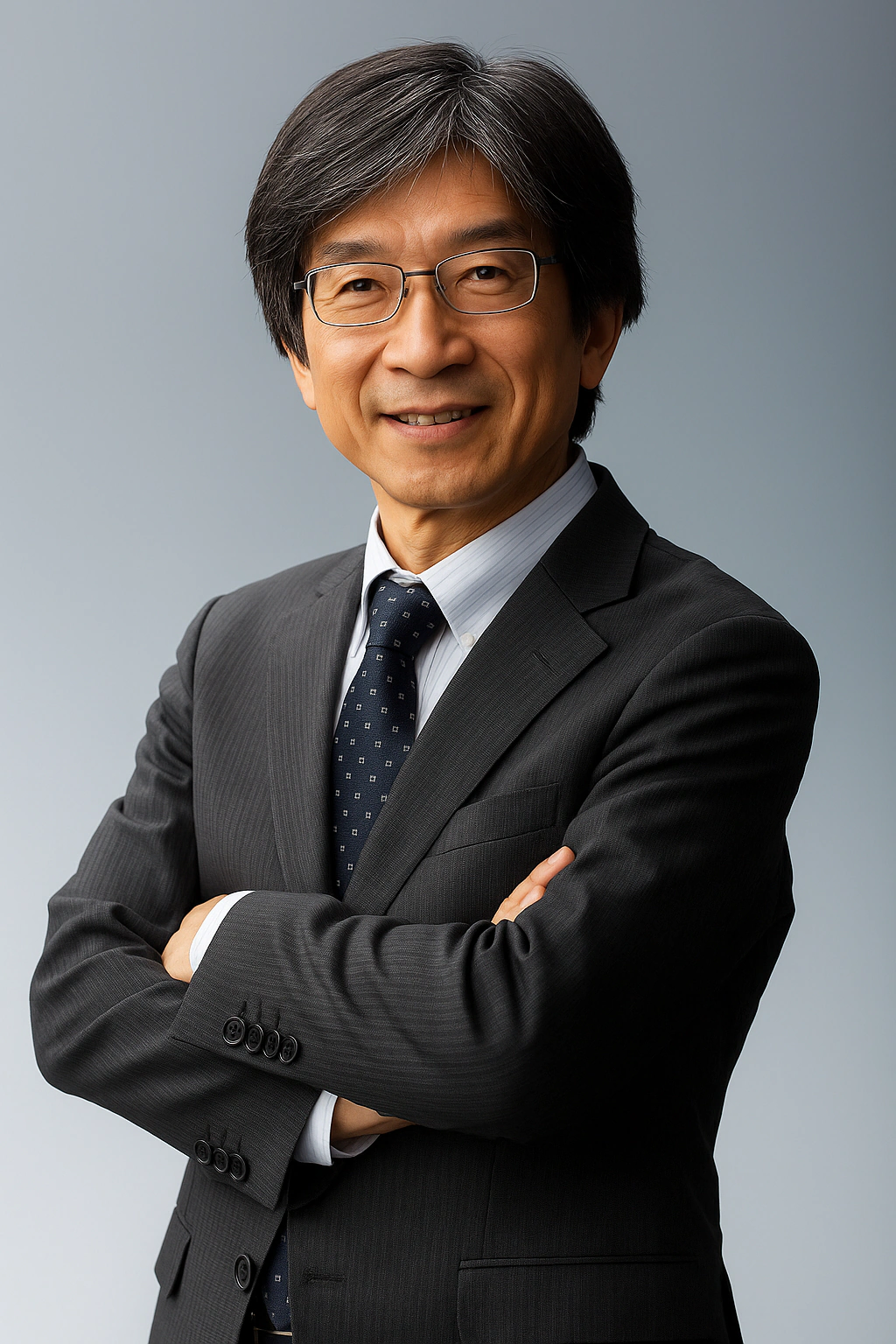
| 3 Quotes | |
| Occup. | Physicist |
| From | Japan |
| Cite | |
Citation Formats
APA Style (7th ed.)
Kanya kusano biography, facts and quotes. (2026, February 11). FixQuotes. https://fixquotes.com/authors/kanya-kusano/
Chicago Style
"Kanya Kusano biography, facts and quotes." FixQuotes. February 11, 2026. https://fixquotes.com/authors/kanya-kusano/.
MLA Style (9th ed.)
"Kanya Kusano biography, facts and quotes." FixQuotes, 11 Feb. 2026, https://fixquotes.com/authors/kanya-kusano/. Accessed 12 Feb. 2026.
Early Life and Education
Kanya Kusano is a Japanese space and solar physicist known for his pioneering work on the physics of solar flares and space weather forecasting. Publicly available information about his early life, including his exact birthplace, childhood, and family background, is sparse, reflecting the common practice in Japanese academic culture of emphasizing professional achievements over personal biography. What is documented is his long association with Japanese research universities and national laboratories, and his emergence, from the late 20th century onward, as a central figure in computational and theoretical studies of the Sun.Kusano pursued higher education in physics in Japan, entering the academic pipeline at a time when solar and magnetospheric physics were becoming tightly linked to satellite observations and supercomputing. His formal training positioned him at the intersection of plasma physics, astrophysics, and numerical simulation, and he grew into a researcher who could translate fundamental magnetohydrodynamics into tools with practical predictive value.
Early Academic Career and Scientific Focus
From the beginning of his career, Kanya Kusano focused on the magnetic activity of the Sun and its impact on near-Earth space. He became part of a generation of Japanese solar physicists who built on both domestic and international space missions, combining observation, theory, and computation. Much of his work has revolved around understanding how magnetic energy accumulates in solar active regions and is suddenly released as flares and coronal mass ejections.Among the people who have been important in his scientific environment are collaborators and colleagues in Japanese solar and space physics, including researchers at institutions such as Nagoya University, Kyushu University, the National Astronomical Observatory of Japan, and the Japan Aerospace Exploration Agency (JAXA). While not all specific names of early collaborators are widely recorded in public summaries, his work is embedded in a network of Japanese and international scientists who share data from observatories like the Solar Dynamics Observatory (SDO) and Hinode, the latter being a Japan-led solar mission. Instrument teams, observational solar physicists, and computational modelers working around Kusano provided the observational and numerical foundations on which his own theoretical contributions were built.
Leadership in Space and Solar Physics
Over time, Kusano rose to become one of the leading figures in Japanese solar-terrestrial and space weather research. He has been closely associated with the Institute for Space-Earth Environmental Research (ISEE) at Nagoya University. Within that institutional framework, he has had a central role in linking space physics, solar physics, and geospace environment research. His leadership has helped shape multi-disciplinary programs that integrate magnetospheric physics, ionospheric physics, and solar observations into a coherent picture of the Sun-Earth system.In this environment, colleagues such as instrument scientists, numerical modelers, and space weather forecasters have worked alongside him to establish predictive capabilities for solar eruptions. Although publicly available biographical profiles do not always name these individuals exhaustively, they include Japanese and international experts in magnetohydrodynamics, data assimilation, and computational astrophysics who have co-authored papers and shared modeling frameworks with Kusano. Their joint efforts advanced the idea that solar flares might be predictable, at least probabilistically, by analyzing the structure and evolution of magnetic fields in active regions.
Contributions to Solar Flare Physics
Kanya Kusano is particularly noted for his contributions to understanding and predicting solar flares. He has become widely known for developing models that attempt to identify when magnetic configurations in solar active regions become unstable enough to trigger major eruptions. His work has drawn on magnetohydrodynamic theory and large-scale numerical simulations, with an emphasis on the dynamic rearrangement of magnetic field lines in the solar corona.A key achievement associated with Kusano and his collaborators is the development of a model sometimes described in the literature as providing a way to forecast large flares based on signatures in vector magnetograms. The model examines the topology of magnetic fields and looks for specific patterns of shear and twist that precede major eruptions. To test and refine these ideas, Kusano has worked with data from solar missions operated by agencies such as NASA and JAXA. Around him, observational experts in solar magnetism, numerical analysts, and space weather specialists have formed teams that combine data and theory in a mutually reinforcing way.
Through this work, he has emerged as a central figure in the global effort to make solar flare prediction more reliable. Scientists in Europe, North America, and Asia who specialize in space weather forecasting have engaged with his models, cited his publications, and collaborated with him in comparative studies. These interactions with international colleagues have helped propagate his ideas beyond Japan and ensured that his methods are tested on diverse datasets.
Space Weather and Societal Relevance
The modern world relies heavily on technologies vulnerable to solar activity: satellites, communication systems, navigation, and power grids. Kanya Kusano has consistently framed his research in the context of protecting this technological infrastructure. His work on early warning of solar flares and related space weather phenomena feeds into forecasting systems that aim to give operators of satellites and power networks sufficient time to react to severe events.He has been part of research communities that work closely with agencies and institutions concerned with practical space weather services. Within Japan, these include national institutes and observatories that monitor the Sun and geospace, while internationally they include collaborations with scientists affiliated with space weather centers and observatories abroad. In this environment, engineers, space mission planners, and data system specialists also become important people around him, translating research outputs into operational tools, databases, and alert systems.
Computational and Interdisciplinary Work
Another pillar of Kusanos career has been the use of high-performance computing. Advanced numerical simulations of the solar corona and magnetic reconnection demand substantial computational resources, and he has operated within national and university-level computing programs. Technical staff, code developers, and computational scientists in these centers have been crucial associates, working with him to optimize codes and manage simulations that can realistically capture the dynamics of solar magnetic fields.Beyond physics, his research has touched on applied mathematics, data science, and, more recently, approaches that intersect with machine learning. Colleagues trained in statistics and data analysis have collaborated with him to validate models and evaluate how well they predict events using historical solar data. These interdisciplinary ties have expanded the set of important people around Kusano to include not just traditional physicists, but also experts in information science and large-scale data management.
Role in Japanese and International Scientific Communities
Within Japan, Kanya Kusano has been an influential voice in discussions about the direction of space and solar research. He has participated in planning efforts for national programs, and he has interacted with figures in agencies like JAXA and related governmental bodies that oversee the countrys scientific agenda. Program managers, senior administrators, and fellow principal investigators constitute another circle of individuals whose decisions intersect with his work and who have supported the institutional frameworks that enable his research.Internationally, Kusano has been active in conference communities and collaborative networks organized by bodies such as the International Astronomical Union and other professional organizations focused on solar-terrestrial physics. Through conferences, joint workshops, and coordinated observation campaigns, he has worked with leading figures in solar physics in Europe and North America. These include experts in coronal mass ejections, reconnection theory, and helioseismology whose names appear alongside his in proceedings, special journal issues, and collaborative projects. Together, this community has shaped a shared agenda: combining multi-wavelength solar observations with advanced modeling to better understand and predict solar activity.
Mentorship and Influence
As a senior scientist, Kusano has also had a role as a mentor and supervisor. Graduate students, postdoctoral fellows, and younger staff researchers working with him have formed an inner circle of people deeply involved in his projects. Many of them have focused on specific aspects of solar flare onset, magnetic field analysis, and simulation methodology, contributing detailed case studies and algorithmic improvements under his guidance.While individual student names may not be widely highlighted in brief public biographical sketches, they have co-authored papers with Kusano and gone on to positions in universities, research institutes, and industry. Through this mentorship, his influence extends beyond his own publications into the broader trajectory of Japanese and international solar physics, as these former students and colleagues continue to build on the methods and questions that he helped to popularize.
Recognition and Ongoing Work
Over the years, Kanya Kusano has received recognition within the solar physics and space weather communities for his scientific contributions. Citations to his work on solar flare prediction and magnetic instability models appear in major journals in astrophysics and geophysics. Conference organizers regularly invite him to present keynote and review talks that summarize the state of the field, reflecting the respect accorded to him by his peers.His work remains ongoing, evolving in step with new observational data and computational advances. Space missions deliver ever more detailed views of the Sun, and supercomputers enable simulations of increasing realism. Within this changing landscape, Kusano continues to collaborate with a wide array of important colleagues: mission scientists who design and operate instruments, data pipeline architects who process incoming observations, theorists who refine physical models, and forecasters who translate scientific knowledge into warnings useful to society. Together, they are gradually transforming the once purely academic study of solar flares into a predictive science with concrete benefits for the modern technological world.
Our collection contains 3 quotes written by Kanya, under the main topics: Science.
Source / external links