
Karin Boye Biography Quotes 1 Report mistakes
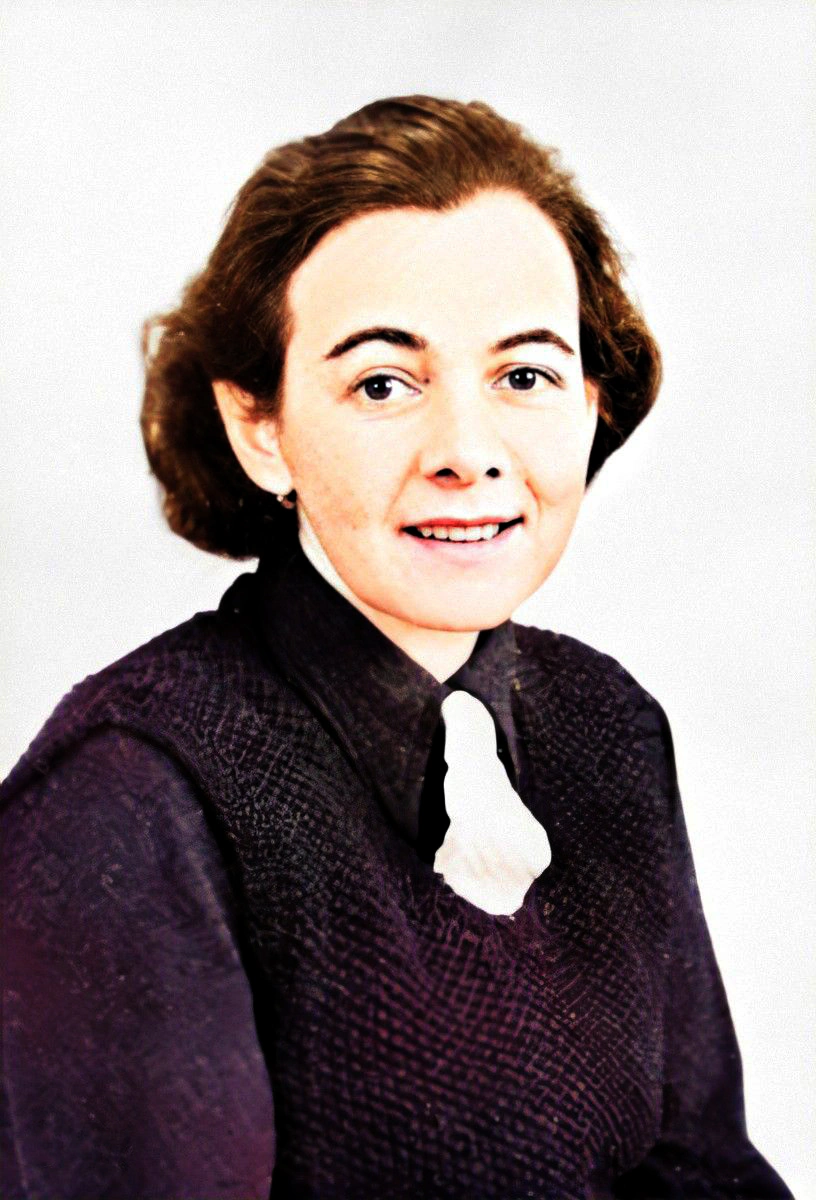
| 1 Quotes | |
| Born as | Karin Maria Boye |
| Occup. | Poet |
| From | Sweden |
| Born | October 26, 1900 Göteborg, Västra Götaland, Sweden |
| Died | April 24, 1941 Stockholm, Sweden |
| Cause | Suicide by overdose of sleeping pills |
| Aged | 40 years |
| Cite | |
Citation Formats
APA Style (7th ed.)
Karin boye biography, facts and quotes. (2026, February 11). FixQuotes. https://fixquotes.com/authors/karin-boye/
Chicago Style
"Karin Boye biography, facts and quotes." FixQuotes. February 11, 2026. https://fixquotes.com/authors/karin-boye/.
MLA Style (9th ed.)
"Karin Boye biography, facts and quotes." FixQuotes, 11 Feb. 2026, https://fixquotes.com/authors/karin-boye/. Accessed 26 Mar. 2026.
Early Life and Background
Karin Maria Boye was born on 26 October 1900 in Gothenburg, Sweden, into a respectable middle-class milieu shaped by Lutheran norms and the steadying expectations of turn-of-the-century bourgeois life. Her childhood coincided with Sweden's rapid modernization - expanding education, a growing press, and new debates about women's roles - yet her private temperament ran toward intensity and self-scrutiny. In 1909 the family moved to Stockholm, a shift that placed her near the country's cultural institutions while also sharpening her sense of being observed and measured.Early diaries and later recollections suggest a young person who experienced feeling as a moral problem: desire and ambition were not merely personal but existential tests. She was drawn to strong friendships with women, to ideas of ethical rigor, and to the hope that language could make inner conflict legible. These qualities, present before she became publicly known, would later harden under the pressures of the interwar years, when questions of democracy, authoritarianism, and sexuality became increasingly charged in Europe.
Education and Formative Influences
Boye studied at Stockholm University and later at Uppsala University, where she entered the student literary world and helped found the influential journal Spektrum, a conduit for modernist writing and European intellectual currents. In Uppsala she also joined the Clarte movement, linking literature to political conscience in the wake of World War I and amid labor unrest and widening ideological polarization. The era's psychology - Freud, the language of repression and sublimation - and the ethical seriousness of Scandinavian humanism offered her tools to name inner division, while modernist experimentation offered forms sharp enough to carry it.Career, Major Works, and Turning Points
Her breakthrough came with early poetry collections in the 1920s, followed by the mature lyric voice for which she is best remembered in volumes such as For tradets skull (1935) and in widely read poems like "Ja visst gor det ont" ("Yes, of course it hurts"), where growth is rendered as both necessity and wound. She worked as a critic and translator and moved in Stockholm's literary circles while also spending periods abroad, including time in Germany as the political atmosphere darkened. The 1930s were decisive: she deepened her engagement with psychoanalysis, faced the costs of living as a lesbian in a society that still pathologized it, and wrote her major prose work, Kallocain (1940), a dystopian novel whose surveillance state and coerced confession reflect both totalitarian realities and her own preoccupation with the fragile boundary between inner truth and public speech. On 24 April 1941, after prolonged depression and strain, she died by suicide outside Alingsas.Philosophy, Style, and Themes
Boye's inner life was animated by a recurring paradox: an almost religious demand for honesty paired with a fear that honesty would destroy the self it revealed. Her verse is clean-lined and musical, but the clarity is never soothing; it is the clarity of a mind pressing on its own sore spots until they yield meaning. The most characteristic Boye poems treat transformation as an ethical act - to grow is to accept pain without romanticizing it, and to refuse growth is to collude with deadness. This is why her work often moves by controlled turns rather than overflow, staging conflict as argument within the self.Her psychological candor can sound like revolt against passivity: “I hate this wretched willow soul of mine, patiently enduring, plaited or twisted by other hands”. The image is not only personal but political, rejecting the trained compliance that authoritarian systems require and that conventional gender roles reward. In Kallocain, the state demands that citizens betray their own inwardness; Boye answers by insisting that the self is not fully governable, yet it is also not fully trustworthy. Love and fear, loyalty and survival, are braided together, and her lyric "I" keeps asking whether integrity is endurance, refusal, or the willingness to change even when change feels like loss.
Legacy and Influence
Boye endures as one of Sweden's defining modern writers because she fused ethical seriousness with emotional exactitude, offering language for the costs of becoming oneself in a coercive world. Her poems are memorized in schools, her lines circulate as aphorisms about courage and change, and Kallocain remains a central Scandinavian contribution to dystopian literature, often read alongside Orwell and Zamyatin while retaining its distinct emphasis on confession, intimacy, and the politics of the psyche. For later Swedish poets, feminists, and LGBTQ readers, her life and work form a testament to both the beauty and the peril of radical honesty - a legacy that continues to console, provoke, and demand reckoning.Our collection contains 1 quotes written by Karin, under the main topics: Poetry.
Karin Boye Famous Works
- 1940 Kallocain (Novel)
- 1935 For the Tree's Sake (Poetry Collection)
- 1934 Crises (Poetry Collection)
- 1931 Astarte (Novel)
- 1924 Hidden Lands (Poetry Collection)
- 1922 Clouds (Poetry Collection)
Source / external links