
Karl A. Menninger Biography Quotes 11 Report mistakes
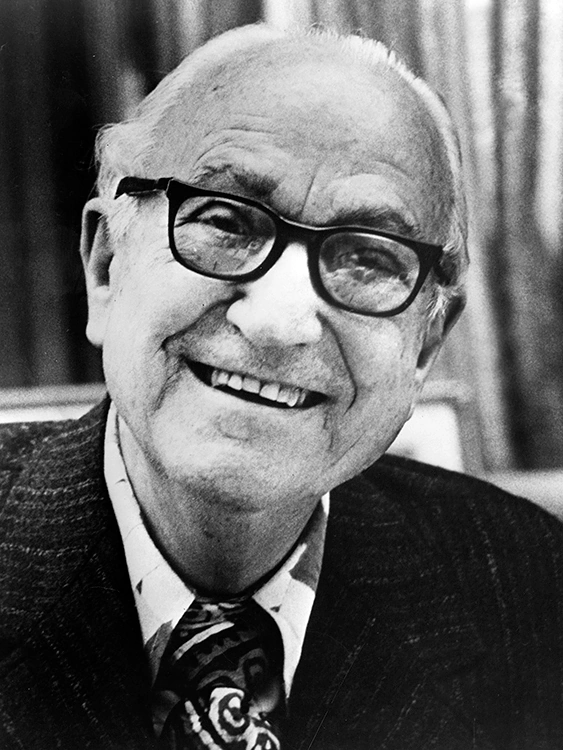
| 11 Quotes | |
| Born as | Karl Augustus Menninger |
| Occup. | Psychologist |
| From | USA |
| Born | July 22, 1893 Topeka, Kansas, United States |
| Died | July 18, 1990 Topeka, Kansas, United States |
| Aged | 96 years |
| Cite | |
Citation Formats
APA Style (7th ed.)
Karl a. menninger biography, facts and quotes. (2026, February 11). FixQuotes. https://fixquotes.com/authors/karl-a-menninger/
Chicago Style
"Karl A. Menninger biography, facts and quotes." FixQuotes. February 11, 2026. https://fixquotes.com/authors/karl-a-menninger/.
MLA Style (9th ed.)
"Karl A. Menninger biography, facts and quotes." FixQuotes, 11 Feb. 2026, https://fixquotes.com/authors/karl-a-menninger/. Accessed 12 Feb. 2026.
Early Life and Background
Karl Augustus Menninger was born on July 22, 1893, in Topeka, Kansas, into a Midwestern Protestant milieu that prized civic duty, self-control, and plain speech. His father, Charles Frederick Menninger, was a physician whose practice made the household intimate with illness and the social consequences of poverty, alcoholism, and family strain - a vantage point that later helped Karl treat "mental disorder" not as a distant mystery but as suffering embedded in ordinary lives.Topeka at the turn of the century was both provincial and modernizing: rail lines, small industries, and reform politics met church culture and tight-knit neighborhoods. That tension shaped Menninger's inner life: he learned early to translate private anguish into public responsibility, and to see character not as fixed virtue or vice but as something molded by family systems, community judgment, and the stresses of an era marked by World War I, the influenza pandemic, and rapid change in medicine.
Education and Formative Influences
Menninger studied at Washburn College before earning his M.D. at Harvard Medical School (1917), then trained in psychiatry at Boston Psychopathic Hospital under Adolf Meyer, whose psychobiological approach emphasized life history, adaptation, and careful observation over dogma. Wartime medicine and early hospital work exposed Menninger to trauma, delirium, and the thin line between "normal" coping and breakdown, reinforcing his belief that diagnosis must be joined to biography and that the clinician's attitude - curious, respectful, unsensational - could itself be therapeutic.Career, Major Works, and Turning Points
Returning to Kansas, Karl and his younger brother William C. Menninger joined their father's practice and, in 1925, founded what became The Menninger Clinic in Topeka; it grew from a regional enterprise into one of America's most influential psychiatric centers, combining psychoanalytic therapy, hospital care, training, and research. Menninger helped popularize a humane, psychologically minded psychiatry through books such as The Human Mind (1930), Man Against Himself (1938), and Love Against Hate (1942), while the Menninger Foundation later expanded education and policy influence; during and after World War II, the clinic played a major role in military psychiatry and in shaping postwar American mental health practice. Over time he became a national voice for treating offenders and the severely ill with dignity, and for building systems that prevented breakdown rather than merely punishing its aftermath.Philosophy, Style, and Themes
Menninger wrote as a clinician addressing citizens, not as a specialist defending turf. His style was moral without being moralistic: he described symptoms as communications and institutions as mirrors of collective fear, arguing that cruelty in families and schools metastasizes into public brutality. "What's done to children, they will do to society". The sentence distills his psychological realism: early injury does not stay private, and untreated humiliation tends to reproduce itself through aggression, addiction, and indifference. For Menninger, prevention meant parent education, community supports, and a justice system able to understand development.At the center of his work was the conviction that despair is not merely a philosophical problem but a clinical emergency - and that the antidote is relational. "Hope is a necessity for normal life and the major weapon against the suicide impulse". In Menninger's inner map of the mind, suicidal ideation often signaled a war between rage and conscience, between unbearable shame and the longing to be seen; therapy aimed to restore future-mindedness by making suffering speakable. This is why he prized attentive presence as an active force rather than a passive courtesy: "Listening is a magnetic and strange thing, a creative force. The friends who listen to us are the ones we move toward. When we are listened to, it creates
Our collection contains 11 quotes written by Karl, under the main topics: Ethics & Morality - Wisdom - Truth - Justice - Friendship.