
Karl Kraus Biography Quotes 46 Report mistakes
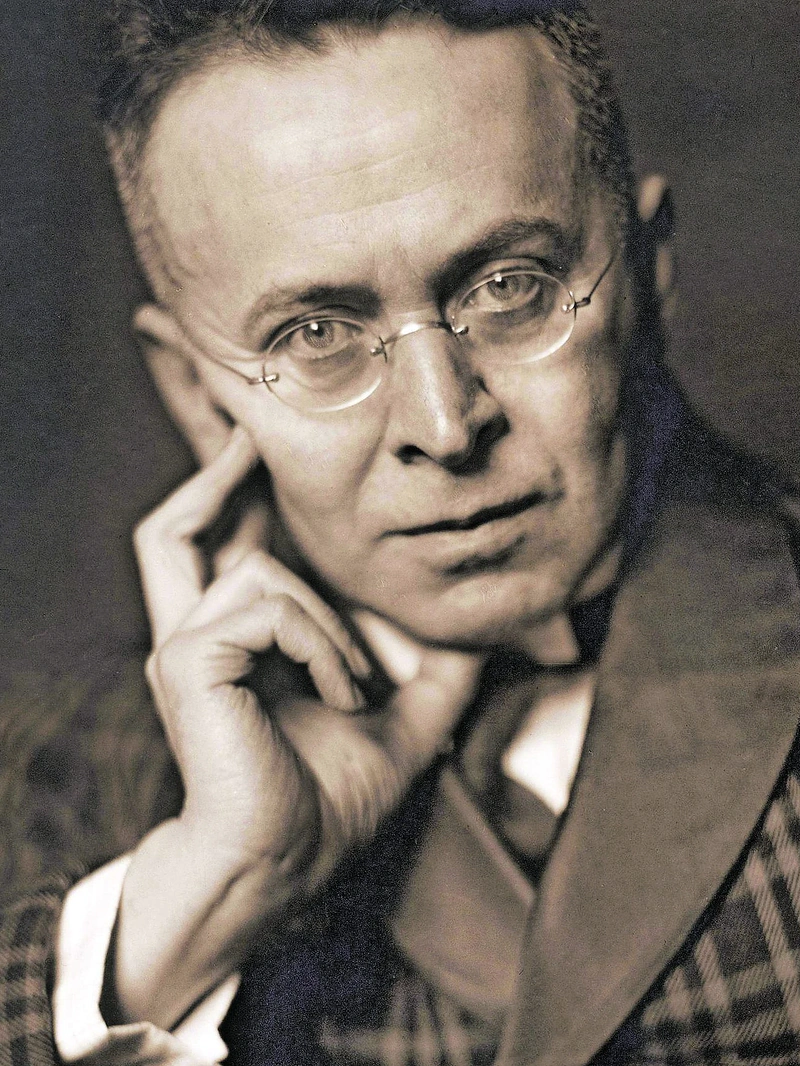
| 46 Quotes | |
| Occup. | Writer |
| From | Austria |
| Born | April 28, 1874 Jicin, Bohemia, Austria-Hungary |
| Died | June 12, 1936 Vienna, Austria |
| Aged | 62 years |
| Cite | |
Citation Formats
APA Style (7th ed.)
Karl kraus biography, facts and quotes. (2026, February 11). FixQuotes. https://fixquotes.com/authors/karl-kraus/
Chicago Style
"Karl Kraus biography, facts and quotes." FixQuotes. February 11, 2026. https://fixquotes.com/authors/karl-kraus/.
MLA Style (9th ed.)
"Karl Kraus biography, facts and quotes." FixQuotes, 11 Feb. 2026, https://fixquotes.com/authors/karl-kraus/. Accessed 26 Mar. 2026.
Early Life and Background
Karl Kraus was born on 28 April 1874 in Jicin (then in Austria-Hungary, today in the Czech Republic) to a German-speaking Jewish family whose prosperity was tied to modern industry and the expanding bourgeois world of the late Habsburg Empire. When the family moved to Vienna in the 1880s, he grew up inside a capital that was at once brilliant and brittle: a city of cafes, newspapers, operettas, anti-Semitic politics, and a restless avant-garde that sensed the empire aging from within.Kraus absorbed Vienna as a moral weather system. The daily press and the theater taught him how public language could anesthetize conscience, while the citys factional life - liberals, clericals, nationalists, Social Democrats - trained him to distrust every camp that asked for a pledge rather than precision. Though he converted to Catholicism later (1911) and eventually left the Church (1923), his deeper allegiance was to a stern, almost prophetic idea of responsibility: that a sentence could either defend reality or help destroy it.
Education and Formative Influences
He studied law and German studies at the University of Vienna but never completed a degree, choosing instead the more electric education of journalism, cabaret, and literary circles such as Jung-Wien. Early essays and reviews honed the stance that would define him: a writer who treated public prose as evidence and error as guilt, indebted to satirists (from Lichtenberg to Swift) and to the rigorous musicality of classical German, while watching modern Viennese chatter turn language into currency.Career, Major Works, and Turning Points
In 1899 Kraus founded and edited Die Fackel (The Torch), first with collaborators and soon largely alone, making it both weapon and archive: an ever-growing indictment of journalistic fraud, political hypocrisy, and cultural pretension, published until 1936. His most consequential turning point came with World War I, when he shifted from corrosive cultural critique to an all-encompassing moral prosecution of modernity at war; the result was The Last Days of Mankind (written 1915-1922), a vast documentary tragedy assembled from headlines, speeches, and overheard talk, meant less to be staged than to be faced. In the 1920s he became a commanding public performer, giving readings that fused courtroom cross-examination with liturgy, and he remained an implacable adversary of sensational journalism, corrupt politics, and, later, the early triumphs of fascist rhetoric - even as he agonized over the limits of satire in the face of catastrophe.Philosophy, Style, and Themes
Krauss central belief was that civilization is made, and unmade, by its verbs. He treated the newspaper not as a mirror but as a machine that manufactures consent, and he pursued its lies with philological exactness. His satire aimed not at private vice but at the public systems that normalize it - a distinction captured in his aphorism, “Corruption is worse than prostitution. The latter might endanger the morals of an individual, the former invariably endangers the morals of the entire country”. Behind the sting is a diagnostic mind: he feared the quiet shift whereby citizens begin to speak in ready-made formulas and therefore stop judging.His style fused aphorism, parody, quotation, and savage close reading, often letting opponents convict themselves by their own phrasing. He distrusted reforms that were only changes of costume, and he mocked a culture that congratulated itself on novelty while surrendering standards: “It is the style of idealism to console itself for the loss of something old with the ability to gape at something new”. That suspicion extended to the modern cult of expertise applied to the psyche; for Kraus, even the language of liberation could become another form of coercion, as in: “Psychoanalysis is that mental illness for which it regards itself as therapy”. The psychological core is consistent - a horror of self-deception institutionalized, whether in patriotic slogans, therapeutic jargon, or philanthropic advertising.
Legacy and Influence
Kraus died in Vienna on 12 June 1936, leaving behind not a school but a standard: a model of the writer as linguistic moralist, archival witness, and enemy of euphemism. Die Fackel and The Last Days of Mankind became indispensable to later critics of propaganda and media complicity, shaping Central European modernism and influencing figures such as Elias Canetti, Ludwig Wittgenstein (who read him closely), and later traditions of documentary theater and polemical essayism. His endurance lies in the uncomfortable intimacy of his method: he compels readers to hear how power sounds in ordinary sentences, and to measure culture not by its ideals but by the accuracy and decency of its words.Our collection contains 46 quotes written by Karl, under the main topics: Witty One-Liners - Ethics & Morality - Truth - Wisdom - Dark Humor.
Other people related to Karl: Elfriede Jelinek (Playwright)
Karl Kraus Famous Works
- 1922 Die letzten Tage der Menschheit (Play)
- 1899 Die Fackel (Collection)