
Karl Landsteiner Biography Quotes 2 Report mistakes
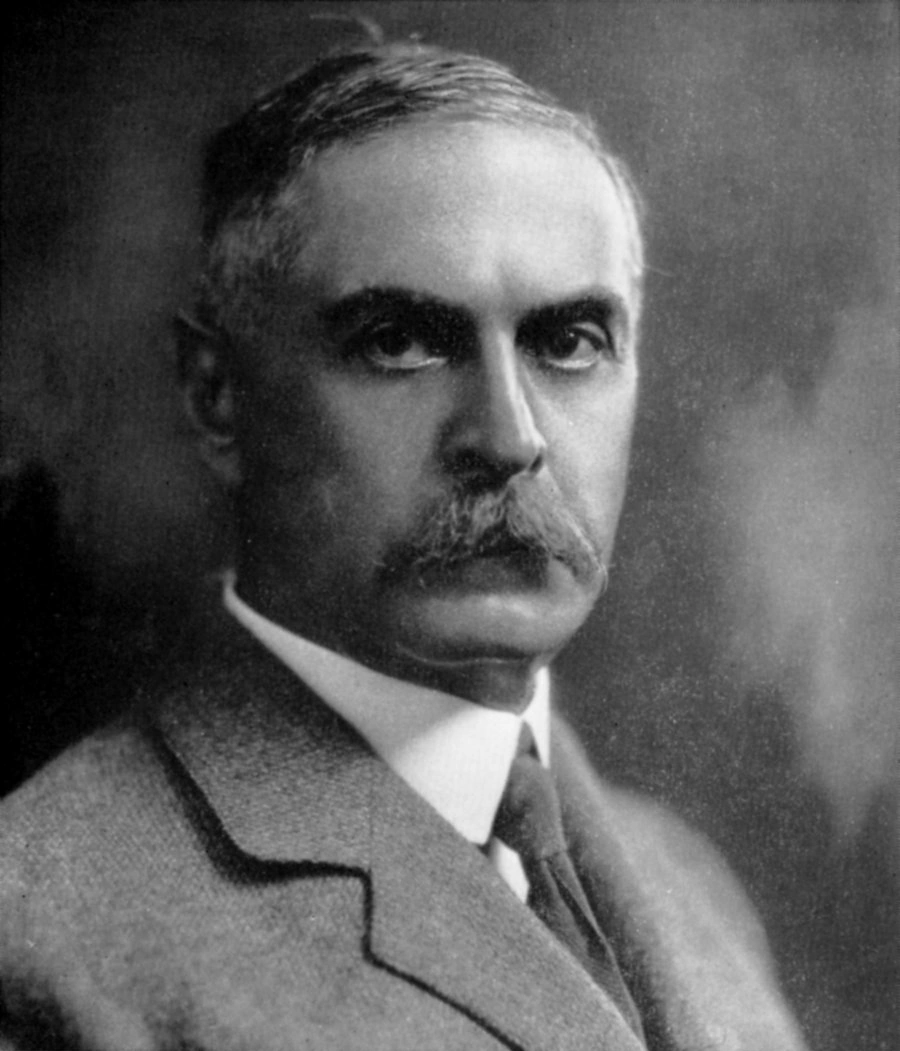
| 2 Quotes | |
| Occup. | Scientist |
| From | Austria |
| Born | June 14, 1868 Baden bei Wien, near Vienna (Austria) |
| Died | June 26, 1943 New York City, United States |
| Aged | 75 years |
| Cite | |
Citation Formats
APA Style (7th ed.)
Karl landsteiner biography, facts and quotes. (2026, February 11). FixQuotes. https://fixquotes.com/authors/karl-landsteiner/
Chicago Style
"Karl Landsteiner biography, facts and quotes." FixQuotes. February 11, 2026. https://fixquotes.com/authors/karl-landsteiner/.
MLA Style (9th ed.)
"Karl Landsteiner biography, facts and quotes." FixQuotes, 11 Feb. 2026, https://fixquotes.com/authors/karl-landsteiner/. Accessed 12 Feb. 2026.
Early Life and Background
Karl Landsteiner was born on 14 June 1868 in Vienna, then the capital of the Austro-Hungarian Empire, into a cultivated, assimilated Jewish family marked early by absence and self-reliance. His father, Leopold Landsteiner, a respected journalist and editor, died when Karl was still a boy, leaving him closely bound to his mother, Fanny (Hess) Landsteiner, whose fierce attentiveness helped produce in him a lifetime habit of privacy, exactness, and emotional restraint.Vienna in the 1870s and 1880s was a city of glittering modernity and sharpening fault lines - laboratory science rising alongside political nationalism and social antisemitism. Landsteiner grew up amid this mix of opportunity and constraint. Friends and colleagues later described him as reserved and unsentimental, but not cold: he was simply disciplined by a world in which belonging could be conditional and errors could be costly, especially for a young Jewish physician trying to make himself indispensable through rigor.
Education and Formative Influences
He studied medicine at the University of Vienna, earning his MD in 1891, then deliberately sought chemical training that most clinicians lacked, working in leading European laboratories (including time with Emil Fischer) before returning to Vienna with a chemist's suspicion of vague categories. In 1897 he joined Max von Gruber's hygiene institute, absorbing bacteriology and immunology just as the field was shifting from descriptive pathology to experimentally defined mechanisms; the habit of testing blood, sera, and cells as reacting substances - not merely clinical "fluids" - became his permanent method.Career, Major Works, and Turning Points
Landsteiner's decisive breakthrough came in 1900-1901 in Vienna, when systematic mixing of human sera and red cells revealed predictable patterns of agglutination, leading him to define the ABO blood groups and explain why many transfusions failed. That discovery transformed surgery, obstetrics, and wartime medicine by making compatibility testable rather than guessed. He later clarified immune specificity through studies of haptens and antibodies, expanded blood group science (work that helped open the path to the Rh factor discovery by his laboratory with Alexander Wiener in 1940), and moved through European posts (including the Wilhelminenspital) before emigrating after World War I to the Netherlands and then, in 1923, to The Rockefeller Institute for Medical Research in New York. There, in an era of ascendant American biomedicine, he extended his biochemical-immunological approach and, with Erwin Popper in 1908, had already provided key evidence that poliomyelitis was caused by a filterable virus. He received the Nobel Prize in Physiology or Medicine in 1930 for the blood group discovery and died in New York on 26 June 1943 after a heart attack, still working.Philosophy, Style, and Themes
Landsteiner's inner life reads through his science: cautious, skeptical, and committed to the idea that nature yields only to carefully staged comparisons. He distrusted grand theorizing without reagents and controls, preferring clean experiments that converted human variability into reproducible rules. Even when his findings carried immense practical consequences, his temperament remained that of a bench investigator who valued the next question over public triumph.His writing reveals a mind oriented toward limits as much as achievements, a psychological realism that kept him productive for decades. "Owing to the difficulty of dealing with substances of high molecular weight we are still a long way from having determined the chemical characteristics and the constitution of proteins, which are regarded as the principal con-stituents of living organisms". The sentence is more than a technical complaint - it is a credo of intellectual humility, and it explains his method: when the chemistry was obscure, he approached immunity indirectly, using reactions (agglutination, precipitation, inhibition by small molecules) as measurable shadows of unseen structure. His correspondence could be strikingly modest and relational, hinting at a scientist who needed trusted collaborators as sounding boards: "It is very kind of you to consider the possibility of my working in Pasadena, an idea which certainly is attractive, especially since it would hold out the prospect of your cooperation or advice". The phrasing shows a man wary of isolation, seeking environments where disciplined criticism could sharpen results - a theme consistent with his life-long preference for quiet institutions over public platforms.
Legacy and Influence
Landsteiner changed medicine by making transfusion a rational procedure, turning a dangerous art into a laboratory-guided therapy and enabling modern blood banking, organ transplantation protocols, and the broader culture of compatibility testing. His immunochemical approach - treating specificity as a chemical problem with biological consequences - helped shape 20th-century immunology, from antigen-antibody theory to the study of viral disease and molecular recognition. Equally enduring is the model of the scientist he embodied: meticulous, constraint-aware, and uninterested in spectacle, yet capable of discoveries so fundamental that they disappear into everyday medical practice as if they had always been there.Our collection contains 2 quotes written by Karl, under the main topics: Science - Work.
Karl Landsteiner Famous Works
- 1936 The Specificity of Serological Reactions (Book)
Source / external links