
Karl Wilhelm Friedrich Schlegel Biography Quotes 70 Report mistakes
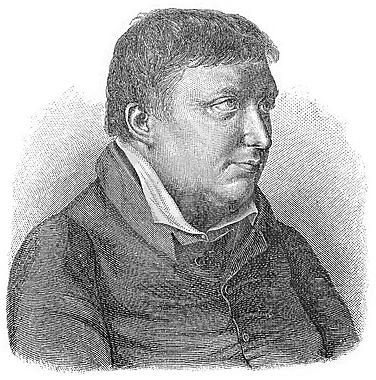
| 70 Quotes | |
| Occup. | Poet |
| From | Germany |
| Born | March 10, 1772 |
| Died | January 12, 1829 |
| Aged | 56 years |
| Cite | |
Citation Formats
APA Style (7th ed.)
Karl wilhelm friedrich schlegel biography, facts and quotes. (2026, February 11). FixQuotes. https://fixquotes.com/authors/karl-wilhelm-friedrich-schlegel/
Chicago Style
"Karl Wilhelm Friedrich Schlegel biography, facts and quotes." FixQuotes. February 11, 2026. https://fixquotes.com/authors/karl-wilhelm-friedrich-schlegel/.
MLA Style (9th ed.)
"Karl Wilhelm Friedrich Schlegel biography, facts and quotes." FixQuotes, 11 Feb. 2026, https://fixquotes.com/authors/karl-wilhelm-friedrich-schlegel/. Accessed 24 Mar. 2026.
Early Life and Background
Karl Wilhelm Friedrich Schlegel was born on March 10, 1772, in Hanover, in the Electorate of Brunswick-Luneburg, into a cultivated Protestant household that was already orbiting the German book world. His father, Johann Adolf Schlegel, was a Lutheran pastor and poet, a figure of the late Enlightenment whose steady career made literature seem like a vocation rather than a gamble. In this environment, Friedrich absorbed the rhythms of sermon, philology, and verse, and he grew up with siblings who would become collaborators and foils - most importantly August Wilhelm Schlegel, the future translator-critic with whom he would help launch early German Romanticism.The Germany of Schlegel's youth was not a nation but a crowded map of courts, universities, and confessions - a landscape where new ideas moved faster than armies until the French Revolution made both accelerate. Schlegel came of age as the classical ideals of Weimar were solidifying around Goethe and Schiller, while a younger generation felt the pressure of modernity: new reading publics, political upheaval, and the sense that inherited forms could no longer hold experience. His early restlessness was not only aesthetic; it was also a temperamental search for a total worldview, a desire to fuse art, criticism, history, and life into a single intellectual practice.
Education and Formative Influences
Schlegel studied law and philosophy (notably at Gottingen) but was quickly pulled into the gravitational field of ancient literature and the new critical methods of the day; he read the Greeks and Romans with a modern hunger for origins and system. The decisive formative influences were Kant and post-Kantian philosophy, the philological tradition that treated texts as living problems, and his encounters with contemporary writers who were redefining German letters. By the mid-1790s he was writing as a critic rather than training for a profession, and his friendships and rivalries - including the Weimar classicists he admired and challenged - sharpened his sense that criticism could be a creative act.Career, Major Works, and Turning Points
In the later 1790s Schlegel emerged as a central theorist of Romanticism through his criticism and the celebrated journal Athenaeum, founded in 1798 with August Wilhelm, a platform where fragments, reviews, and manifestos became a new genre of thought. He wrote the novel Lucinde (1799), scandalous and programmatic in its insistence that love, erotic life, and artistic freedom belonged to the same modern experiment; its autobiographical edge was inseparable from his relationship with Dorothea Veit (later Dorothea Schlegel), who left her marriage and became his partner and intellectual ally. His lectures and essays on Greek poetry and on the history of literature attempted a comprehensive map of European culture, while his aphoristic "fragments" made incompletion feel like method. A major turning point came with his religious and political realignment: in 1808 he converted to Catholicism, moved toward a more conservative vision of Christian Europe, and entered Austrian service in Vienna, where he worked in administration and journalism during the Napoleonic era and delivered influential lectures (notably on modern history and literature) that reframed Romanticism as a civilizational project rather than a bohemian revolt. He died in Dresden on January 12, 1829.Philosophy, Style, and Themes
Schlegel's inner life was driven by a tension between longing for wholeness and fascination with rupture. He wanted the totality of a system - philosophy, theology, philology, politics - yet he trusted the sharp, incomplete utterance as the truest modern form. That is why his fragment became more than a stylistic quirk: it mirrored a world whose unity had been broken by historical acceleration. His famous claim that “Many works of the ancients have become fragments. Many works of the moderns are fragments at the time of their origin”. is both diagnosis and self-portrait - an admission that modern consciousness begins amid shards, and an assertion that art can make a principle out of that condition rather than merely lament it.At his best, Schlegel wrote criticism as an exploratory psychology of culture, insisting that genres are not containers but modes of thinking. When he argues that “Novels are the Socratic dialogues of our time. Practical wisdom fled from school wisdom into this liberal form”. , he reveals his own method: treat the contemporary, even the disreputable, as a vehicle for philosophical seriousness, and let conversation, irony, and narrative replace scholastic proof. The same temperament appears in his historical imagination. “The historian is a prophet looking backward”. captures his conviction that to interpret the past is to disclose a pattern that can orient the present - a vocation that suited a man who increasingly sought religious and political anchors. Across his career, from the bold experiment of Lucinde to his later Vienna lectures, the recurring theme is the search for mediation: between antiquity and modernity, sensual life and moral form, freedom and authority, individuality and tradition.
Legacy and Influence
Schlegel's influence is less that of a single poetic masterpiece than of an engine that changed how Europe talked about literature. He helped invent Romantic theory: the fragment as form, criticism as creation, the novel as a philosophical medium, and "romantic poetry" as self-reflective and endlessly becoming. His work shaped German literary studies, comparative literature, and modern hermeneutics, and his provocative mix of philology and speculation influenced writers and thinkers from the Jena circle outward, even when they rejected his later conservatism. The arc of his life - radical experimenter, then Christian-European system builder - also made him a case study in how the French Revolution and Napoleonic wars reorganized intellectual loyalties. For a quotes-and-biography reader, Schlegel endures as a mind that tried to make modernity intelligible without reducing its contradictions, leaving behind not a closed doctrine but a vocabulary for thinking in fragments.Our collection contains 70 quotes written by Karl, under the main topics: Witty One-Liners - Ethics & Morality - Wisdom - Art - Nature.
Karl Wilhelm Friedrich Schlegel Famous Works
- 1800 Dialogue on Poetry and Literary Aphorisms (Collection of Essays and Aphorisms)
- 1799 Lucinde (Novel)
- 1798 Athenaeum (Collection of Essays)
- 1797 On the Study of Greek Poetry (Essay)
Source / external links