
Katherine Dunham Biography Quotes 24 Report mistakes
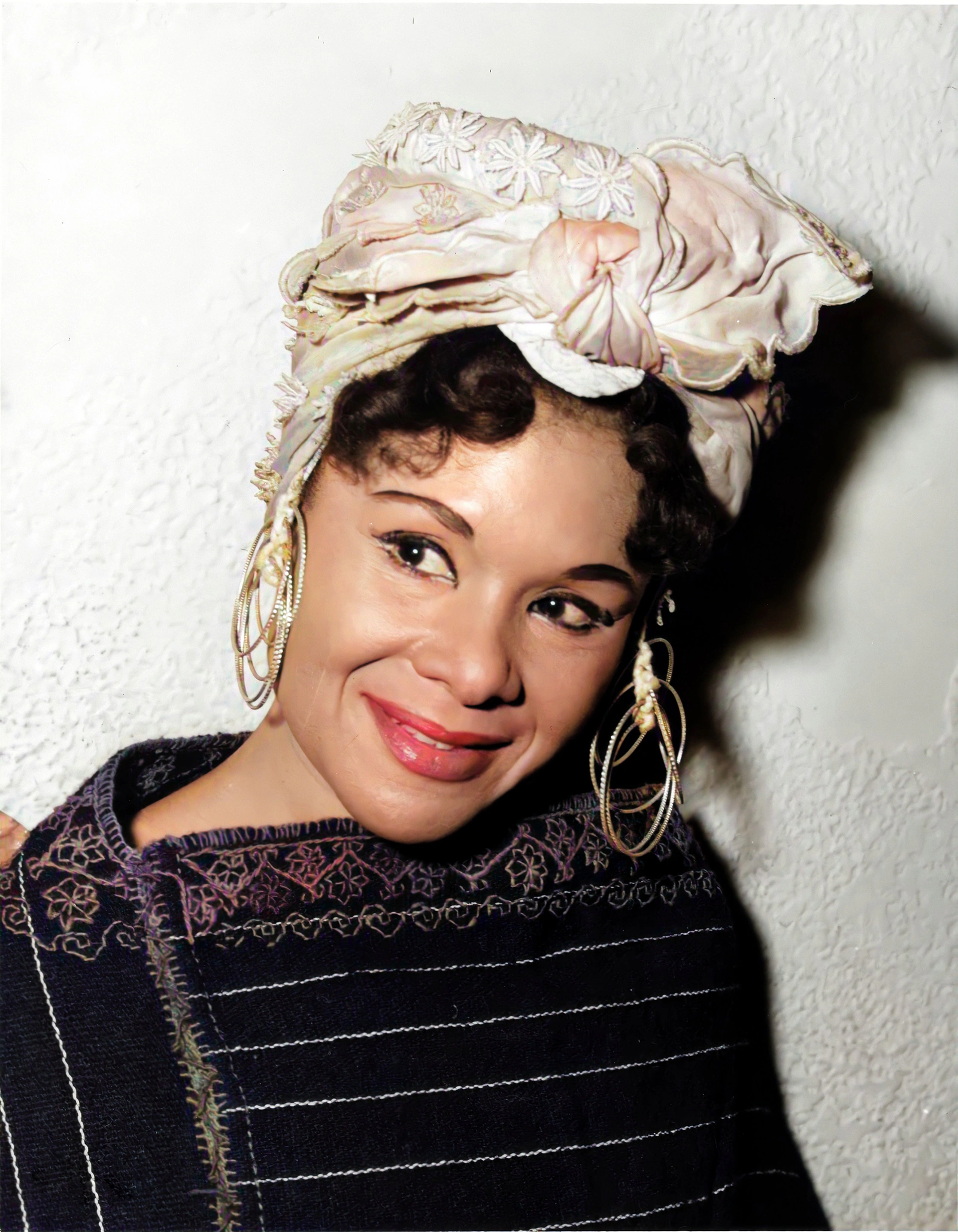
Attr: Phyllis Twachtman
| 24 Quotes | |
| Occup. | Dancer |
| From | USA |
| Born | June 22, 1909 |
| Died | May 21, 2006 |
| Aged | 96 years |
| Cite | |
Citation Formats
APA Style (7th ed.)
Katherine dunham biography, facts and quotes. (2026, February 11). FixQuotes. https://fixquotes.com/authors/katherine-dunham/
Chicago Style
"Katherine Dunham biography, facts and quotes." FixQuotes. February 11, 2026. https://fixquotes.com/authors/katherine-dunham/.
MLA Style (9th ed.)
"Katherine Dunham biography, facts and quotes." FixQuotes, 11 Feb. 2026, https://fixquotes.com/authors/katherine-dunham/. Accessed 11 Feb. 2026.
Early Life and Background
Katherine Mary Dunham was born on June 22, 1909, in the Chicago suburb of Glen Ellyn, Illinois, into a United States still tightening the color line even as Black cultural modernism gathered force. Her father, Albert Millard Dunham, worked as a tailor and businessman; her mother, Fanny June Dunham, died when Katherine was still a child, a loss that left a lifelong sensitivity to grief and ritual as lived realities rather than abstractions.Raised largely in Joliet, Illinois, Dunham grew up at the intersection of Midwestern respectability and the porous, dance-filled social worlds of Black community life. The early 20th century offered Black women few sanctioned stages; the ones available were often minstrelized or segregated. Dunham internalized that constraint as both challenge and fuel, learning to move between worlds with the alertness of someone who understood that art could be survival, argument, and passport at once.
Education and Formative Influences
In the late 1920s and early 1930s she studied at the University of Chicago, turning toward anthropology as much as toward performance, and trained in dance in Chicago while absorbing the era's debates about race, authenticity, and modernity. Fellowships and fieldwork opportunities drew her into the Black Atlantic: research in the Caribbean (notably Haiti, Jamaica, Trinidad, and Martinique) helped her fuse ethnography with choreography, treating dance as a rigorous cultural language shaped by history, labor, and belief.Career, Major Works, and Turning Points
Dunham broke nationally as a performer-choreographer in the 1930s and 1940s, forming what became the Katherine Dunham Company and bringing Afro-Caribbean and African diasporic movement vocabularies into concert dance, Broadway, and film at a time when such material was routinely exoticized or erased. Works and vehicles such as "Tropics and Le Jazz Hot" (1940), "Cabin in the Sky" (1943), and "Stormy Weather" (1943) expanded her audience while testing her control over representation; she insisted on technique, context, and dignity even within commercial constraints. A key turning point was her establishment of schools and training programs that codified what audiences saw as "new" into a disciplined pedagogy, later known as the Dunham Technique, and her long commitment to teaching and institution-building in the United States and abroad.Philosophy, Style, and Themes
Dunham thought like an anthropologist and staged like a dramatist: her dances were not simply steps but arguments about origin, adaptation, and the right to complexity. She rejected narrow labels, describing an identity of method rather than map: "My work has been much more Caribbean and eclectic. I am interested in people, and where they come from happens to have fallen within an area of Africa". That statement reveals a psychology oriented toward lineage without essentialism - she pursued roots to enlarge possibility, not to police it.Her style married grounded pelvic articulation, polyrhythmic isolations, and a modernist sense of structure, often framed by pageantry that could seduce audiences into learning. Yet underneath the spectacle was a moral demand: to remain creatively alive and multiple, especially for artists asked to perform a single identity. "Start something else that makes use of your creative ability because if you don't you will die inside as a person". And her self-understanding sharpened over time into a fierce, earned certainty - less about applause than completion: "I used to want the words "She tried" on my tombstone. Now I want "She did it."" . Taken together, these lines show her insistence on inner continuity - the artist as a whole person whose curiosity, labor, and will must outlast the spotlight.
Legacy and Influence
Dunham died on May 21, 2006, after a life that helped reroute American dance history: she professionalized Afro-diasporic movement on major stages, trained generations of performers with a technique that treated cultural knowledge as technical knowledge, and modeled an artist-scholar path that later choreographers and academics would claim as normal rather than exceptional. Her enduring influence lies in the standard she set - that virtuosity includes research, that popular platforms can carry serious cultural meaning, and that a Black woman choreographer could build institutions, vocabularies, and futures on her own terms.Our collection contains 24 quotes written by Katherine, under the main topics: Motivational - Art - Equality - Movie - Romantic.
Other people related to Katherine: Eartha Kitt (Actress)
Source / external links