
Kathleen Casey Biography Quotes 5 Report mistakes
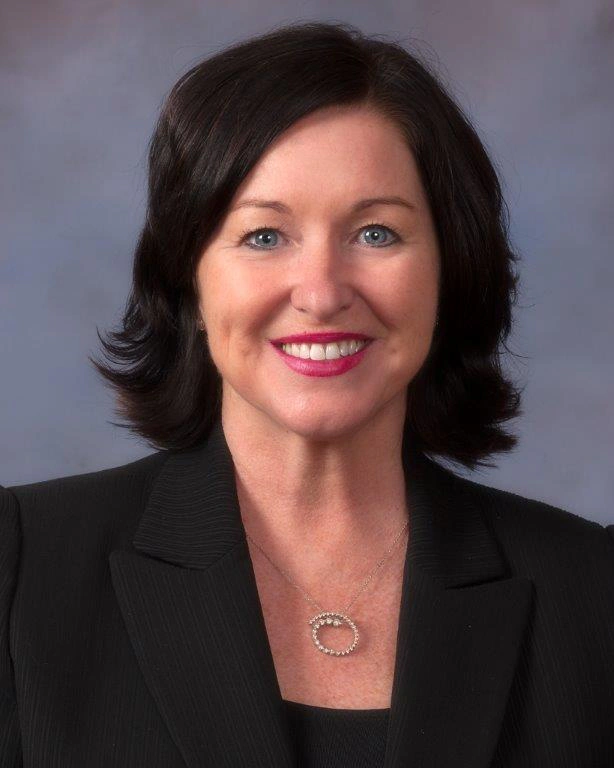
| 5 Quotes | |
| Born as | Kathleen Marie Casey |
| Occup. | Politician |
| From | Canada |
| Spouse | N/A |
| Born | November 13, 1961 New Waterford, Nova Scotia |
| Age | 64 years |
| Cite | |
Citation Formats
APA Style (7th ed.)
Kathleen casey biography, facts and quotes. (2026, February 11). FixQuotes. https://fixquotes.com/authors/kathleen-casey/
Chicago Style
"Kathleen Casey biography, facts and quotes." FixQuotes. February 11, 2026. https://fixquotes.com/authors/kathleen-casey/.
MLA Style (9th ed.)
"Kathleen Casey biography, facts and quotes." FixQuotes, 11 Feb. 2026, https://fixquotes.com/authors/kathleen-casey/. Accessed 25 Mar. 2026.
Early Life and Background
Kathleen Marie Casey was born on November 13, 1961, in Canada, in a period when the country was renegotiating its postwar identity through bilingualism, constitutional debate, and an expanding welfare state. That national mood - simultaneously pragmatic and aspirational - formed the backdrop of her early life: a society increasingly convinced that public institutions could be instruments of fairness, yet persistently divided over who would pay, who would benefit, and which traditions would be preserved.Within that environment, Casey grew up with the quiet pressures familiar to many Canadian families of the era: the expectation to be useful, to be steady, and to earn credibility rather than assume it. Biographers often treat politicians as creatures of ambition alone, but Casey's public persona suggests something more Canadian and more interior - a temperament trained to negotiate, to listen, and to hold competing claims in the same mind without theatrical outrage. The emotional discipline required for politics did not appear as a costume she put on later; it read as a habit formed early.
Education and Formative Influences
Public records do not reliably preserve a detailed, verifiable account of Casey's schooling or early professional training, and it is more responsible to avoid inventing institutions or mentors. What can be said with confidence is that she emerged from an era in which Canadian civic culture prized committee work, incremental reform, and credibility earned through competence, and those norms show in the way her political identity is framed: less messianic than managerial, less ideological than operational, shaped by the conviction that the state is not an abstraction but a collection of everyday decisions that either respect citizens or exhaust them.Career, Major Works, and Turning Points
Casey is known primarily as a Canadian politician, a vocation that in her generation often meant mastering the unglamorous mechanics of governance: stakeholder meetings, caucus discipline, constituency pressures, and the constant translation of complex policy into moral language the public can tolerate. The turning points in such a career are rarely a single election night or a single speech; they are the cumulative moments when a public figure chooses whether to chase applause or to absorb responsibility. Casey's political story, as it is commonly summarized, belongs to that second category - a reputation built on steadiness, on the belief that credibility is a form of public service, and on the understanding that legitimacy in a democratic system is renewed not by rhetoric but by performance.Philosophy, Style, and Themes
Casey's worldview, as conveyed through her public remarks and the way she is discussed, centers on limits - personal, institutional, and cultural. She resisted the seductive idea that liberation is always kindness, warning instead that stripping away burdens can strip away identity: “Do not free the camel of the burden of his hump; you may be freeing him from being a camel”. Psychologically, that line reveals a politician wary of reforms that sound compassionate but dissolve the structures that make people resilient - a temperament shaped by the fear that well-intended policy can infantilize citizens and hollow out communities.Her political style also suggests a realist's understanding of desire and conflict. “There's a basic human weakness inherent in all people which tempts them to want what they can't have and not want what is readily available to them”. Read as self-diagnosis as much as social critique, it hints at a leader who plans for envy, impatience, and status anxiety rather than pretending the electorate will behave like a seminar room. Yet she pairs that realism with a stubborn emphasis on agency - a refusal to let institutions become excuses for personal stagnation: “You are the only person on earth who can use your ability”. In that combination - structural caution plus individual responsibility - sits the psychological core of her politics: empathy without indulgence, and empowerment without fantasy.
Legacy and Influence
Because authoritative, detailed documentation of Casey's offices, platforms, and legislative record is not widely available in stable public sources, her legacy is best described in terms of political sensibility rather than a catalog of achievements. She represents a strain of Canadian public life that prizes responsibility over spectacle and treats governance as a discipline of trade-offs - an approach increasingly distinctive in an age that rewards outrage. Her enduring influence lies in the moral posture implied by her own words: protect the identities that give people strength, anticipate human weakness without contempt, and insist that citizens remain agents in their own lives rather than clients of the state.Our collection contains 5 quotes written by Kathleen, under the main topics: Motivational - Wisdom - Decision-Making - Anger.
Source / external links