
Kathryn Bigelow Biography Quotes 22 Report mistakes
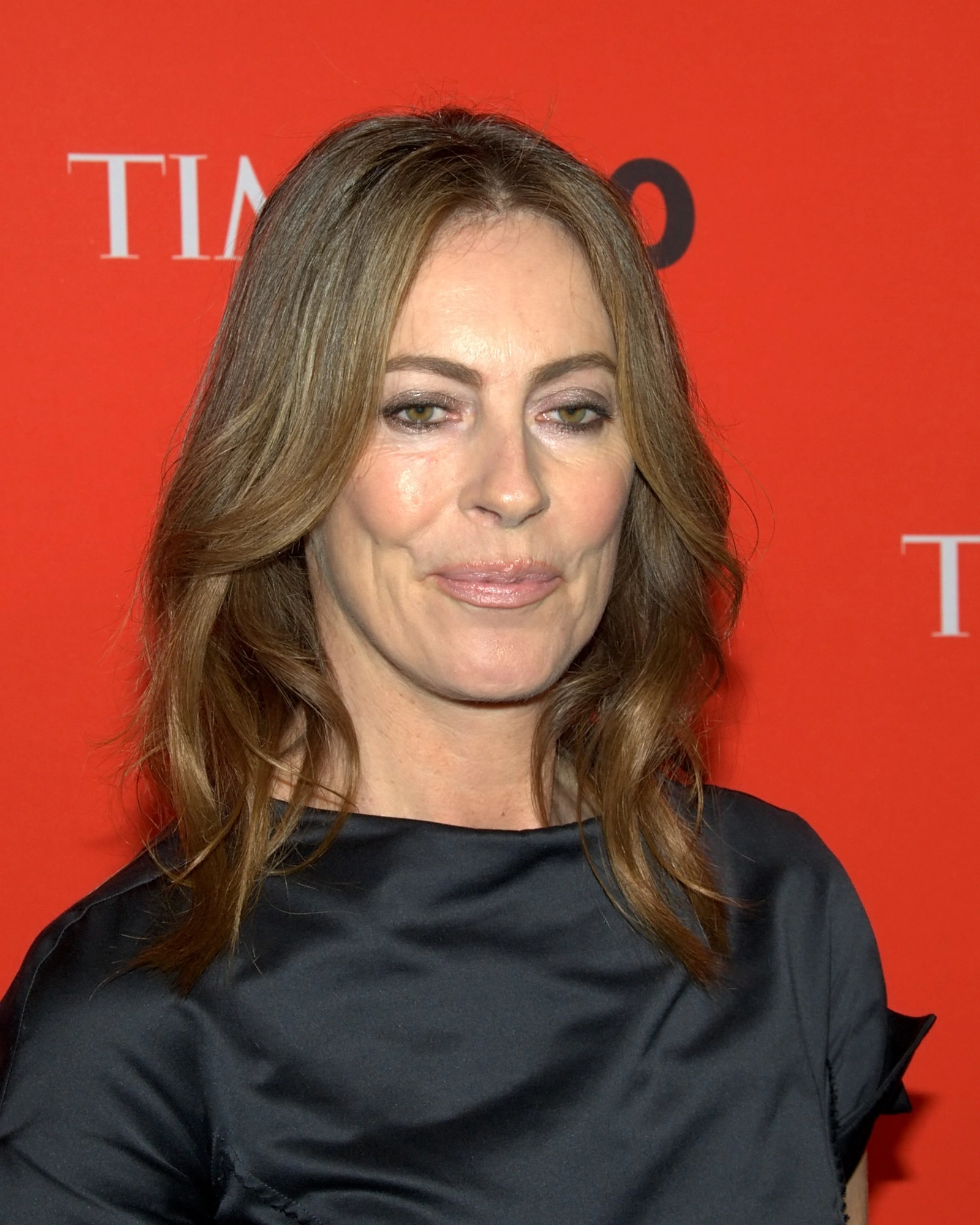
Attr: David Shankbone, CC BY 2.0
| 22 Quotes | |
| Born as | Kathryn Ann Bigelow |
| Occup. | Director |
| From | USA |
| Born | November 27, 1952 San Carlos, California, USA |
| Age | 73 years |
| Cite | |
Citation Formats
APA Style (7th ed.)
Kathryn bigelow biography, facts and quotes. (2026, February 11). FixQuotes. https://fixquotes.com/authors/kathryn-bigelow/
Chicago Style
"Kathryn Bigelow biography, facts and quotes." FixQuotes. February 11, 2026. https://fixquotes.com/authors/kathryn-bigelow/.
MLA Style (9th ed.)
"Kathryn Bigelow biography, facts and quotes." FixQuotes, 11 Feb. 2026, https://fixquotes.com/authors/kathryn-bigelow/. Accessed 12 Feb. 2026.
Early Life and Background
Kathryn Ann Bigelow was born on November 27, 1952, in San Carlos, California, and came of age in a state where aerospace money, suburban expansion, and the aftershocks of 1960s protest culture collided. Northern California in the late 1960s and early 1970s offered a live laboratory of politics and image-making: televised war, civil rights organizing, and the rise of a youth counterculture that understood spectacle as power. Bigelow absorbed that atmosphere less as a partisan catechism than as a training in how public narratives are manufactured and enforced.
Even early on, her temperament leaned toward systems rather than confessions. Friends and later collaborators often described her as disciplined, analytical, and unusually unromantic about the myth of the auteur - interested in process, technique, and the ethics of representation. That mix would become crucial in a career built on volatile material: violence, authority, adrenaline, and the way institutions recruit belief.
Education and Formative Influences
Bigelow studied painting at the San Francisco Art Institute and later at Columbia University, where she was exposed to rigorous critical theory and an art world preoccupied with gender, power, and the politics of images; she also spent time in New York's downtown scene and in circles shaped by conceptual and performance art. The period trained her eye toward framing, duration, and the body as a site of social meaning - tools she would carry into narrative cinema, where the stakes of spectatorship are mass and immediate.
Career, Major Works, and Turning Points
She entered film through short work and collaboration in the late 1970s, then broke through with The Loveless (shot 1981, released 1982, co-directed with Monty Montgomery), a stylized biker reverie that already treated masculinity as costume and ritual. Mainstream attention arrived with Near Dark (1987), a feral, dust-and-neon vampire film that merged genre with a hard American fatalism; then Blue Steel (1990) and Point Break (1991) tested her ability to fuse action with psychological pressure. In the late 1990s she navigated large-scale studio production with Strange Days (1995) and later K-19: The Widowmaker (2002). A decisive reinvention came with The Hurt Locker (2008), whose procedural intimacy with bomb disposal made war feel like a practice, not a slogan; it won the Academy Award for Best Director, making her the first woman to receive it. She followed with Zero Dark Thirty (2012), a controversial, granular account of the hunt for Osama bin Laden, then Detroit (2017), returning to domestic crisis and state violence with a bracing refusal of comfort.
Philosophy, Style, and Themes
Bigelow has consistently treated craft as ethics. Her shift from visual art to cinema was not a drift but an argument about audience and consequence: "My movement from painting to film was a very conscious one". The line is revealing because it frames her ambition as strategic rather than confessional - she chooses the medium that can best interrogate how societies watch, judge, and authorize force. That sensibility also explains why her films so often inhabit institutions (police, military, intelligence) without becoming their publicity: she stages proximity as a test of the viewer, not a pledge of allegiance.
Her visual style favors kinetic clarity - handheld urgency, tight spatial geography, and bodies in motion under stress - yet the deeper signature is her suspicion of moral outsourcing. She has insisted that spectators remain ethically awake: "One should make morals judgements for oneself". That principle animates the hard ambivalence of The Hurt Locker, where bravery shades into compulsion, and Zero Dark Thirty, where procedural success carries the contamination of method. Just as crucial is her stance toward gatekeeping in a male-dominated industry: "If there's specific resistance to women making movies, I just choose to ignore that as an obstacle for two reasons: I can't change my gender, and I refuse to stop making movies". The psychology behind it is less defiance-as-brand than a refusal to let biography become a permission slip - she pushes forward by narrowing attention to the work.
Legacy and Influence
Bigelow's enduring influence lies in how she expanded what prestige filmmaking could look like: muscular genre technique married to investigative seriousness, with women authorship neither softened nor made symbolic. She reshaped the critical vocabulary around action cinema, proving it could be formally innovative and morally unsettling, and she altered the industry's historical record by breaking the Best Director barrier without turning her career into a single-issue narrative. For filmmakers after her, especially those navigating genre and institutional power, her example is bracing: empathy does not require exoneration, realism does not forbid style, and the camera can be both inside the machinery of force and skeptical of the stories it tells.
Our collection contains 22 quotes written by Kathryn, under the main topics: Ethics & Morality - Art - Justice - Freedom - Deep.
Other people related to Kathryn: Gary Busey (Actor), Ralph Fiennes (Actor), Jamie Lee Curtis (Actress), Angela Bassett (Actress), James Cameron (Director), David Morse (Actor), Bill Paxton (Actor), Lance Henriksen (Actor), Jeremy Renner (Actor), Guy Pearce (Actor)
Source / external links