
Kay Rala Xanana Gusmao Biography Quotes 4 Report mistakes
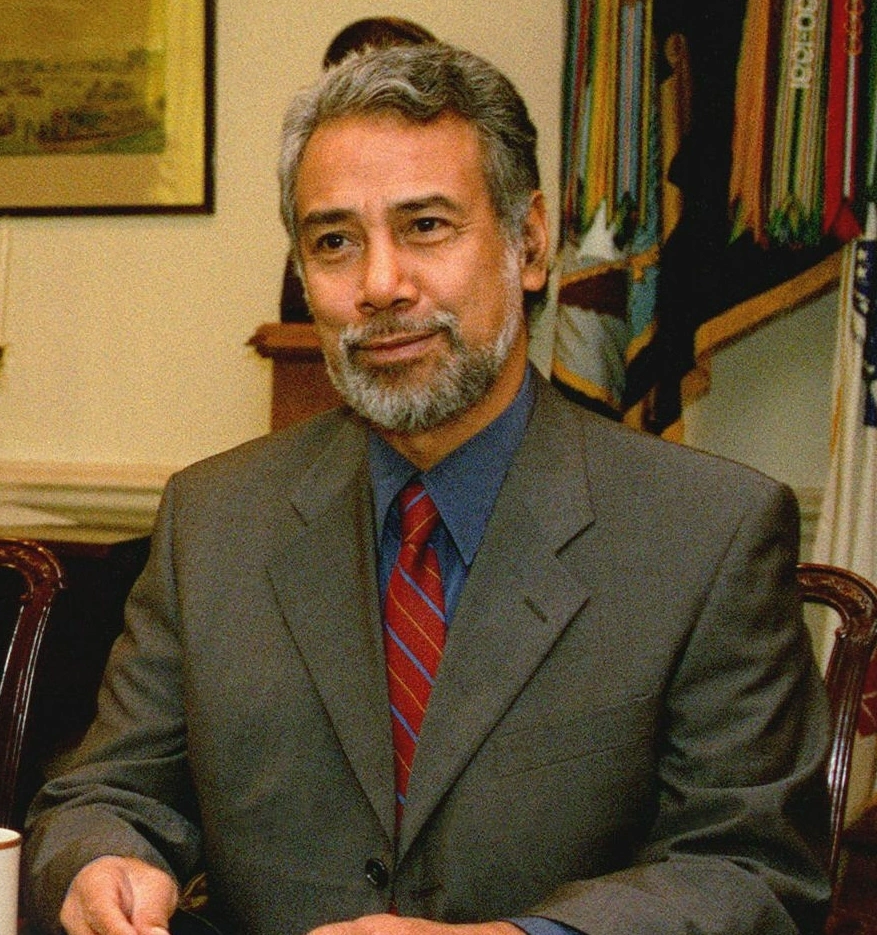
| 4 Quotes | |
| Born as | José Alexandre Gusmão |
| Known as | Xanana Gusmão |
| Occup. | Politician |
| From | Portugal |
| Born | June 20, 1946 Manatuto, Portuguese Timor |
| Age | 79 years |
| Cite | |
Citation Formats
APA Style (7th ed.)
Kay rala xanana gusmao biography, facts and quotes. (2026, February 11). FixQuotes. https://fixquotes.com/authors/kay-rala-xanana-gusmao/
Chicago Style
"Kay Rala Xanana Gusmao biography, facts and quotes." FixQuotes. February 11, 2026. https://fixquotes.com/authors/kay-rala-xanana-gusmao/.
MLA Style (9th ed.)
"Kay Rala Xanana Gusmao biography, facts and quotes." FixQuotes, 11 Feb. 2026, https://fixquotes.com/authors/kay-rala-xanana-gusmao/. Accessed 5 Mar. 2026.
Early Life and Background
Jose Alexandre "Xanana" Gusmao was born on June 20, 1946, in Manatuto, Portuguese Timor, into a large rural family shaped by the hard arithmetic of subsistence farming and the hierarchies of a late colonial outpost. Though often described abroad simply as a "Portuguese" figure because Timor was then a Portuguese territory, his identity formed in the layered reality of Timorese life - Tetum-speaking villages, Catholic ritual, and a distant Lisbon administration whose promises of modernization rarely reached the interior.The era that produced him was one of abrupt historical acceleration. In 1974, Portugal's Carnation Revolution dismantled the dictatorship and triggered decolonization across the empire, pulling Timor into an unexpected contest of ideologies and parties. When Indonesia invaded in December 1975, the world into which Gusmao had stepped as a young man - tentative political pluralism and hope for self-rule - collapsed into occupation, famine, and mass displacement. The war that followed did not simply make him a leader; it forced him to become a translator between worlds: guerrillas and diplomats, village elders and international law, grief-stricken families and the cold language of strategy.
Education and Formative Influences
Gusmao was educated in Catholic schools and trained for a time in seminary settings, where discipline, rhetoric, and moral vocabulary left lasting marks even after he chose a secular path. He worked in Dili in clerical and administrative roles and wrote poetry, cultivating an introspective streak that would later coexist with ruthless pragmatism. The formative influence was less a single book than a lived syllabus: Portuguese political change, Timorese factionalism, and the brutal clarity of Indonesian counterinsurgency, which taught him that survival depended on unifying rival networks and communicating purpose under terror.Career, Major Works, and Turning Points
Joining the independence movement in the mid-1970s, Gusmao rose within FRETILIN and then, crucially, reshaped the resistance by separating the armed front (FALINTIL) from party control and recasting it as a national force, a move that widened legitimacy and reduced ideological fracture. As commander-in-chief of FALINTIL from the 1980s, he pursued unity and international visibility while enduring the attrition of occupation; his capture by Indonesian forces in 1992 became a turning point, turning prison into a platform as he wrote, negotiated, and symbolized endurance while allies abroad - including Jose Ramos-Horta and church figures such as Bishop Carlos Ximenes Belo - amplified the cause. After the 1999 UN-sponsored referendum for independence and the ensuing violence, Gusmao returned to help steer the transition, becoming the first President of the Democratic Republic of Timor-Leste (2002-2007) and later Prime Minister (2007-2015), with a further premiership beginning in 2023, often acting as the system's crisis negotiator and political center of gravity.Philosophy, Style, and Themes
Gusmao's inner life is marked by a tension between romantic nationalism and managerial realism. His earlier reputation for poetic introspection never disappeared; it hardened into a leader's habit of asking what sacrifice is for, and how to convert collective pain into institutions. “After so much suffering, after enduring so much sacrifice, sanctioned and embraced by our people, what is it that the people of East Timor expect as a result of independence?” The question is both moral and psychological: he feared that independence could become merely a flag if it did not deliver dignity in daily life, and he repeatedly framed leadership as an obligation to repay the dead with competence.In office, he emphasized social cohesion and the painstaking craft of nation-building over ideological purity, speaking in a register that joined village ethics to state policy. “Freedom goes hand-in-hand with mutual respect”. This line captures his preference for reconciliation, including the fraught choice to prioritize stability with Indonesia and to keep former enemies within a common civic frame, even when many wanted harsher retribution. His pragmatism also shows in a belief that aid and international solidarity must be metabolized into local capacity rather than dependency: “It is not enough to receive support, no matter, how needed it may be. It is fundamental to know how to receive this support and ensure that its result is exponential”. It is a credo shaped by years when survival depended on scarce resources and on converting sympathy abroad into concrete leverage at home.
Legacy and Influence
Gusmao endures as the defining political biographer of modern Timor-Leste - a man whose personal narrative tracks the country's passage from colony to occupation, from resistance to statehood. His legacy is inseparable from the institutions he helped consolidate: a professionalized resistance turned national army, a political culture that has repeatedly returned to dialogue after violence, and a governing style that prizes unity even at the cost of controversy. To supporters, he remains the indispensable architect of independence and a stabilizing statesman; to critics, an outsized figure whose dominance can compress pluralism. Either way, his influence persists in the nation's central argument: how to turn remembered sacrifice into a future of jobs, trust, and accountable power.Our collection contains 4 quotes written by Kay, under the main topics: Leadership - Freedom - Equality.
Source / external links