
Kazimir Malevich Biography Quotes 2 Report mistakes
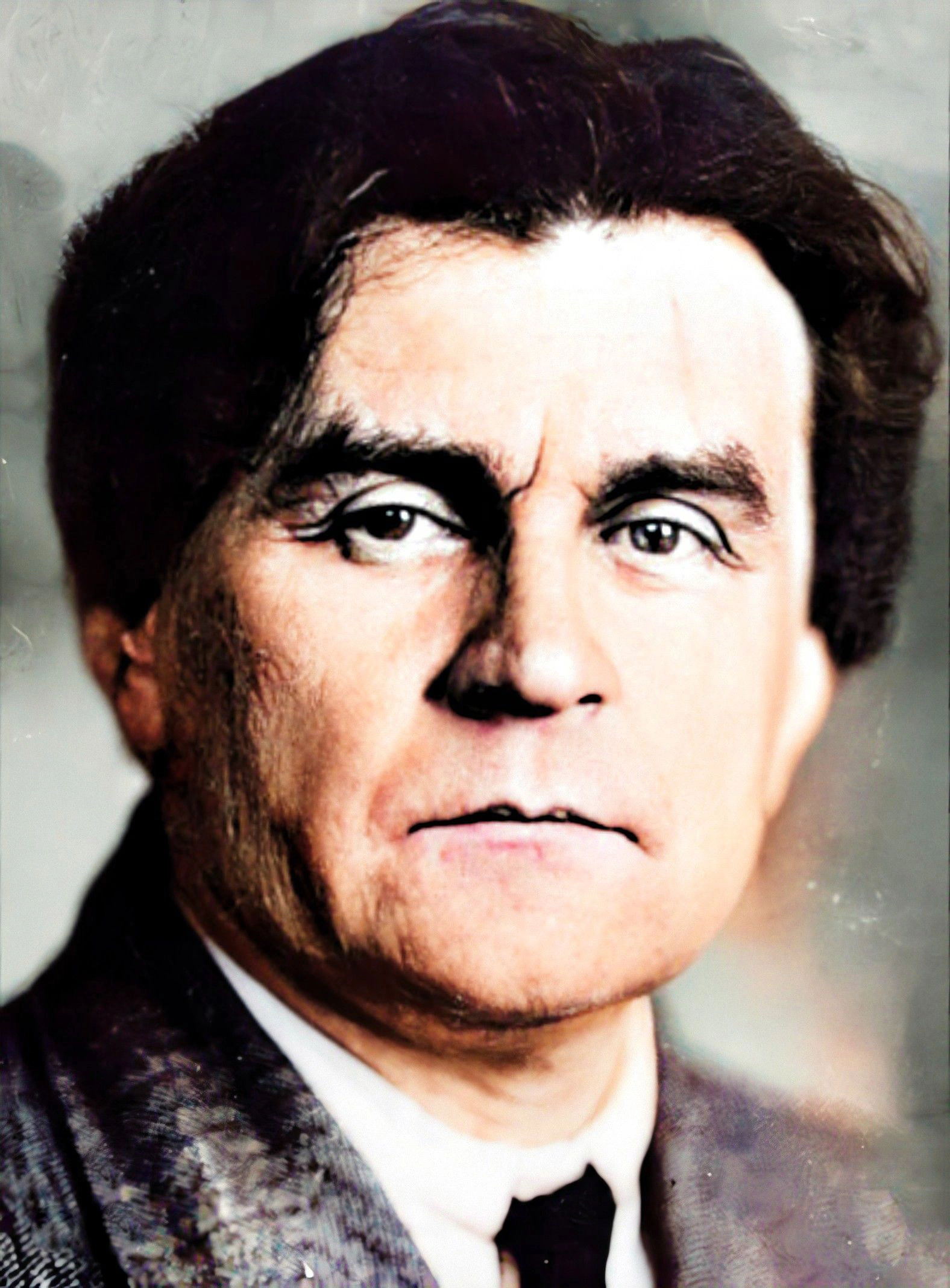
| 2 Quotes | |
| Born as | Kazimir Severinovich Malevich |
| Occup. | Artist |
| From | Poland |
| Born | February 23, 1878 Kiev Governorate, Russian Empire (now Ukraine) |
| Died | May 15, 1935 Leningrad, Soviet Union (now Saint Petersburg, Russia) |
| Cause | Heart Attack |
| Aged | 57 years |
| Cite | |
Citation Formats
APA Style (7th ed.)
Kazimir malevich biography, facts and quotes. (2026, February 11). FixQuotes. https://fixquotes.com/authors/kazimir-malevich/
Chicago Style
"Kazimir Malevich biography, facts and quotes." FixQuotes. February 11, 2026. https://fixquotes.com/authors/kazimir-malevich/.
MLA Style (9th ed.)
"Kazimir Malevich biography, facts and quotes." FixQuotes, 11 Feb. 2026, https://fixquotes.com/authors/kazimir-malevich/. Accessed 26 Mar. 2026.
Early Life and Background
Kazimir Severinovich Malevich was born on February 23, 1878, into a Polish Catholic family in the borderland world of the late Russian Empire, a landscape of shifting languages and loyalties. Though often claimed by multiple nations, his earliest sensibility was formed less by capitals than by provinces: the agrarian towns and sugar-beet districts where his father worked as a manager in the sugar industry. That itinerant childhood, moving through Ukrainian and central Russian locales, trained his eye on peasant ornament, icons, signboards, and the blunt geometry of fields and village architecture.The empire he grew up in was modernizing unevenly, and the arts reflected that tension - the pull of folk tradition against the push of industry and metropolitan culture. Malevich later returned obsessively to the peasant figure and rural labor not as reportage but as a symbolic reservoir. Even before revolution redrew borders and destinies, his personal geography taught him that identity could be constructed - and reconstructed - through form.
Education and Formative Influences
Malevich reached Moscow in the first years of the 20th century and trained in the citys art world, studying at the Moscow School of Painting, Sculpture and Architecture and in the orbit of teachers such as Fedor Rerberg, while absorbing the era-defining shocks of Post-Impressionism, Symbolism, and the Russian reception of Cezanne and Cubism. Moscow offered both tradition and experiment: the legacy of icons and realist painting alongside exhibitions and salons that brought new European art into view. From the beginning he treated style as a laboratory rather than a signature, moving quickly through Impressionist handling, Neo-Primitivist flattening, and Cubo-Futurist fracture as he searched for a language adequate to the speed and violence of modern life.Career, Major Works, and Turning Points
By the 1910s Malevich became a central figure of the Russian avant-garde, exhibiting with radical groups and arguing that painting had to cut loose from illustration and literary anecdote. The decisive turn arrived in 1915 with Suprematism and the debut of "Black Square", hung high in the corner like an icon at the "0, 10" exhibition in Petrograd - a deliberate claim that a new, non-objective order could replace the old. Works such as "Black Cross" and "White on White" followed, pursuing an increasingly austere grammar of floating planes and weightless space. After the 1917 Revolution he taught and theorized, working in Vitebsk with the circle around Marc Chagall before clashing over direction, then shaping the UNOVIS collective that spread Suprematist ideas. The 1920s brought institutional roles and international visibility, including a 1927 trip to Warsaw and Berlin, but the tightening cultural regime of the early 1930s forced a retreat from pure abstraction; he returned to figurative paintings of peasants and portraits, often built from Suprematist structure yet constrained by official suspicion. He died on May 15, 1935, in Leningrad, after years of surveillance and curtailed freedom, and was buried with a square as an emblem of his creed.Philosophy, Style, and Themes
Malevichs inner life reads as a prolonged argument with representation - a moral as much as aesthetic struggle. He believed the painter had been corrupted by service roles and borrowed expertise, turning art into a descriptive trade rather than a creative act: “Painters were also attorneys, happy storytellers of anecdote, psychologists, botanists, zoologists, archaeologists, engineers, but there were no creative painters”. The sting in that sentence is psychological self-diagnosis: he feared his own intelligence could become mere commentary, so he demanded a purge, stripping painting down until it could no longer hide behind narrative, virtuosity, or ethnography.Suprematism was his proposed cure - a leap into what he called the supremacy of pure feeling, where the canvas becomes a site of internal necessity rather than external depiction. His suspicion of objecthood is explicit: “Painting is the aesthetic side of the object but it has never been original, has never been its own goal”. In practice this meant a disciplined reduction: the square, cross, circle, and tilted rectangle, arranged to suggest motion, gravity, and metaphysical distance without telling a story. Yet he never became a cold formalist. The starkness is charged with spiritual ambition inherited from icon culture, and with a revolutionaries appetite for a world remade. Even his later peasants - faceless, monumental, often set against bands of color - feel like icons rebuilt from Suprematist bones, showing an artist trying to reconcile inner absolutism with outer coercion.
Legacy and Influence
Malevichs influence is foundational for geometric abstraction and the idea that a painting can assert an autonomous reality rather than mirror the world. "Black Square" became a touchstone for Constructivists and their opponents, for De Stijl and the Bauhaus, for postwar Minimalism, and for conceptual practices that treat a single form as a philosophical proposition. Equally enduring is his example as a thinker-artist: his manifestos and teaching shaped how modern art justifies itself, while his late oscillation between abstraction and figuration prefigures the 20th centurys recurring conflict between inner vision and political demand. In a century of propaganda and mass images, Malevich remains a symbol of the wager that reduction can be radical - that a simple square can carry the weight of an epoch.Our collection contains 2 quotes written by Kazimir, under the main topics: Art.
Source / external links