
Ken Burns Biography Quotes 33 Report mistakes
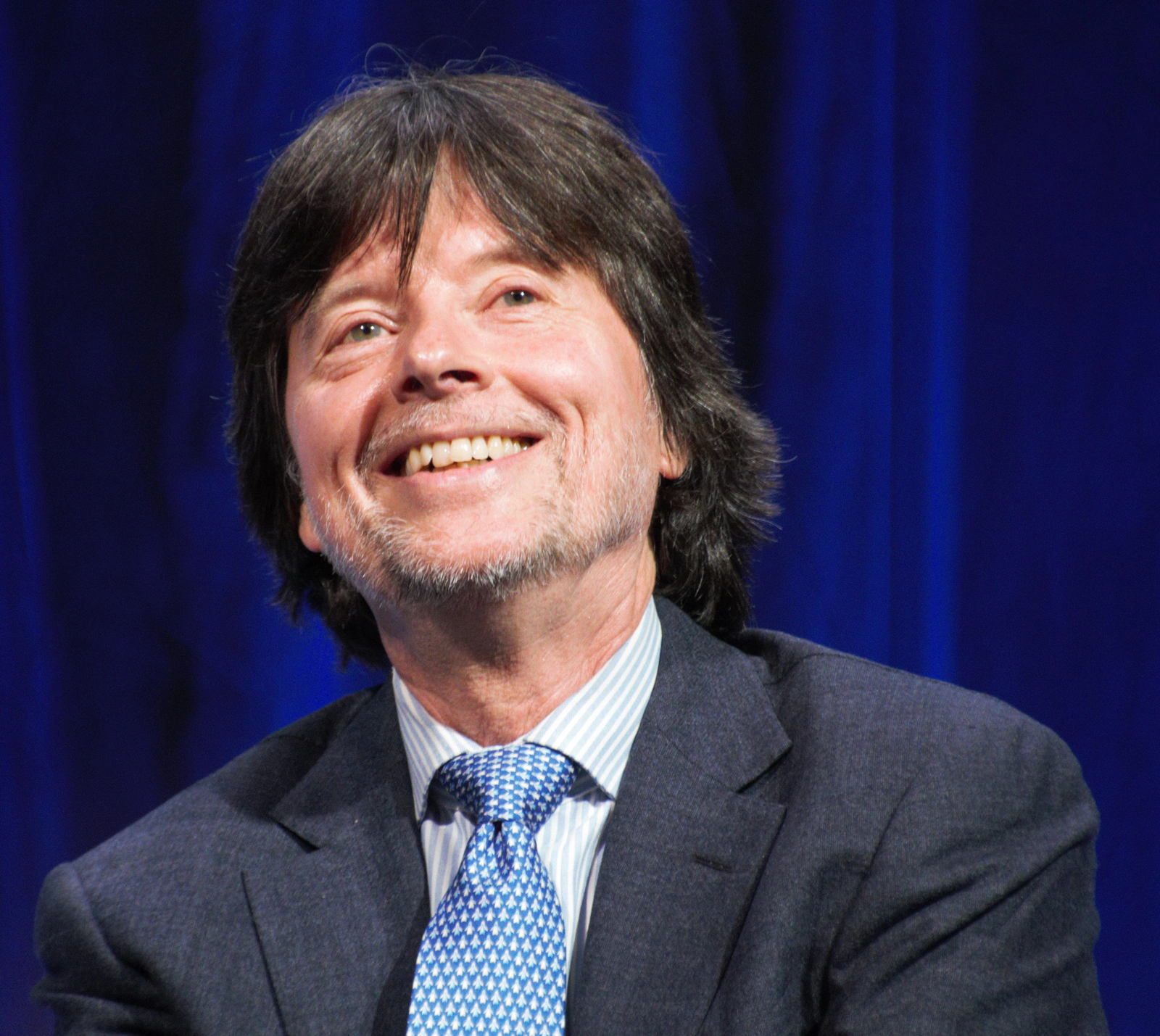
Attr: Jonathunder, GFDL 1.2
| 33 Quotes | |
| Born as | Kenneth Lauren Burns |
| Occup. | Director |
| From | USA |
| Born | July 29, 1953 Brooklyn, New York, USA |
| Age | 72 years |
| Cite | |
Citation Formats
APA Style (7th ed.)
Ken burns biography, facts and quotes. (2026, February 12). FixQuotes. https://fixquotes.com/authors/ken-burns/
Chicago Style
"Ken Burns biography, facts and quotes." FixQuotes. February 12, 2026. https://fixquotes.com/authors/ken-burns/.
MLA Style (9th ed.)
"Ken Burns biography, facts and quotes." FixQuotes, 12 Feb. 2026, https://fixquotes.com/authors/ken-burns/. Accessed 26 Mar. 2026.
Early Life and Background
Kenneth Lauren Burns was born on July 29, 1953, in Brooklyn, New York, at the hinge of postwar confidence and televised mass culture. His father, Robert Kyle Burns, was an academic and cultural administrator; his mother, Lyla Smith Burns, died of cancer when he was a boy, a loss that later colored his films' tenderness toward ordinary lives interrupted by history. The family moved to Ann Arbor, Michigan, where Burns grew up amid the civic rhythms of a university town and the widening national arguments of the 1960s.That combination - a household oriented toward ideas and a childhood marked by bereavement - helped form his characteristic emotional register: unsentimental but openly moved by testimony, letters, and photographs. Before he ever had a national audience, Burns was already a collector in temperament, drawn to the physical traces people leave behind and to the moral questions that surface when private experience collides with public events.
Education and Formative Influences
Burns studied at Hampshire College in Amherst, Massachusetts, graduating in 1975, in an environment that prized interdisciplinary work and self-directed inquiry. There he absorbed documentary traditions from cinema verite to archival compilation, and he learned the craft side of storytelling - structuring, pacing, and the ethics of narration - alongside a historian's respect for sources. The era's political aftermath (Vietnam, Watergate) also sharpened his interest in how national myths are made, contested, and revised, an interest that would become the engine of his career.Career, Major Works, and Turning Points
After early shorts and collaborations, Burns broke through with "The Civil War" (1990), a PBS series that turned still photographs, letters, and battlefield maps into a mass-audience epic and cemented what came to be nicknamed the "Ken Burns effect". He followed with major series and films that expanded his canvas of American identity: "Baseball" (1994), "Jazz" (2001), "The War" (2007), "The National Parks: America's Best Idea" (2009), "Prohibition" (2011), "The Dust Bowl" (2012), "The Vietnam War" (2017, with Lynn Novick), "Country Music" (2019), and "The U.S. and the Holocaust" (2022). Turning points often arrived as collaborations deepened - with writers such as Geoffrey C. Ward and a rotating circle of historians, musicians, and voice actors - and as he moved from celebratory heritage subjects to more openly accusatory ones, using national memory not as comfort but as confrontation.Philosophy, Style, and Themes
Burns' method is archival intimacy: photographs and documents treated as emotional evidence, braided with voiceover drawn from diaries, journalism, and letters, then shaped by music as a narrative partner rather than a decorative overlay. He has argued against the common post-production habit of using score as mere emotional cue, insisting that sound and image should grow together in meaning: “In most films music is brought in at the end, after the picture is more or less locked, to amplify the emotions the filmmaker wants you to feel”. That stance explains his careful, early integration of period music and commissioned compositions - sound that does not simply tell viewers what to feel, but helps them inhabit the era's tempo and uncertainty.The deeper aim is moral continuity: history as a living argument about the present, not a museum label. Burns frames national narrative as an unfinished improvisation, especially when treating American music and democratic struggle: “The genius of our country is improvisation, and jazz reflects that. It's our great contribution to the arts”. Yet he also resists fatalism, warning against withdrawal masquerading as sophistication: “I think we too often make choices based on the safety of cynicism, and what we're lead to is a life not fully lived. Cynicism is fear, and it's worse than fear - it's active disengagement”. Psychologically, the films often behave like an antidote to that disengagement: slow attention as civic practice, empathy as a discipline, and complexity as a kind of emotional courage.
Legacy and Influence
Burns reshaped U.S. documentary culture by making long-form historical storytelling a prime-time habit and by proving that archives, when edited with narrative intelligence, could compete with scripted drama. His influence is visible in the boom of serialized nonfiction, in the expectation that public history should be both rigorous and widely accessible, and in the way filmmakers now treat letters, photographs, and oral testimony as central characters. Admired and criticized in equal measure for the power of his narration and his shaping hand, Burns nonetheless remains a defining interpreter of the American past - a director whose work insists that national memory is not a static inheritance but an ongoing, consequential choice.Our collection contains 33 quotes written by Ken, under the main topics: Justice - Music - Deep - Hope - Knowledge.
Other people related to Ken: Shelby Foote (Author), David C. McCullough (Historian), David McCullough (Historian)
Source / external links