
Ken Kesey Biography Quotes 35 Report mistakes
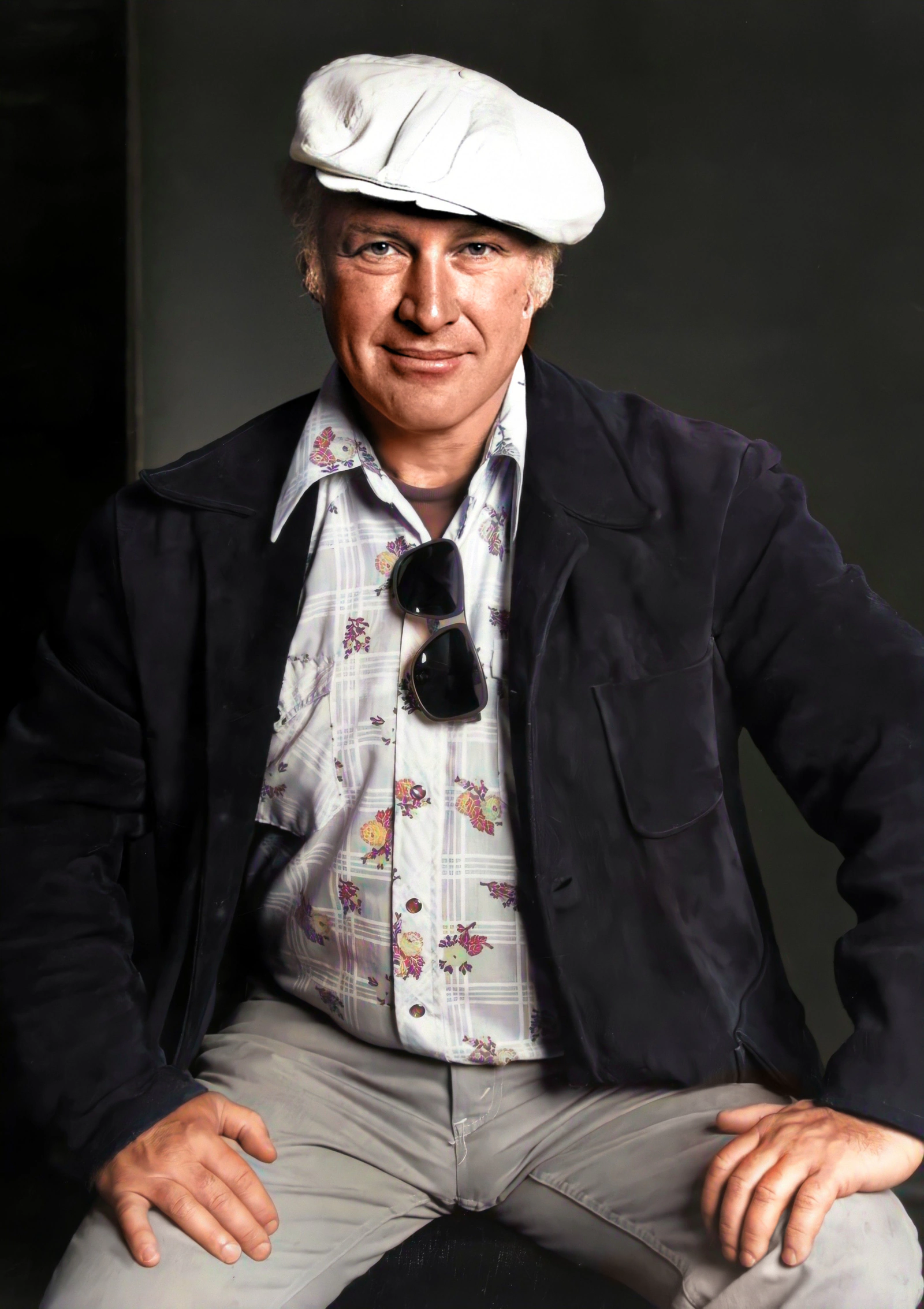
| 35 Quotes | |
| Born as | Ken Elton Kesey |
| Occup. | Author |
| From | USA |
| Born | September 17, 1935 La Junta, Colorado, USA |
| Died | November 10, 2001 Eugene, Oregon, USA |
| Aged | 66 years |
| Cite | |
Citation Formats
APA Style (7th ed.)
Ken kesey biography, facts and quotes. (2026, February 11). FixQuotes. https://fixquotes.com/authors/ken-kesey/
Chicago Style
"Ken Kesey biography, facts and quotes." FixQuotes. February 11, 2026. https://fixquotes.com/authors/ken-kesey/.
MLA Style (9th ed.)
"Ken Kesey biography, facts and quotes." FixQuotes, 11 Feb. 2026, https://fixquotes.com/authors/ken-kesey/. Accessed 19 Mar. 2026.
Early Life and Background
Ken Elton Kesey was born on September 17, 1935, in La Junta, Colorado, to Frederick A. Kesey, a dairy farmer, and Geneva (Smith) Kesey. During the Depression and its long aftershock, his family moved west to Springfield, Oregon, where the promise of land and work still felt tangible. Oregon in the 1940s and early 1950s offered Kesey a culture of manual competence - barns, engines, athletics, churches - and also a restlessness typical of the postwar interior West: a sense that the country was getting bigger faster than any one life could easily hold.Tall, competitive, and socially magnetic, Kesey grew up straddling two identities that later fused into his art: the dutiful son in a practical household and the performer who could bend a room with humor, daring, and story. He became a champion wrestler in high school, and the bodily discipline of the sport - endurance, pain, ritual - never left his prose. Behind the confidence, friends and later readers sensed a man testing how far a self can be pushed before it breaks or becomes something else, a question that would define his fiction and his public life.
Education and Formative Influences
Kesey attended the University of Oregon in Eugene and graduated in 1957 with a degree in speech and communication, already drawn to voice, persuasion, and the theater of public identity. He married Norma "Faye" Haxby in 1956, beginning the family life that ran, sometimes tensely, alongside his bohemian ambitions. After Oregon he entered Stanford University's creative writing program, where he studied amid a strong postwar literary scene and encountered the era's competing imperatives: Cold War conformity, the new psychology, and an emerging counterculture. A pivotal moment came when he volunteered for government-funded drug experiments at the Menlo Park Veterans Administration hospital, experiences with LSD and other psychedelics that intensified his interest in perception, authority, and the porous boundary between sanity and social control.Career, Major Works, and Turning Points
While working nights as an aide on a psychiatric ward, Kesey transformed institutional observation into his breakthrough novel, One Flew Over the Cuckoo's Nest (1962), a fierce parable of power narrated by Chief Bromden and centered on Randle P. McMurphy's rebellion against Nurse Ratched. The book's success made Kesey a public figure just as America entered the 1960s upheavals. He followed with Sometimes a Great Notion (1964), set in an Oregon logging family and written with muscular ambition about pride, labor, and stubborn individuality. Then came the turn from novelist to cultural catalyst: Kesey and his Merry Pranksters bought a painted school bus, "Further", and drove across the United States in 1964, later staging the Acid Tests in California with amplified music and LSD as social instrument. After a 1965 marijuana arrest, he briefly fled to Mexico, returned, and served jail time in 1966. In later decades he lived largely in Oregon, publishing nonfiction and performance-driven works such as Kesey's Garage Sale (1973) and later collections, while remaining a touchstone of 1960s myth. He died on November 10, 2001, in Eugene, Oregon, after complications from surgery.Philosophy, Style, and Themes
Kesey's inner life revolved around a moral argument he waged through spectacle: that a society can anesthetize its citizens with routine, and that a person must sometimes become noisy, inconvenient, and visible to stay human. His style mixed oral bravura, tall-tale propulsion, and a sharp ear for institutional language - the soothing euphemisms behind coercion. He prized narrative not as decoration but as survival technology, a way to keep experience from being processed into paperwork. “To hell with facts! We need stories!” In Kesey, that line is not anti-truth; it is a diagnosis of how "facts" can be weaponized by systems that claim neutrality while enforcing obedience.The same psychology underlies his attraction to psychedelics and performance: he wanted to be an agent of disturbance, not a passive recorder. “I'd rather be a lightning rod than a seismograph”. His best work holds a tension between compassion and combativeness - the need to confront the machine and the need to keep one's heart from hardening into another machine. That is why his rebellion is never purely cruel; it is tested against mercy, against whether freedom can include care for the frightened and the broken. “The truth doesn't have to do with cruelty, the truth has to do with mercy”. Cuckoo's Nest, in particular, asks whether a man can fight authority without becoming addicted to domination himself, and whether a community of the damaged can be awakened without being used.
Legacy and Influence
Kesey endures as both major novelist and emblematic instigator of the American counterculture, a writer who carried the social novel into the psychedelic age without surrendering moral seriousness. One Flew Over the Cuckoo's Nest reshaped public imagination about psychiatric power and remains a staple in debates over conformity, disability, and institutional violence; its influence is amplified by the stage and film adaptations, even as the novel's voice and tribal sadness are uniquely literary. Sometimes a Great Notion has grown steadily in reputation for its daring structure and its unsentimental portrait of Northwestern labor and family pride. Beyond the books, Kesey's greatest cultural impact may be the model he offered of art as lived experiment - literature, music, travel, prank, and community fused into a single argument that consciousness and authority are political terrain.Our collection contains 35 quotes written by Ken, under the main topics: Witty One-Liners - Motivational - Truth - Wisdom - Friendship.
Other people related to Ken: Jerry Garcia (Musician), Robert Stone (Novelist), Wavy Gravy (Activist), Larry McMurtry (Writer), Wallace Stegner (Novelist)
Ken Kesey Famous Works
- 1994 Last Go Round (Novel)
- 1992 Sailor Song (Novel)
- 1990 The Further Inquiry (Book)
- 1990 Caverns (Novel)
- 1986 Demon Box (Collection)
- 1973 Kesey's Garage Sale (Collection)
- 1964 Sometimes a Great Notion (Novel)
- 1962 One Flew Over the Cuckoo's Nest (Novel)
Source / external links