
Kenji Miyazawa Biography Quotes 5 Report mistakes
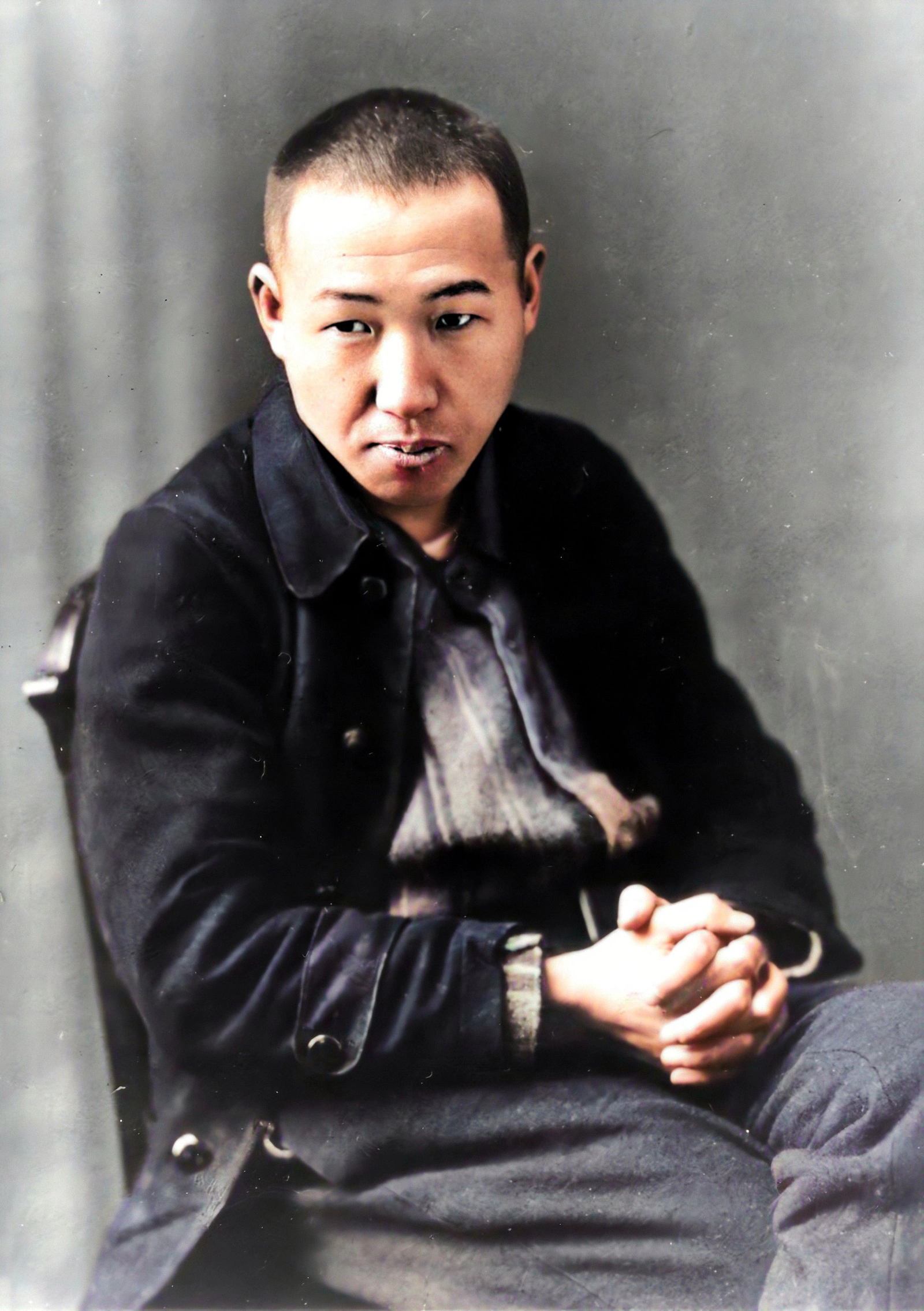
| 5 Quotes | |
| Occup. | Poet |
| From | Japan |
| Born | August 27, 1896 Hanamaki, Iwate, Japan |
| Died | September 21, 1933 Hanamaki, Iwate, Japan |
| Cause | Pneumonia |
| Aged | 37 years |
| Cite | |
Citation Formats
APA Style (7th ed.)
Kenji miyazawa biography, facts and quotes. (2026, February 11). FixQuotes. https://fixquotes.com/authors/kenji-miyazawa/
Chicago Style
"Kenji Miyazawa biography, facts and quotes." FixQuotes. February 11, 2026. https://fixquotes.com/authors/kenji-miyazawa/.
MLA Style (9th ed.)
"Kenji Miyazawa biography, facts and quotes." FixQuotes, 11 Feb. 2026, https://fixquotes.com/authors/kenji-miyazawa/. Accessed 12 Feb. 2026.
Early Life and Background
Kenji Miyazawa was born on August 27, 1896, in Hanamaki, Iwate Prefecture, in Japans rural Tohoku, a region marked by harsh winters, poor soils, and a long memory of famine and tenant hardship. His family ran a prosperous pawnshop and secondhand clothing business, positioning him uncomfortably between village poverty and merchant security. That tension - the awareness of hunger close by, the shame of comfort, and a childs fierce sensitivity to animals, weather, and the minute life of fields - became the emotional engine of his later work.He grew up as Japan accelerated through the Meiji and Taisho eras: railways and new schools arrived, while farm families remained trapped in debt cycles. Miyazawas closest relationships were often with the landscape itself - riverbanks, volcanic ridges, and rice paddies - and with his younger sister Toshi, whose illness and death would later cut into him with lifelong force. Even early accounts depict a boy prone to inward intensity, alternating between playful imagination and periods of moral seriousness that bordered on self-punishment.
Education and Formative Influences
Miyazawa studied at Morioka Higher School of Agriculture and Forestry (later part of Iwate University), specializing in agricultural chemistry. The program grounded him in soils, fertilizers, and plant physiology, giving him a scientific vocabulary for the natural phenomena that animate his poems and tales. He also absorbed modern Japanese literature and Esperanto, and he committed himself to Nichiren Buddhism, especially the Lotus Sutra, as a practical ethic rather than a private consolation - a faith that demanded action, compassion, and the remaking of daily life.Career, Major Works, and Turning Points
After graduation he worked briefly as a teacher at the Hanamaki Agricultural School, then quit to pursue religious devotion and writing, a choice that strained family ties. The defining turning point was Toshis death in 1922, which drove his finest elegiac poems and clarified his preoccupation with suffering as both fact and test. In 1924 he self-published two small books at his own expense, Spring and Asura (Haru to Shura) and The Restaurant of Many Orders, while drafting stories that would be published posthumously, including Night on the Galactic Railroad, Gosh the Cellist, and Matasaburo of the Wind. From 1926 he turned outward, organizing the Rasu Farmers Association to teach soil improvement, record-keeping, and cooperative practices, moving among villages as a lecturer and hands-on adviser. The work was exhausting; combined with chronic illness (likely tuberculosis) it shortened his life. He died in Hanamaki on September 21, 1933, at 37, leaving a vast, uneven archive that later editors shaped into a coherent canon.Philosophy, Style, and Themes
Miyazawas inner life reads as a constant negotiation between ecstatic perception and moral urgency. His poems fuse mineral, plant, animal, and cosmic registers as if the self were only a temporary knot in a much larger circulation of matter and feeling; scientific terms, Buddhist chant, and childrens-story clarity sit side by side. He wrote in a hybrid idiom - colloquial Japanese, invented words, dialect flavor, and the musical logic of repetition - to model a world in which the ordinary is already strange, and the strange is a deeper form of the ordinary. Behind the play is a conscience that cannot accept beauty without responsibility, especially in a countryside where children still went hungry.His ethics were not abstract. The repeated figures of travel, labor, hunger, and weather enact a psychology trained to convert pain into service. "We must embrace pain and burn it as fuel for our journey". That is not bravado in his case but a method: grief becomes motion, and motion becomes aid. The same impulse drives his insistence on economic and spiritual equality - "Not just the rich and the strong, but everyone must share happiness equally". Even his cosmic fantasies are built as moral experiments: what would it mean for a train through the stars, or a restaurant that consumes its patrons, to reveal how greed, fear, and loneliness distort perception? He also believed attention itself was a discipline: "If you look for the light, you can often find it. But if you look for the dark, that is all you will ever see". In Miyazawa, that choice is less optimism than training the heart to remain useful.
Legacy and Influence
Miyazawa was only modestly known while alive, but after World War II his work became a national and then international touchstone, embraced by poets, educators, musicians, and animators for its blend of tenderness and rigor. His stories are now staples of Japanese childrens literature, yet their philosophical weight continues to draw adult readers: the cosmic perspective that enlarges compassion, the refusal to separate art from work, and the insistence that the rural poor belong at the center of any ethical imagination. In an era of climate anxiety and widening inequality, his combination of ecological literacy, spiritual urgency, and practical solidarity has made him feel less like a relic of Taisho idealism and more like a contemporary demanding - quietly, relentlessly - that beauty be put to use.Our collection contains 5 quotes written by Kenji, under the main topics: Life - Equality - Perseverance - Optimism - Self-Improvement.
Kenji Miyazawa Famous Works
- 1930 Gauche the Cellist (Short Story)
- 1927 Night on the Galactic Railroad (Novel)
- 1924 Matasaburo of the Wind (Short Story)
- 1924 The Restaurant of Many Orders (Short Story)
Source / external links