
Kenneth Burke Biography Quotes 6 Report mistakes
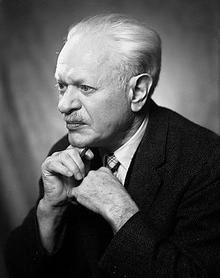
| 6 Quotes | |
| Born as | Kenneth Duva Burke |
| Occup. | Philosopher |
| From | USA |
| Born | May 5, 1897 Pittsburgh, Pennsylvania, USA |
| Died | November 19, 1993 |
| Aged | 96 years |
| Cite | |
Citation Formats
APA Style (7th ed.)
Kenneth burke biography, facts and quotes. (2026, March 1). FixQuotes. https://fixquotes.com/authors/kenneth-burke/
Chicago Style
"Kenneth Burke biography, facts and quotes." FixQuotes. March 1, 2026. https://fixquotes.com/authors/kenneth-burke/.
MLA Style (9th ed.)
"Kenneth Burke biography, facts and quotes." FixQuotes, 1 Mar. 2026, https://fixquotes.com/authors/kenneth-burke/. Accessed 6 Mar. 2026.
Early Life and Background
Kenneth Duva Burke was born on May 5, 1897, in Pittsburgh, Pennsylvania, at the hinge of an American century defined by mass immigration, industrial capitalism, and the new authority of advertising and journalism. He grew up alert to the pressures of urban life and the social theater of class and aspiration - conditions that later made him suspicious of any language that pretended to be neutral. The rhythms of steel-town modernity, with its sharp divisions of labor and status, supplied him with an early sense that words do not merely describe the world; they organize it.In the 1910s and 1920s, as the United States moved from Progressive reform toward World War I and then the convulsions of the Great Depression, Burke developed the habit that would mark his inner life: he watched how public crises changed private vocabularies. His early adulthood was shaped less by institutional loyalties than by a self-made discipline of reading, argument, and revision - a temperament drawn to systems, but wary of dogma. That combination, both combative and self-skeptical, became central to the kind of philosopher he would be: one who treated language as a scene of motives rather than a transparent instrument.
Education and Formative Influences
Burke attended Ohio State University briefly but left before taking a degree, choosing instead the intensely literary and argumentative culture of Greenwich Village and New York modernism. He moved among writers, editors, and critics in the orbit of magazines such as The Dial, absorbing the era's experiments in form while resisting the idea that art could be sealed off from politics or psychology. Modernist difficulty, Marxist urgency, Freudian depth, and the practical world of publishing all left their imprint, but Burke distilled them into his own project: a vocabulary for explaining how symbolic forms bind people to beliefs, institutions, and one another.Career, Major Works, and Turning Points
From the 1930s onward Burke produced a body of criticism and philosophy that remade rhetorical study in the United States: Permanence and Change (1935) and Attitudes Toward History (1937) framed social life as a drama of interpretive frames; The Philosophy of Literary Form (1941) sharpened his method of "form" as an experience that persuades; A Grammar of Motives (1945) and A Rhetoric of Motives (1950) introduced dramatism, pentadic analysis (act, scene, agent, agency, purpose), and the concept of identification as the core of persuasion; Language as Symbolic Action (1966) consolidated decades of thinking about symbol systems. A turning point was his Depression-era engagement with political rhetoric, including his notorious critique of Hitler's Mein Kampf as a "rhetoric" rather than an anomaly - a move that scandalized some readers but clarified his conviction that demagoguery is intelligible only when one studies the desires and identifications a vocabulary supplies.Philosophy, Style, and Themes
Burke's philosophy begins with a hard premise: humans are "symbol-using animals", and symbolic action precedes political action by shaping what counts as reality. He argued that every vocabulary is strategic, built from choice and omission: “Men seek for vocabularies that are reflections of reality. To this end, they must develop vocabularies that are selections of reality. And any selection of reality must, in certain circumstances, function as a deflection of reality”. Psychologically, this is Burke confessing a lifelong suspicion of his own tools - the critic, like the citizen, cannot speak without biasing the world he claims to map. His method therefore reads arguments as equipment for living: patterns that console, accuse, justify, and recruit.His style mirrored his themes: recursive, punning, technical and comic, forever doubling back to show how conclusions are produced. He insisted that critique must include critique of the critic, because interpretation is itself an act with motives: “We not only interpret the character of events... We may also interpret our interpretations”. That reflexivity was not academic play; it was an ethical discipline against self-righteousness, a way of catching the "god-terms" and "devil-terms" that smuggle hierarchy into speech. Even his secular rhetoric kept a theological sensitivity to origin, guilt, and redemption, asking how old religious structures reappear in modern discourse: “Our purpose is simply to ask how theological principles can be shown to have usable secular analogues that throw light upon the nature of language”. Burke's dramatism thus reads public life as a continual search for purification - scapegoats, victimages, heroic sacrifices - enacted through words that feel inevitable precisely because they are shared.
Legacy and Influence
Burke died on November 19, 1993, in the United States, having become a foundational figure for rhetoric, composition studies, communication theory, and literary criticism, and a quiet presence in sociology and political theory. His terms - identification, terministic screens, dramatism, the pentad - remain durable because they translate private psychology into public analysis without reducing either to mere data. In an age of propaganda, mass media, and algorithmic persuasion, Burke endures as a philosopher of motives who taught generations to ask not only what a text says, but what it makes people want, fear, and call "reality".Our collection contains 6 quotes written by Kenneth, under the main topics: Truth - Deep - Reason & Logic - Equality - Humility.
Other people related to Kenneth: Malcolm Cowley (Critic)
Kenneth Burke Famous Works
- 1972 Dramatism and Development (Book)
- 1966 Language as Symbolic Action (Book)
- 1961 The Rhetoric of Religion (Book)
- 1950 A Rhetoric of Motives (Book)
- 1945 A Grammar of Motives (Book)
- 1941 The Philosophy of Literary Form (Book)
- 1935 Permanence and Change (Book)
- 1931 Counter-Statement (Book)
Source / external links