
Kenneth Noland Biography Quotes 13 Report mistakes
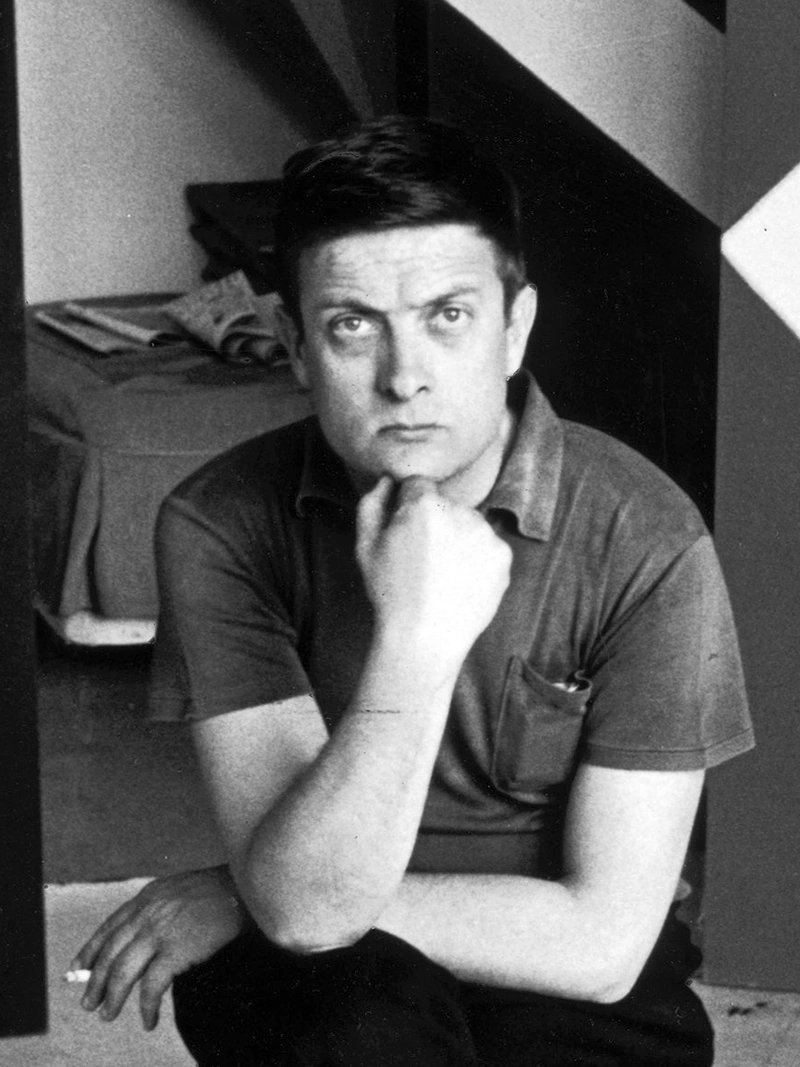
| 13 Quotes | |
| Occup. | Artist |
| From | USA |
| Born | April 10, 1924 Asheville, North Carolina, United States |
| Died | January 5, 2010 Port St. Lucie, Florida, United States |
| Aged | 85 years |
| Cite | |
Citation Formats
APA Style (7th ed.)
Kenneth noland biography, facts and quotes. (2026, February 11). FixQuotes. https://fixquotes.com/authors/kenneth-noland/
Chicago Style
"Kenneth Noland biography, facts and quotes." FixQuotes. February 11, 2026. https://fixquotes.com/authors/kenneth-noland/.
MLA Style (9th ed.)
"Kenneth Noland biography, facts and quotes." FixQuotes, 11 Feb. 2026, https://fixquotes.com/authors/kenneth-noland/. Accessed 26 Mar. 2026.
Early Life and Background
Kenneth Noland was born on April 10, 1924, in Asheville, North Carolina, a region where craft traditions, church color, and the hard pragmatism of the Depression coexisted with the first wave of modern American culture arriving by radio and magazine. He grew up in a country still learning to see itself as a global power, and his early sense of form was shaped less by museums than by ordinary visual order - signs, textiles, and the plain geometries of rural and small-city life.World War II interrupted that gradual formation. Noland served in the U.S. Army Air Forces, and the experience of military standardization - repeated procedures, serial work, impersonal scale - left a durable imprint. After the war he returned to a nation remaking itself through industry and confidence, and he entered the postwar art world at the exact moment New York began displacing Paris as the gravitational center of modern painting.
Education and Formative Influences
In 1946 Noland enrolled at the Black Mountain College in North Carolina, an experimental school where modernist ideas were treated as lived practice. There he studied under Josef Albers, absorbing a disciplined approach to color interaction and the belief that perception could be trained through method. Black Mountain also placed him near a network of artists and composers who were redefining American avant-garde culture; Noland left with an Albers-derived rigor and a readiness to treat painting as a problem of structure, not storytelling - a foundation that later allowed him to shed gesture without losing intensity.Career, Major Works, and Turning Points
By the early 1950s Noland was working in Washington, D.C., close to a circle that included Morris Louis, and in 1953 he and Louis saw Helen Frankenthaler's stained-paint breakthrough in New York, a catalytic encounter that helped redirect both men toward soaking color into unprimed canvas. Noland's mature identity emerged in the late 1950s and early 1960s with targets, concentric circles, chevrons, and horizontal stripes - works that became central to what critics later called Color Field painting and, more broadly, to the postwar search for a new kind of abstraction after Abstract Expressionism. He exhibited widely from the 1960s onward, his series logic and pared-down motifs aligning him with a generation that was testing how far painting could go when color, edge, and scale carried the whole meaning.Philosophy, Style, and Themes
Noland's art is often described as reduction, but psychologically it was a wager: that feeling could be made impersonal enough to be shared. He treated the canvas as a site where color could act directly on the nervous system - immediate, bodily, and unmediated by narrative. In that sense, his frequent use of simple motifs (targets, chevrons, bands) was not decorative but stabilizing, a way to hold attention steady while color did the expressive work. His practice also shows a perfectionist streak, a willingness to destroy rather than compromise, and an impatience with virtuoso brushwork when it threatened to become a subject in itself.His thinking was fundamentally relational, shaped by teachers, rivals, and the shifting pecking order of postwar New York. “For me context is the key - from that comes the understanding of everything”. That context included the passage from Pollock's heroic myth to a cooler, more analytical modernism; Noland understood how reputations are built as much by discourse as by paintings, and he watched criticism and exhibition-making become part of the medium. At the same time, he insisted that abstraction was not emptiness but a different kind of speech: “I think of painting without subject matter as music without words”. The analogy clarifies his emotional economy - less confession than resonance - where meaning accrues through repetition, variation, and the viewer's duration with the work. And he was explicit that context is social as well as formal: “Context begins with other artists - seniors and mentors”. The remark reads like a self-portrait of an artist who advanced by listening, looking, and then stripping away everything that was not essential.
Legacy and Influence
Noland died on January 5, 2010, in the United States, having helped establish a language of postwar painting in which color, not depiction, becomes the event. His targets and chevrons did more than define a style; they demonstrated that intensity could be engineered through clarity, that scale and hue could carry the psychological charge once carried by gesture and myth. Later abstraction - from minimalist painting to hard-edge revivals and contemporary explorations of seriality and chroma - continues to argue with the questions Noland posed: how much can be removed while still leaving an experience that feels unmistakably human, and how can a painting be both rigorously constructed and sensually alive.Our collection contains 13 quotes written by Kenneth, under the main topics: Wisdom - Art - Life - Husband & Wife.