
Kevin Durant Biography Quotes 7 Report mistakes
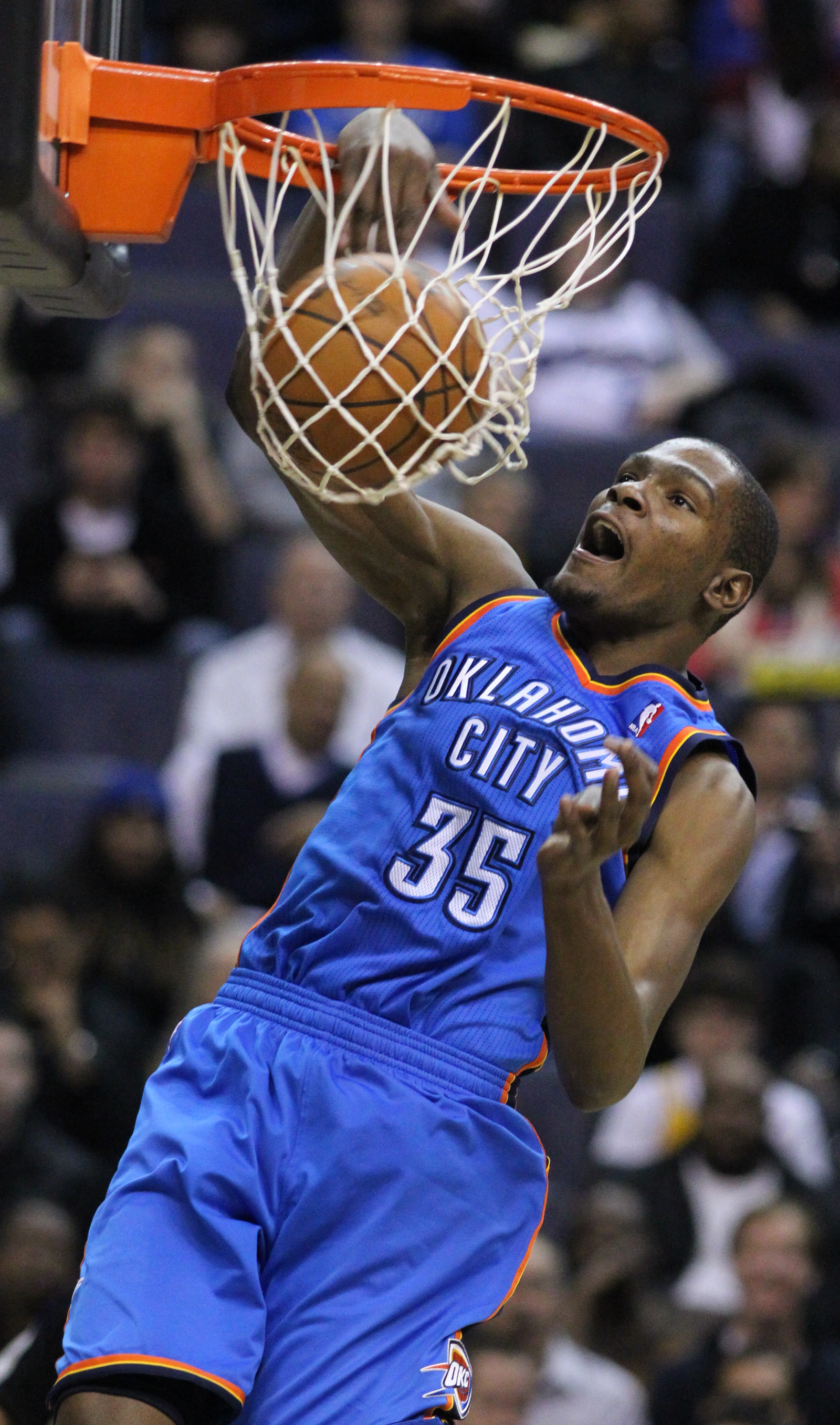
| 7 Quotes | |
| Born as | Kevin Wayne Durant |
| Known as | KD, The Slim Reaper |
| Native name | Kevin Wayne Durant |
| Occup. | Athlete |
| From | USA |
| Born | September 29, 1988 Washington, D.C., USA |
| Age | 37 years |
| Cite | |
Citation Formats
APA Style (7th ed.)
Kevin durant biography, facts and quotes. (2026, February 11). FixQuotes. https://fixquotes.com/authors/kevin-durant/
Chicago Style
"Kevin Durant biography, facts and quotes." FixQuotes. February 11, 2026. https://fixquotes.com/authors/kevin-durant/.
MLA Style (9th ed.)
"Kevin Durant biography, facts and quotes." FixQuotes, 11 Feb. 2026, https://fixquotes.com/authors/kevin-durant/. Accessed 22 Mar. 2026.
Early Life and Background
Kevin Wayne Durant was born on September 29, 1988, in Washington, D.C., and raised largely in Prince George's County, Maryland, a hotbed of East Coast basketball where gym reputations traveled faster than newspapers. His childhood moved through working-class routines and unstable stretches, including periods when his father, Wayne Pratt, was absent. That early mix of attention and uncertainty sharpened a trait that would define him later - a need to control outcomes through repetition, craft, and an almost private competitiveness.Durant grew tall quickly, but his first identity was not inevitability; it was effort. He learned the social economy of playgrounds and AAU circuits - respect earned by showing up, by not shrinking when older players pressed, by responding to talk with skill. The region's basketball culture valued stamina and toughness, and Durant absorbed it as both shield and language, developing a calm exterior that often masked how seriously he took every slight, every label, every expectation.
Education and Formative Influences
Durant's formative years ran through local power programs and the national AAU pipeline, notably with the DC area team later known as Team Durant, a reflection of how quickly his name became a magnet. He attended several high schools in Maryland and Virginia, including National Christian Academy and Oak Hill Academy, meeting elite competition early and learning how spacing, pace, and shooting could be weapons even for a wiry teenager. Central to his inner life was the stabilizing force of his mother, Wanda Durant, who worked to keep the household moving and insisted on discipline amid the noise of rising fame.Career, Major Works, and Turning Points
Durant spent one season at the University of Texas (2006-2007), winning the Naismith and Wooden awards before entering the NBA as the No. 2 pick in the 2007 draft by the Seattle SuperSonics, who soon relocated to become the Oklahoma City Thunder. He became Rookie of the Year, then one of the league's defining scorers, winning MVP in 2014 and reaching the 2012 NBA Finals with a young Thunder core. The turning point that reshaped his public narrative came in 2016 when he joined the Golden State Warriors after blowing a 3-1 lead to them in the Western Conference finals; the move brought two championships and two Finals MVPs (2017, 2018) but also hardened the debate about legacy, difficulty, and belonging. Another pivot followed in 2019: an Achilles rupture in the Finals, surgery, and a long rehabilitation before returning with the Brooklyn Nets, later moving to the Phoenix Suns in 2023. Parallel to the NBA arc, Durant became a fixture of USA Basketball, winning multiple Olympic gold medals and evolving from prodigy to steadying veteran presence.Philosophy, Style, and Themes
Durant's game is the biography in motion: a near seven-footer with guard skills, built around shot-making that looks simple because it is purified - one or two dribbles, a rise, a clean release. He is less a highlight merchant than a technician of advantage, reading defenders like problems to solve. His best teams, and his best versions of himself, have been those that let him be both blade and scalpel: a primary scorer who can also vanish into the flow until a possession demands an answer.Psychologically, his public statements map a man who believes security is earned, not granted. “Everybody wants to be famous, but nobody wants to do the work. I live by that. You grind hard so you can play hard. At the end of the day, you put all the work in, and eventually it'll pay off. It could be in a year, it could be in 30 years. Eventually, your hard work will pay off”. That is not motivational wallpaper - it is a self-explanation for why he keeps refining, why he returns from injuries with new counters, why he remains restless even after titles. The tenderness beneath the discipline is just as central: “My mom was my first love. She's the one who loved me when I didn't love myself”. And the core ethic is incremental rather than heroic: “I'm just trying to grow every day”. Together they reveal a person chasing mastery not to prove perfection, but to quiet doubt.
Legacy and Influence
Durant's enduring influence sits at the intersection of style and era. In the age of pace-and-space, he became the prototype of the modern scoring forward - length plus perimeter skill, efficient shot creation without traditional positions - and younger stars studied his footwork, pull-up mechanics, and calm decision-making. His career also became a case study in contemporary athlete power: free agency as self-authorship, championships weighed against context, and the constant negotiation between public judgment and private standards. Whether remembered most for MVP brilliance in Oklahoma City, the dynastic peak in Golden State, or the defiant returns after injury, Durant stands as one of the defining talents of his generation - a scorer of historic purity and a competitor shaped by work, family, and an insistence on evolving.Our collection contains 7 quotes written by Kevin, under the main topics: Work Ethic - Mother - Legacy & Remembrance - Relationship - Self-Improvement.
Other people related to Kevin: Scott Brooks (Coach), Anthony Edwards (Athlete), Willie Green (Athlete)
Source / external links