
Kevin Mitnick Biography Quotes 22 Report mistakes
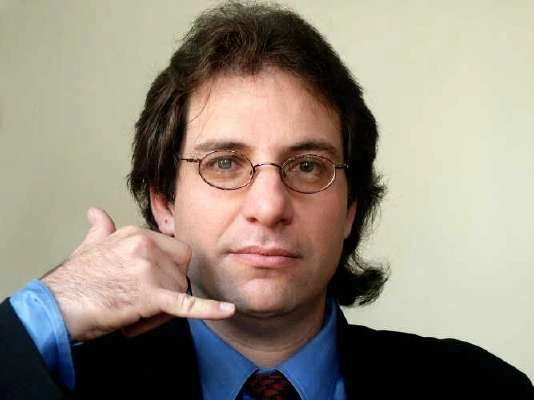
| 22 Quotes | |
| Occup. | Celebrity |
| From | USA |
| Born | August 6, 1963 |
| Age | 62 years |
| Cite | |
Citation Formats
APA Style (7th ed.)
Kevin mitnick biography, facts and quotes. (2026, February 11). FixQuotes. https://fixquotes.com/authors/kevin-mitnick/
Chicago Style
"Kevin Mitnick biography, facts and quotes." FixQuotes. February 11, 2026. https://fixquotes.com/authors/kevin-mitnick/.
MLA Style (9th ed.)
"Kevin Mitnick biography, facts and quotes." FixQuotes, 11 Feb. 2026, https://fixquotes.com/authors/kevin-mitnick/. Accessed 6 Mar. 2026.
Early Life and Background
Kevin David Mitnick was born on August 6, 1963, in Van Nuys, California, and grew up in Los Angeles during the late Cold War years when telephone infrastructure and early personal computing formed the hidden scaffolding of American life. In a city built on networks - freeways, studios, airports, switching centers - he learned early that systems were less like fortresses than like mazes, navigable by those who understood their rules and, more importantly, the habits of the people operating them.As a teenager he gravitated toward the subculture of phone phreaking and early hacker circles that treated knowledge as a kind of currency and curiosity as an ethic. That era was defined by the rise of the microcomputer, the mystique of Silicon Valley, and a widening gap between what institutions believed about security and what disciplined amateurs could prove. Mitnick's early brushes with law enforcement, beginning in his late teens and early twenties, also began shaping an inner narrative that would follow him for decades: he saw himself as a technical explorer and trickster, while authorities framed him as a symbol of uncontrollable digital threat.
Education and Formative Influences
Mitnick attended community college in the Los Angeles area and later studied computer science at the University of Southern California, moving between formal coursework and the far more intensive self-driven education of hacking. He absorbed the era's contradictory messages - the schoolroom ideal of responsible learning and the hacker ethos of testing limits - and later summarized the psychological fuse between the two when he reflected, “So the ethic I was taught in school resulted in the path I chose in my life following school”. In practice, his formation was equal parts technical and social: he learned that access was often granted not by code alone but by persuasion, patience, and the careful reading of organizational routines.Career, Major Works, and Turning Points
By the late 1980s and early 1990s, Mitnick had become one of the best-known figures in American hacking, accused of intrusions into telecom and technology companies and pursued across state lines as prosecutors argued that he embodied a new kind of criminality. His 1995 arrest ended years as a fugitive and led to a highly publicized federal case, extended pretrial detention, and a sentencing story that hardened his distrust of official narratives; after release in 2000, he was barred for a time from using computers, then reinvented himself as a security professional. He built Mitnick Security Consulting and became a sought-after speaker and penetration tester, turning the same skills once used to bypass controls into a service for executives and administrators. His books - including "The Art of Deception" (2002), "The Art of Intrusion" (2005), and later "Ghost in the Wires" (2011) - blended memoir, case study, and cautionary tale, and helped popularize social engineering as a board-level concern. He died in 2023, after years as a prominent public educator in cybersecurity.Philosophy, Style, and Themes
Mitnick's mature philosophy centered on the idea that security failure is rarely a purely technical event - it is an interaction between technology, incentives, and psychology. He argued that attackers prosper by exploiting ordinary human shortcuts, a point he illustrated with disarming bluntness: “All they need to do is to set up some website somewhere selling some bogus product at twenty percent of the normal market prices and people are going to be tricked into providing their credit card numbers”. The sentence is less a trickster's boast than a bleak assessment of attention, desire, and the ways modern commerce trains people to trade caution for convenience.His style, both as an operator and later as an author, was narrative and procedural: he explained intrusions as sequences of small permissions rather than cinematic breakthroughs. That outlook also made him skeptical of corporate complacency, especially the tendency to treat security as cost center instead of continuity planning: “But a lot of businesses out there don't see the return on investment, they look at it as a liability, and until they can understand that proactive security actually returns, gives them a return on investment, it's still a hard sell for people”. Psychologically, he remained invested in the moral distinction between curiosity and harm, pressing audiences to judge behavior by intent and consequence rather than by fear-driven labels: “Should we fear hackers? Intention is at the heart of this discussion”. Across his work runs a consistent theme - systems are made of people, and people are persuadable - which is why training, verification habits, and accountability matter as much as firewalls.
Legacy and Influence
Mitnick's legacy is inseparable from the public's shifting understanding of hacking: he was first cast as a folk devil of the early internet, then recast as a translator between technical communities and institutions that needed protection. As a celebrity, he helped push social engineering and human-factor security into mainstream vocabulary, influencing how companies conduct awareness training, red-team exercises, and incident response planning. His life also remains a cautionary biography about spectacle and power - how the state, media, and a rapidly evolving technology landscape can turn a single figure into a symbol - while his post-prison career demonstrated that the skills used to subvert systems can also be redirected to strengthen them.Our collection contains 22 quotes written by Kevin, under the main topics: Witty One-Liners - Work Ethic - Privacy & Cybersecurity - Learning from Mistakes - Technology.
Source / external links