
Kevin Patterson Biography Quotes 2 Report mistakes
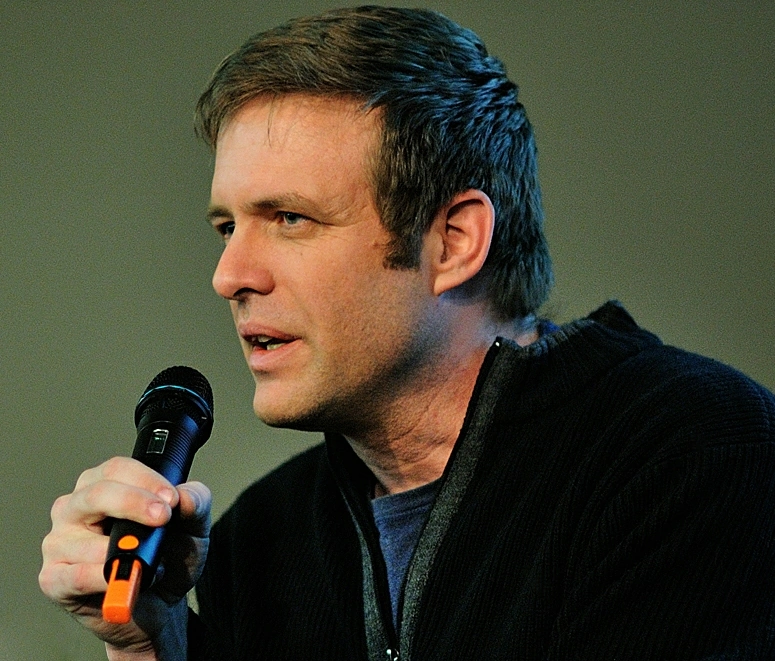
| 2 Quotes | |
| Occup. | Writer |
| From | Canada |
| Born | December 27, 1964 |
| Age | 61 years |
| Cite | |
Citation Formats
APA Style (7th ed.)
Kevin patterson biography, facts and quotes. (2026, February 11). FixQuotes. https://fixquotes.com/authors/kevin-patterson/
Chicago Style
"Kevin Patterson biography, facts and quotes." FixQuotes. February 11, 2026. https://fixquotes.com/authors/kevin-patterson/.
MLA Style (9th ed.)
"Kevin Patterson biography, facts and quotes." FixQuotes, 11 Feb. 2026, https://fixquotes.com/authors/kevin-patterson/. Accessed 1 Apr. 2026.
Early Life and Background
Kevin Patterson was born on December 27, 1964, in Canada, coming of age in a late-20th-century country that was renegotiating its self-image - bilingual, regionally divided, and increasingly attentive to questions of identity, rights, and cultural voice. Those tensions formed the backdrop to his early sense that private life and public policy were never cleanly separable, and that the stories people told about themselves could collide with the rules that governed their bodies and choices.From early on he gravitated toward language as a tool for both refuge and provocation: a way to name experience before it hardened into conventional narrative. His temperament, as reflected later in his essays, suggests a writer pulled between a desire for principled independence and an equally strong need for community and argument - the push and pull that often produces a career built less on pleasing consensus than on clarifying conflict.
Education and Formative Influences
Patterson's formative influences were less a single school or movement than the overlapping Canadian traditions of essay writing, memoir, and policy-conscious nonfiction, where the personal voice is expected to carry intellectual weight. He matured as a reader and writer in an era when medical ethics, civil liberties, and debates over sexuality and gender became increasingly visible in mainstream journalism, and when the essay re-emerged as a serious vehicle for public reasoning. That context sharpened his interest in the borderlands between diagnosis and identity, and in the way institutions speak about bodies as if they were problems to be managed rather than lives to be lived.Career, Major Works, and Turning Points
Patterson established himself primarily through nonfiction and essayistic writing that treats lived experience as evidence rather than ornament, placing intimate dilemmas in the broader frame of law, medicine, and cultural expectation. His work is known for turning points that arrive less as plot twists than as ethical clarifications - moments when the writer decides that precision matters more than comfort, and that candor is a form of civic responsibility. Over time, his public identity solidified around the role of the writer as witness: someone willing to record what polite discussion often edits out, and to insist that private suffering, pleasure, and self-definition deserve rigorous description.Philosophy, Style, and Themes
At the core of Patterson's writing is a suspicion of easy hero narratives, including the flattering versions of dissent that society packages for consumption. “The whole world loves a maverick and the whole world wants the maverick to achieve something nobler than simple rebellion”. That sentence captures a psychological tension his work repeatedly circles: the fear of being reduced to a symbol, and the countervailing pressure to make one's difference legible as moral progress. He writes from the inside of that dilemma, alert to how institutions and audiences demand uplift, and how a writer must decide whether to comply, complicate, or refuse.His style tends toward close observation and deliberate pacing, often using reflective pauses to show how perception changes when one is no longer performing for a crowd. “Solitude sharpens awareness of small pleasures otherwise lost”. In Patterson's hands, solitude is not a romantic pose but a working condition - the space in which sensation, memory, and doubt can be examined without the coercion of social scripts. The themes that follow are consistent: autonomy versus supervision, the mismatch between clinical language and human experience, and the moral cost of forcing complex lives into tidy public categories. He is drawn to thresholds - between body and story, policy and intimacy - and he returns again and again to the question of what it means to speak truthfully when the stakes are social acceptance and personal survival.
Legacy and Influence
Patterson's enduring influence lies in the example he sets for Canadian nonfiction: the essay as a place where inner life, ethics, and public debate can be braided without reducing any strand. He helped normalize a more exacting kind of personal writing - one that does not treat confession as spectacle, and does not treat politics as abstraction - and in doing so widened the space for writers who insist that identity is not a slogan but a lived, evolving argument. His work remains a touchstone for readers interested in how self-knowledge is shaped by institutions, and for writers trying to craft prose that is both intimate and intellectually accountable.Our collection contains 2 quotes written by Kevin, under the main topics: Leadership - Live in the Moment.
Kevin Patterson Famous Works
- 2006 Consumption (Novel)
- 2003 Country of Cold: Stories of Sex and Death (Short Story Collection)
- 1999 The Water in Between: A Journey at Sea (Book)
Source / external links