
Khaleda Zia Biography Quotes 9 Report mistakes
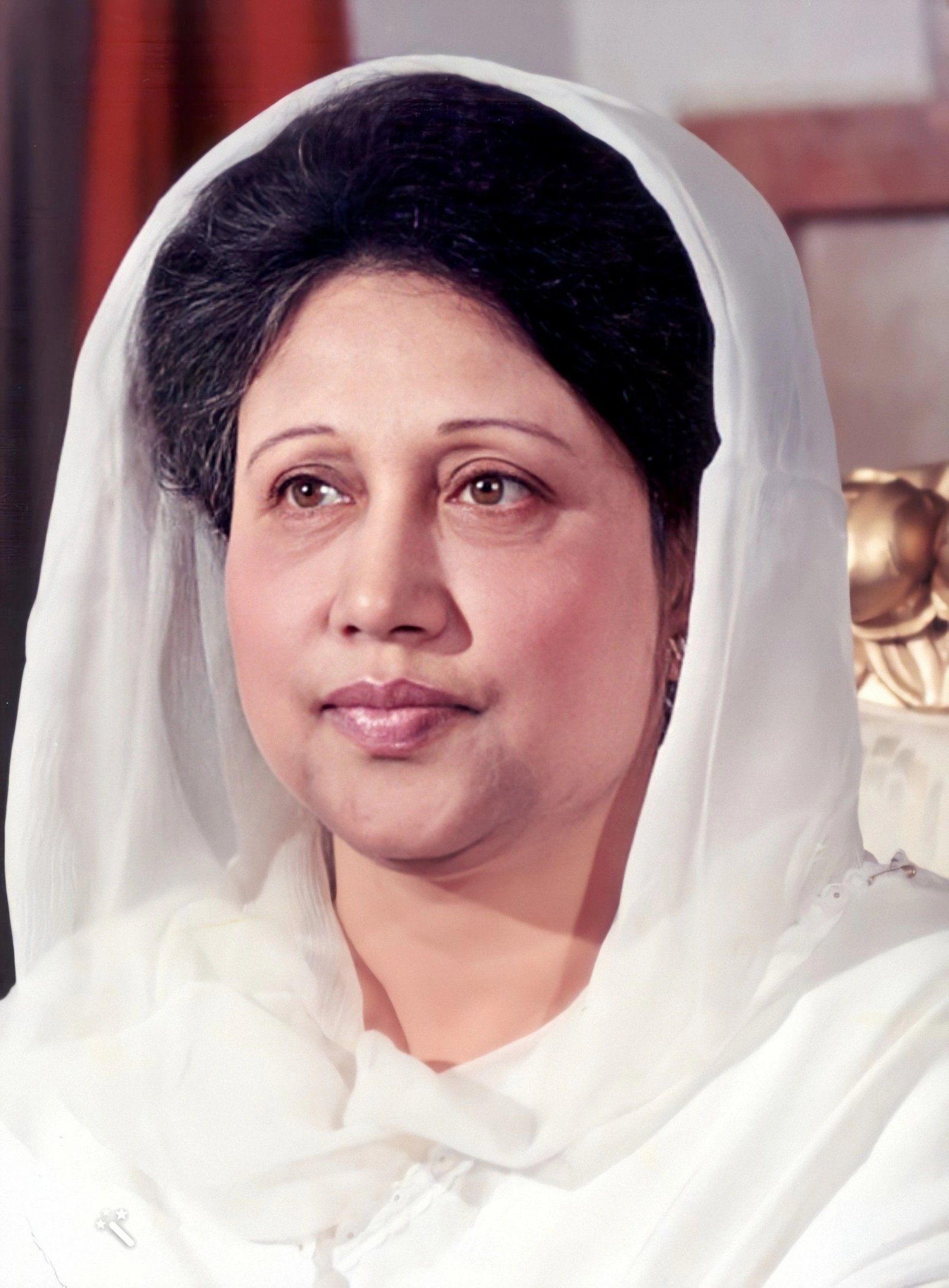
| 9 Quotes | |
| Born as | Khaleda Khanam Putul |
| Occup. | Statesman |
| From | Bangladesh |
| Spouse | Ziaur Rahman (1960-1981) |
| Born | August 15, 1945 Jalpaiguri, Bengal Presidency, British India |
| Age | 80 years |
| Cite | |
Citation Formats
APA Style (7th ed.)
Khaleda zia biography, facts and quotes. (2026, February 11). FixQuotes. https://fixquotes.com/authors/khaleda-zia/
Chicago Style
"Khaleda Zia biography, facts and quotes." FixQuotes. February 11, 2026. https://fixquotes.com/authors/khaleda-zia/.
MLA Style (9th ed.)
"Khaleda Zia biography, facts and quotes." FixQuotes, 11 Feb. 2026, https://fixquotes.com/authors/khaleda-zia/. Accessed 25 Mar. 2026.
Early Life and Background
Khaleda Zia was born Khaleda Khanam Putul on August 15, 1945, in Dinajpur, in what was then British India and soon became East Pakistan. Her childhood unfolded amid the churn of Partition, the hardening fault lines between east and west Pakistan, and the daily frictions of a provincial town where class, language, and political identity were never abstract. In later years she would project a steely public reserve, but her origins were not those of a lifelong professional politician - they were those of a young woman whose sense of nationhood formed in the shadow of upheaval.In 1960 she married Ziaur Rahman, a military officer who would become a central figure in Bangladesh's independence struggle and, later, the head of state. Their family life - and her own public trajectory - was shaped by the violence that followed the 1971 Liberation War and by the coups and counter-coups of the mid-1970s. When Ziaur Rahman was assassinated in Chittagong in May 1981, the killing did more than end a presidency; it created a political vacancy that supporters quickly pressed his widow to fill, and it hardened in her a conviction that personal loss and national destiny could not be separated.
Education and Formative Influences
Khaleda Zia was educated in Dinajpur, including study at Dinajpur Government College, and entered adulthood in a society where public leadership for women remained culturally constrained. Her formative influences were less ideological texts than lived experience: the discipline and threat-awareness of a military household, the reverberations of war and state-building, and the lesson - learned brutally in 1981 - that power in Bangladesh could be both intimate and fatal. These influences helped produce a leader whose authority rested on endurance, family symbolism, and a shrewd reading of mass sentiment.Career, Major Works, and Turning Points
She rose rapidly within the Bangladesh Nationalist Party (BNP) after 1981, becoming party chairperson and the most prominent civilian face of opposition to Lt. Gen. Hussain Muhammad Ershad's military rule, including the street agitation that culminated in his fall in 1990. She served as prime minister three times (1991-1996, February 1996, and 2001-2006), presiding over a return to parliamentary government after years of authoritarianism, and later over a polarizing era of coalition politics. Her career was defined by the intense rivalry with Sheikh Hasina of the Awami League, a contest that turned personal biography into a national cleavage, and by recurring crises around strikes, boycotts, and contested elections. After the military-backed caretaker government of 2007-2008, she faced corruption cases that would later result in conviction and imprisonment, and her declining health became part of the country's political reality as debates over due process, political vengeance, and accountability sharpened.Philosophy, Style, and Themes
Khaleda Zia's politics were grounded in a particular reading of Bangladeshi nationalism - one that stressed sovereignty, majoritarian legitimacy through elections, and a posture of distance from Indian influence, while courting Islamist parties when expedient. Yet she also repeatedly framed her authority as custodial rather than domineering, a self-portrait sharpened by the trauma of assassination and the constant threat of political violence. Her instinct was to speak as a protector of ordinary life: “Vote for me and I will ensure that everyone gets enough to eat and a place to stay”. The line reveals a psychology oriented toward survival promises - food, shelter, safety - in a polity where grand ideology often collapses into insecurity.Her public style mixed formality with moral admonition, reflecting both her conservative social instincts and the etiquette of parliamentary contest in a society scarred by coups. “It is impossible to practice parliamentary politics without having patience, decency, politeness and courtesy”. The insistence reads as more than civics; it is a defensive philosophy from a leader who saw how quickly politics turned lethal, and who tried - not always successfully - to wrap hard power struggles in the language of propriety. Equally characteristic was her claim to national cohesion against extremist violence: “The bombers were enemies of Islam and enemies of the country. We will do everything and anything needed to stop them”. In that formulation she tried to occupy two anxious publics at once - religious identity and secular security - and to present decisive action as a patriotic obligation rather than a partisan weapon.
Legacy and Influence
Khaleda Zia remains one of the defining figures of post-1990 Bangladesh: a three-time prime minister, the most durable symbol of the BNP, and a central architect of the country's adversarial two-party system. Her era helped normalize electoral competition and parliamentary forms, even as it also entrenched a winner-take-all political culture in which institutions were repeatedly strained. For supporters, she embodies resilience, a politics of national dignity, and the memory of Ziaur Rahman's state-building; for critics, her tenure is inseparable from allegations of corruption, intolerance of dissent, and the toxic escalation of partisan conflict. Either way, her life illustrates how Bangladesh's modern history has been driven not only by constitutions and elections, but by widowed authority, family legacies, and the long psychological aftershock of violence in politics.Our collection contains 9 quotes written by Khaleda, under the main topics: Freedom - Equality - War - Peace - Legacy & Remembrance.
Frequently Asked Questions
- Khaleda Zia daughter: Khaleda Zia does not have a daughter; she has two sons.
- Khaleda Zia son: Khaleda Zia has two sons, Tarique Rahman and Arafat Rahman Koko (who passed away in 2015).
- Where is Khaleda Zia now: Khaleda Zia currently resides in Bangladesh; in recent years she has largely stayed in Dhaka due to health and legal issues.
- Khaleda Zia young age: In her young age, Khaleda Zia lived mostly a private family life before entering politics after her husband rose to national prominence.
- Khaleda Zia husband: Her husband was Ziaur Rahman, a former President of Bangladesh and founder of the Bangladesh Nationalist Party (BNP).
- Khaleda Zia young: Khaleda Zia was born as Khaleda Khanam Putul around 1945 in Dinajpur, later becoming active in politics after her marriage to Ziaur Rahman.
- How old is Khaleda Zia? She is 80 years old
Source / external links