
Kilari Anand Paul Biography Quotes 3 Report mistakes
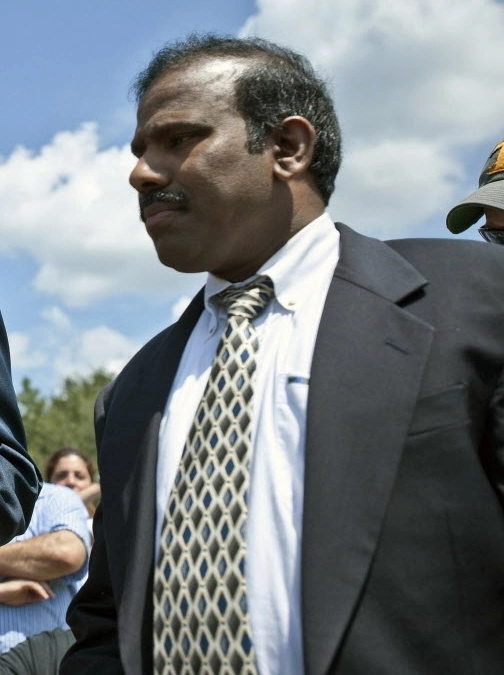
| 3 Quotes | |
| Known as | K. A. Paul |
| Occup. | Priest |
| From | USA |
| Born | September 25, 1963 Andhra Pradesh, India |
| Age | 62 years |
| Cite | |
Citation Formats
APA Style (7th ed.)
Kilari anand paul biography, facts and quotes. (2026, February 11). FixQuotes. https://fixquotes.com/authors/kilari-anand-paul/
Chicago Style
"Kilari Anand Paul biography, facts and quotes." FixQuotes. February 11, 2026. https://fixquotes.com/authors/kilari-anand-paul/.
MLA Style (9th ed.)
"Kilari Anand Paul biography, facts and quotes." FixQuotes, 11 Feb. 2026, https://fixquotes.com/authors/kilari-anand-paul/. Accessed 13 Feb. 2026.
Early Life and Background
Kilari Anand Paul was born on September 25, 1963, in the United States, into a period when American public religion was both politically assertive and internally divided - animated by Cold War certainties, reshaped by civil rights debates, and, by the end of his youth, increasingly attentive to global conflict and migration. That larger backdrop mattered to Paul because his later identity as a priest would be forged not only in parish routines but also in the abrasive, media-saturated terrain where faith met geopolitics and cultural anxiety.From early on, Paul showed the profile of a bridge-builder with a confrontational conscience: drawn to pastoral language and moral appeal, yet unwilling to treat religion as a private sentiment sealed off from public consequence. Friends and colleagues later described him as a man for whom "priesthood" meant presence at the flashpoints of communal fear - the places where symbolic acts could either inflame or calm crowds. That instinct toward public intercession became a defining feature of his life, and it set him on a path where spiritual counsel and crisis diplomacy would repeatedly overlap.
Education and Formative Influences
Paul's formation as a priest unfolded amid late-20th-century American debates about pluralism, free speech, and the boundaries of religious witness. The clerical temperament he developed was shaped by two persistent pressures: the inherited pastoral responsibility to serve consciences one by one, and the modern reality that a single provocative gesture - a sermon, a protest, a threatened act of desecration - could circulate instantly and produce international repercussions. This environment pushed him toward a ministry in which ethical discernment, not merely doctrinal assertion, became central.Career, Major Works, and Turning Points
Paul became best known for stepping into controversies that linked American religious activism to global Muslim-Christian tensions, using his clerical standing as leverage to de-escalate. The most visible turning points in his public life came when he positioned himself as a mediator in moments when political outrage and religious symbolism threatened to metastasize into violence. Rather than seeking attention for its own sake, he often appeared in the role of the anxious negotiator, trying to convert combustible certainty into restraint - a vocation that demanded both moral clarity and a willingness to accept criticism from multiple sides.Philosophy, Style, and Themes
Paul's ethical posture is best understood as a form of pastoral consequentialism: a belief that legality is not the final measure of righteousness, and that spiritual leadership must ask what an act does to the vulnerable, the fearful, and the easily mobilized. His public statements repeatedly separated the permissibility of an action from its moral wisdom, insisting that the priest's job is to press beyond rights-talk into responsibility. In controversies over religious offense, he framed the central question as not whether a person can do something, but whether doing it would serve peace, neighbor-love, and the possibility of coexistence.His language carried the cadence of a mediator who knows that humiliation is a seed of violence. When he argued that "Does the imam have a legal right to build the mosque at Ground Zero? The answer is yes. But is it the right thing to do? The answer is no. And most Americans, and most moderate Muslims, join with me in that call". , he revealed a psychological need to create a third space between absolutist camps - a space where empathy could coexist with firm moral judgment. Likewise, his insistence, "I can tell you 100 percent Pastor Jones will not burn the Quran tomorrow. There will be no Quran burning". , showed a priestly impulse toward containment: not triumph, but the prevention of harm through persuasion, reassurance, and practical intervention. And in the blunt moral syllogism, "Is it the right thing to burn Qurans? Legally? Can pastor burn Quran tomorrow? People accept legally it is right. But is it the right thing to do? No". , Paul exposed the core theme of his ministry - that sacred texts and sacred memories are not props in culture war theater, but objects whose violation predictably injures real communities.
Legacy and Influence
Paul's enduring significance lies less in institutional achievement than in a model of priesthood adapted to an era of viral outrage: the cleric as de-escalator, ethicist, and public conscience. In the early 21st century - when interreligious suspicion, terrorism fears, and media amplification made symbolic provocation uniquely dangerous - he treated restraint as a moral practice rather than a capitulation. For supporters, he exemplified courage through mediation; for critics, he sometimes seemed too willing to police symbolism. Yet his record reflects a consistent inner thesis: that peace is not merely the absence of conflict, but the disciplined refusal to turn faith into a weapon, especially when law provides cover for cruelty.Our collection contains 3 quotes written by Kilari, under the main topics: Freedom - Quran.
Source / external links