
Kim Dae Jung Biography Quotes 18 Report mistakes
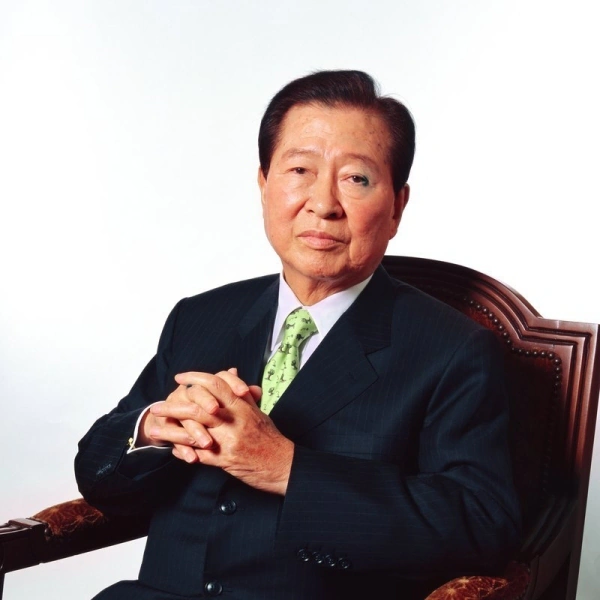
| 18 Quotes | |
| Occup. | Leader |
| From | South Korea |
| Born | December 3, 1925 |
| Died | August 18, 2009 |
| Aged | 83 years |
| Cite | |
Citation Formats
APA Style (7th ed.)
Kim dae jung biography, facts and quotes. (2026, February 11). FixQuotes. https://fixquotes.com/authors/kim-dae-jung/
Chicago Style
"Kim Dae Jung biography, facts and quotes." FixQuotes. February 11, 2026. https://fixquotes.com/authors/kim-dae-jung/.
MLA Style (9th ed.)
"Kim Dae Jung biography, facts and quotes." FixQuotes, 11 Feb. 2026, https://fixquotes.com/authors/kim-dae-jung/. Accessed 26 Mar. 2026.
Early Life and Background
Kim Dae Jung was born on December 3, 1925, on Hauido Island in South Jeolla Province, then under Japanese colonial rule. The archipelago life - boats, tides, and the hard math of survival - bred both a maritime practicality and an instinct for negotiation. His family was relatively comfortable by rural standards, yet the wider reality of dispossession and surveillance shaped the young Kim's sense that politics was not theory but a force that could enter a household uninvited.Liberation in 1945 and the violent partition that followed threw his generation into permanent contingency. In Mokpo and the southwest, ideological cleansing, factional reprisals, and the Korean War made civic life feel provisional - a lesson Kim would carry into his lifelong suspicion of absolutism. That early experience of fragile order helped form a leader who pursued security and democracy together, not as sequential luxuries but as interdependent necessities.
Education and Formative Influences
Kim did not follow a straight, elite bureaucratic path. He studied commerce and worked in shipping and business in Mokpo, acquiring a manager's eye for budgets and logistics even as he read widely and listened closely to the arguments of reformers and nationalists. The formative influence was less a single mentor than the collision of colonial modernity, war, and postwar corruption - teaching him that persuasion mattered, that institutions could be rebuilt, and that a regional outsider would need language sharp enough to travel beyond Jeolla into a divided national audience.Career, Major Works, and Turning Points
Kim entered politics in the 1950s and rose within the Democratic Party, winning a National Assembly seat and, in 1971, mounting a formidable presidential challenge to Park Chung Hee, narrowly losing but emerging as the most durable face of democratic opposition. Under the Yushin dictatorship he survived arrest, torture, and in 1973 a notorious kidnapping from Tokyo by South Korean agents - an episode that internationalized his cause and deepened his conviction that moral legitimacy could outlast brute force. After Chun Doo Hwan's coup, Kim was condemned to death in 1980 in connection with the Gwangju uprising; commutation and years of imprisonment and exile followed. He returned to lead successive opposition campaigns, finally winning the presidency in 1997 amid the Asian Financial Crisis and entering office in 1998, pushing financial and corporate restructuring and a political opening toward North Korea that culminated in the 2000 inter-Korean summit. Awarded the Nobel Peace Prize in 2000, he left office in 2003 but remained a conscience of democratic Korea until his death on August 18, 2009.Philosophy, Style, and Themes
Kim's inner life was defined by a tension he learned to live inside: principled resistance paired with an almost accountant-like patience for incremental gains. His Catholic faith and repeated brushes with death pressed him toward a politics of conscience, yet he never confused conscience with recklessness. He spoke in tight moral clauses, but he negotiated like a survivor - attentive to timing, leverage, and the psychology of adversaries. Even his most criticized initiatives were framed as hedges against catastrophe, shaped by the memory of how quickly the peninsula could slide from rhetoric into bloodshed.Nowhere was this clearer than his approach to North Korea and regional security. He resisted romantic reunification talk, insisting, “Unification is not our present goal. That is a future program”. The line reveals a mind trained by trauma to distrust sudden endings - the kind that invite purges, collapse, or war - and to prefer managed change over symbolic victories. He separated hopes from strategy: “Unification is one thing, and stability in Northeast Asia is another thing”. This was not evasion but a core theme of his statecraft: democracy at home required avoiding panic abroad, and peace required mechanisms that could survive leadership changes on both sides. His Sunshine Policy therefore aimed less at immediate transformation than at widening options - trade, family reunions, humanitarian aid - while prodding the North toward permeability: “Well, that is very imperative to let North Korea open door to outside”. The psychological signature is consistent across decades - a dissident who knew ideals need doors, and that doors open most reliably under pressure tempered by dignity.
Legacy and Influence
Kim Dae Jung helped complete South Korea's passage from authoritarian developmentalism to durable electoral democracy, proving that a long-persecuted opposition leader could govern without vengeance while still widening civil liberties. He normalized the idea that engagement with Pyongyang could be a tool of national security rather than a synonym for appeasement, even as later crises exposed the limits of trust and the costs of misreading the North. His enduring influence lies in the model he offered Asia and the world: a politician forged in imprisonment and exile who treated democracy as a lived discipline, and who argued - sometimes against his own supporters' impatience - that peace is built less by grand declarations than by institutions, incentives, and the slow, stubborn refusal to give up on human change.Our collection contains 18 quotes written by Kim, under the main topics: Freedom - War - Change - Peace - Vision & Strategy.
Source / external links