
Kim Stanley Robinson Biography Quotes 2 Report mistakes
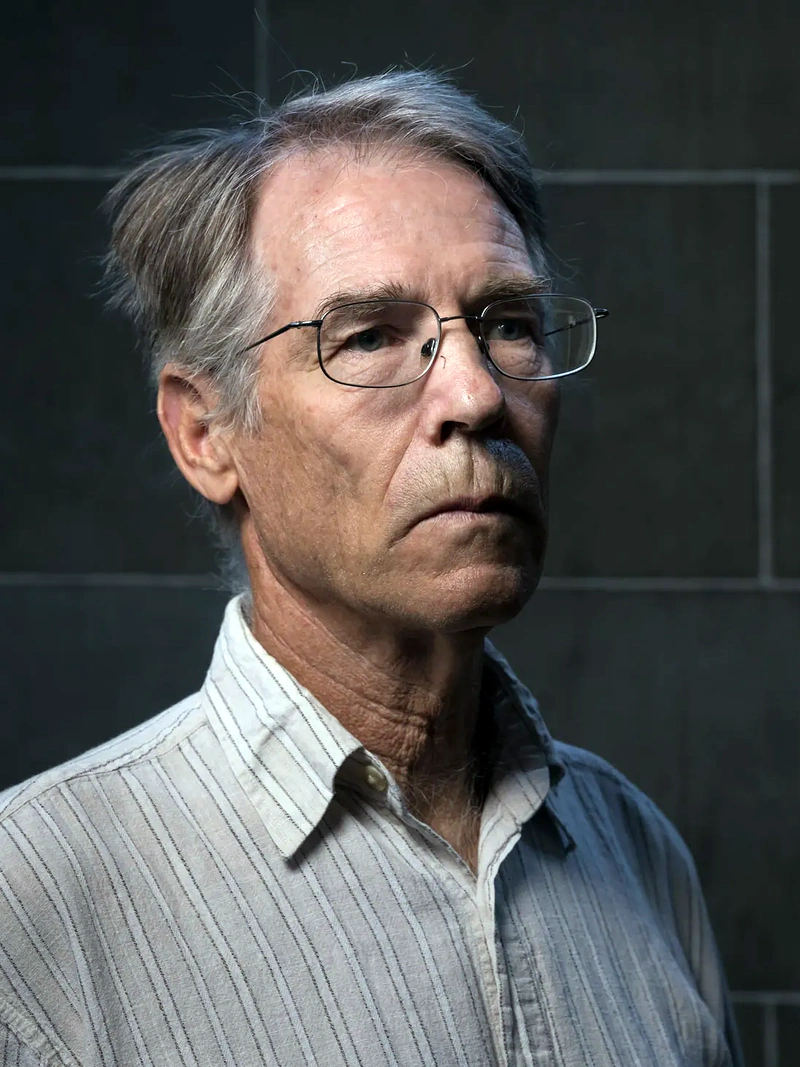
Attr: Bloomberg
| 2 Quotes | |
| Occup. | Writer |
| From | USA |
| Born | March 23, 1952 Waukegan, Illinois, United States |
| Age | 74 years |
| Cite | |
Citation Formats
APA Style (7th ed.)
Kim stanley robinson biography, facts and quotes. (2026, February 11). FixQuotes. https://fixquotes.com/authors/kim-stanley-robinson/
Chicago Style
"Kim Stanley Robinson biography, facts and quotes." FixQuotes. February 11, 2026. https://fixquotes.com/authors/kim-stanley-robinson/.
MLA Style (9th ed.)
"Kim Stanley Robinson biography, facts and quotes." FixQuotes, 11 Feb. 2026, https://fixquotes.com/authors/kim-stanley-robinson/. Accessed 26 Mar. 2026.
Early Life and Background
Kim Stanley Robinson was born on March 23, 1952, in Waukegan, Illinois, and grew up largely in Southern California as the postwar United States remade itself around freeways, suburbs, defense spending, and a horizon of technological confidence. That setting mattered: Robinson came of age amid the contradictions of the Sunbelt boom, where a dazzling aerospace future sat beside smog, water politics, and a landscape engineered to look natural. Long before his fiction turned toward climate, urban form, and planetary stewardship, he was absorbing how institutions, infrastructure, and ecology interlock - and how quickly a place can be transformed by ideology and money.His inner life has often been described through a patient, observant temperament rather than the cult of the lone genius. Friends and readers have noted a man drawn to hiking, the Sierra Nevada, and long attention spans - habits that became both refuge and method. Robinson's fiction would later treat landscapes not as backdrops but as actors, and his characters often wrestle with despair, endurance, and solidarity. The era also trained him in skepticism: Vietnam, Watergate, and the oil shocks taught a generation to distrust easy triumphalism, while environmentalism offered a language for responsibility that did not rely on nostalgia.
Education and Formative Influences
Robinson studied literature in California, earning a BA from the University of California, San Diego, and later an MA and PhD in English from the University of California, Davis. A decisive formative influence was his doctoral work on Philip K. Dick, which sharpened his interest in how politics and perception shape reality; unlike Dick's paranoid metaphysics, Robinson would cultivate a civic, material imagination - attentive to economics, institutions, and geology. He also absorbed the American tradition of utopian and anti-utopian writing, plus the rigor of academic argument, which later surfaced as essays, documentary-like exposition, and a willingness to model systems rather than merely hint at them.Career, Major Works, and Turning Points
After early novels and the Orange County trilogy - The Wild Shore (1984), The Gold Coast (1988), and Pacific Edge (1990) - Robinson achieved landmark stature with the Mars trilogy: Red Mars (1992), Green Mars (1993), and Blue Mars (1996), which fused hard science, political theory, and character ensembles into a generational epic about terraforming and governance. His subsequent career widened in ambition: Antarctica (1997) explored science and treaty politics; The Years of Rice and Salt (2002) reimagined world history after the Black Death; the "Science in the Capital" trilogy (2004-2007) tackled U.S. climate policy from inside Washington; 2312 (2012) and Aurora (2015) interrogated space settlement and limits; New York 2140 (2017) and The Ministry for the Future (2020) confronted climate crisis through finance, law, activism, and state power. A turning point across these works is the shift from imagining alternative worlds to insisting that our own world contains multiple futures, contingent on collective choices - a move that made him central to contemporary climate fiction while remaining, at core, a political novelist.Philosophy, Style, and Themes
Robinson is a utopian realist: he distrusts pure apocalypse and pure techno-salvation, preferring plausible pathways where imperfect people build imperfect institutions under pressure. His work is steeped in democratic argument, labor, and the slow grinding of process - committees, constitutions, cooperatives, court cases, carbon markets, and public banks - because he believes politics is how a species thinks. The ensemble cast is not a gimmick but an ethic: no single hero can comprehend a planet. This is also where his humor bites. “You can't get any movement larger than five people without including at least one flippin idiot”. The line is comic, but psychologically it signals his refusal of purity fantasies; he expects fallibility inside any coalition, and still insists coalition is the only engine strong enough to turn history.His sentences often carry the calm authority of field notes - glaciers measured, cities mapped, budgets argued - yet he is equally interested in the weather inside a mind: grief, stubborn hope, the temptation to detach. Under stress, his characters oscillate between cynicism and commitment, and Robinson repeatedly dramatizes the choice to stay engaged. His politics can be sharply judgmental when he sees freedom invoked as a cover for domination. “That's libertarians for you - anarchists who want police protection from their slaves”. Read as characterization, it reveals a writer whose moral center is anti-oligarchic and pro-public: the state is not automatically virtuous, but power without accountability is worse, and markets without boundaries metastasize. Across Mars, drowned Manhattan, and a warming Earth, his signature theme is the long emergency: how to preserve dignity and beauty while reorganizing energy, property, and desire.
Legacy and Influence
Robinson has become one of the defining American science fiction writers of the late 20th and early 21st centuries, not only for the scale of his imagined worlds but for restoring political economy and ecology to the center of the genre. The Mars trilogy helped set a template for serious planetary sf; later books became touchstones for climate discourse, cited by activists, policymakers, and fellow writers exploring "cli-fi" without surrendering to nihilism. His enduring influence lies in making hope intellectually demanding: he asks readers to think in systems, argue in good faith, and accept that the future will be made by flawed people cooperating anyway.Our collection contains 2 quotes written by Kim, under the main topics: Sarcastic - Freedom.
Kim Stanley Robinson Famous Works
- 2020 Ministry for the Future (Novel)
- 2017 New York 2140 (Novel)
- 2015 Aurora (Novel)
- 2012 2312 (Novel)
- 2009 Galileo's Dream (Novel)
- 2007 Sixty Days and Counting (Novel)
- 2005 Fifty Degrees Below (Novel)
- 2004 Forty Signs of Rain (Novel)
- 2002 The Years of Rice and Salt (Novel)
- 1999 The Martians (Collection)
- 1997 Antarctica (Novel)
- 1996 Blue Mars (Novel)
- 1993 Green Mars (Novel)
- 1992 Red Mars (Novel)
- 1990 Pacific Edge (Novel)
- 1988 The Gold Coast (Novel)
- 1985 The Memory of Whiteness (Novel)
- 1984 Icehenge (Novel)
- 1984 The Wild Shore (Novel)