
King George V Biography Quotes 8 Report mistakes
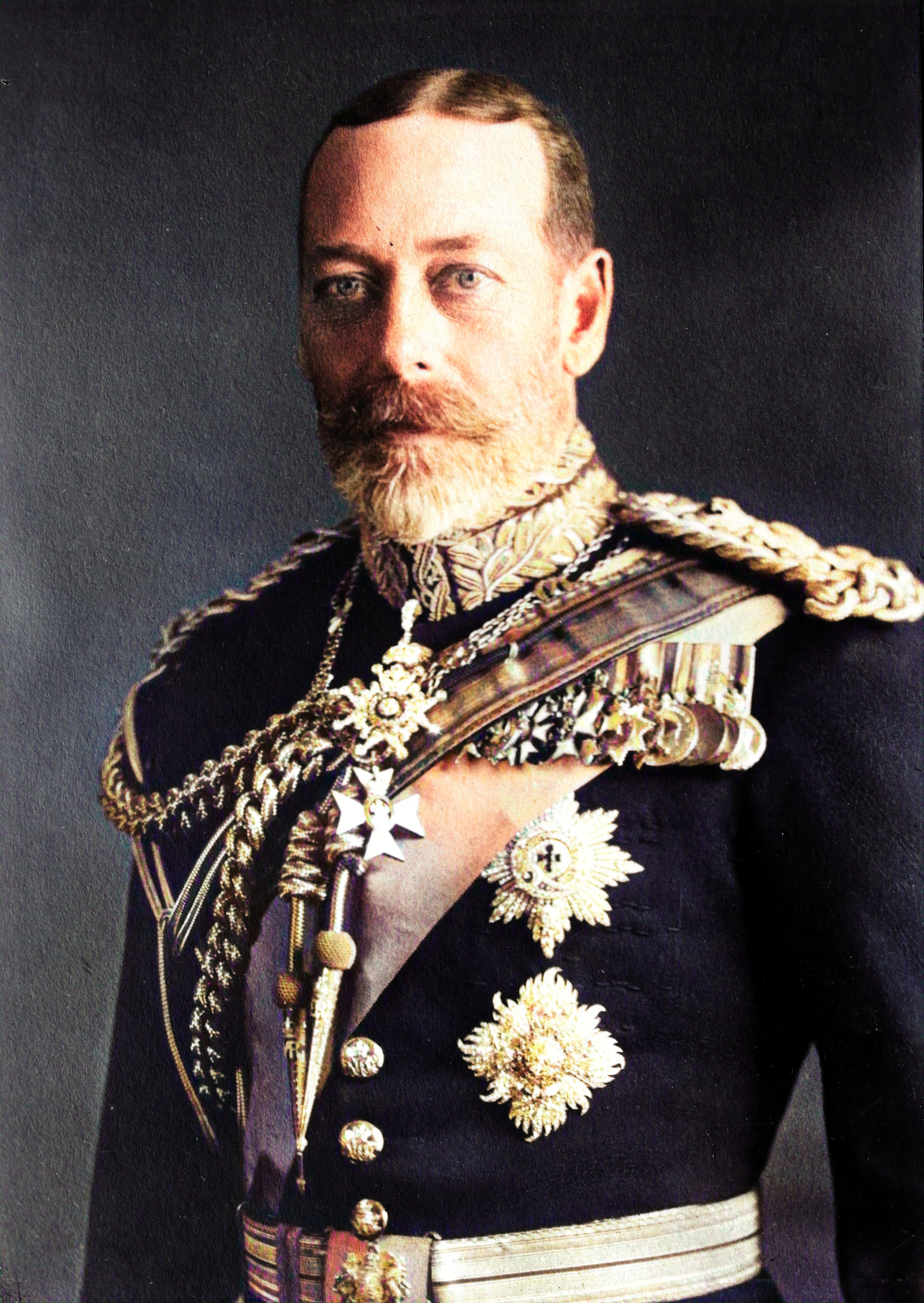
| 8 Quotes | |
| Born as | Prince George of Wales |
| Occup. | Royalty |
| From | United Kingdom |
| Spouse | Mary of Teck |
| Born | June 3, 1865 Marlborough House, London, United Kingdom |
| Died | January 20, 1936 Sandringham House, Norfolk, United Kingdom |
| Cause | Bronchial pneumonia |
| Aged | 70 years |
| Cite | |
Citation Formats
APA Style (7th ed.)
King george v biography, facts and quotes. (2026, February 20). FixQuotes. https://fixquotes.com/authors/king-george-v/
Chicago Style
"King George V biography, facts and quotes." FixQuotes. February 20, 2026. https://fixquotes.com/authors/king-george-v/.
MLA Style (9th ed.)
"King George V biography, facts and quotes." FixQuotes, 20 Feb. 2026, https://fixquotes.com/authors/king-george-v/. Accessed 6 Mar. 2026.
Early Life and Background
George Frederick Ernest Albert was born at Marlborough House, London, on 3 June 1865, the second son of the Prince and Princess of Wales (the future Edward VII and Queen Alexandra). In a family defined by duty and display, George grew up in the shadow of the long Victorian monarchy and of an heir apparent father whose social charisma and distance set the emotional weather of the household. His early world was royal, but not soft: the Wales children were managed by strict routines, moral expectations, and the watchful sense that public life could curdle into scandal.Because his elder brother Albert Victor stood first in line, George was initially shaped for service rather than sovereignty. That accident of birth helped form his later temperament: cautious, practical, and happiest inside systems he could understand - ships, schedules, protocol, and the steady pressure of obligation. The late-19th-century United Kingdom he inherited as a boy was already wrestling with mass politics, labor organization, and imperial ambition; his earliest impressions were of a monarchy that survived by being seen, and by staying just out of reach.
Education and Formative Influences
George was educated privately and, more decisively, through the Royal Navy: from 1877 he trained as a cadet aboard HMS Britannia and then served on HMS Bacchante (1879-1882) on a world tour that exposed him to the breadth of empire and the discipline of command. The navy gave him a model of hierarchy and comradeship that he trusted more than court life, and it deepened his identification with imperial geography - ports, dominions, and sea lanes - as the connective tissue of British power. When Albert Victor died in 1892, George became Duke of York and heir presumptive; the shock forced him out of the professional identity he preferred and into the symbolic role he would spend his life trying to perform with steadiness rather than brilliance.Career, Major Works, and Turning Points
In 1893 George married Princess Victoria Mary of Teck (Mary), a union that became the emotional and managerial core of his reign; together they raised six children, including the future Edward VIII and George VI. He became Prince of Wales in 1901 and king on Edward VII's death in 1910, entering office amid constitutional tension between the House of Lords and an elected government that passed the Parliament Act (1911) and widened democratic authority. The First World War transformed his kingship into one of national endurance: he visited factories, hospitals, and front areas, endured personal injury in 1915, and in 1917 renamed the royal house from Saxe-Coburg and Gotha to Windsor to blunt anti-German feeling. After the war he navigated Irish secession, labor unrest, and the general strike of 1926 while the empire evolved into a looser Commonwealth; his Christmas broadcasts (begun 1932) made the crown audible and domestic. He died on 20 January 1936 at Sandringham, closing a reign that had tried to keep continuity intact while everything around it modernized.Philosophy, Style, and Themes
George V's inner life was defined by discipline, inherited anxiety, and a profound belief that the monarchy survived by self-restraint. He distrusted emotional improvisation and preferred rules that could be obeyed: the famous domestic maxim “Always go to the bathroom when you have a chance”. is comic on its face, but it reveals a mind that treated life as logistics - anticipating strain, minimizing risk, and mastering the body so the public role would not be betrayed. That same preference for order colored his politics. He did not seek ideological authorship; instead he tried to be the fixed point around which elected governments could rotate, whether Liberal, Conservative, or Labour, and he watched modern mass society with a wary, methodical attention.Yet his reserve could open into stark moral clarity when confronted with suffering and war. Visiting postwar cemeteries and memorial landscapes, he asked whether there could be “more potent advocates of peace upon earth through the years to come than this massed multitude of silent witnesses to the desolation of war”. The line exposes a monarch who processed trauma through ritual and symbolism: the dead, arranged and named, became a political argument against future catastrophe. And when shown urban deprivation, he could respond with rare candor: “Is it possible that my people live in such awful conditions? I tell you, Mr Wheatley, that if I had to live in conditions like that I would be a revolutionary myself”. It is a revealing crack in the armor - empathy phrased as shock, and loyalty framed not as deference but as a conditional contract between crown and social justice.
Legacy and Influence
George V's legacy is less about innovation than about institutional survival under extreme pressure: he helped steer the monarchy through world war, the rise of organized labor and democratic legitimacy, and the remaking of empire into Commonwealth, while managing the crown's image as national rather than partisan. By normalizing the royal family's domestic presentation, insisting on public service, and accepting constitutional limits as the price of endurance, he left his successors a workable template for 20th-century monarchy - one that would be tested immediately by the abdication crisis his death precipitated and, longer-term, by the very mass politics he had learned to meet with steadiness rather than spectacle.Our collection contains 8 quotes written by King, under the main topics: Witty One-Liners - Justice - Mortality - Leadership - Parenting.
Other people related to King: Lord Curzon (Statesman), Kate Middleton (Celebrity), Malcolm Campbell (Celebrity)
Source / external links