
King James I Biography Quotes 3 Report mistakes
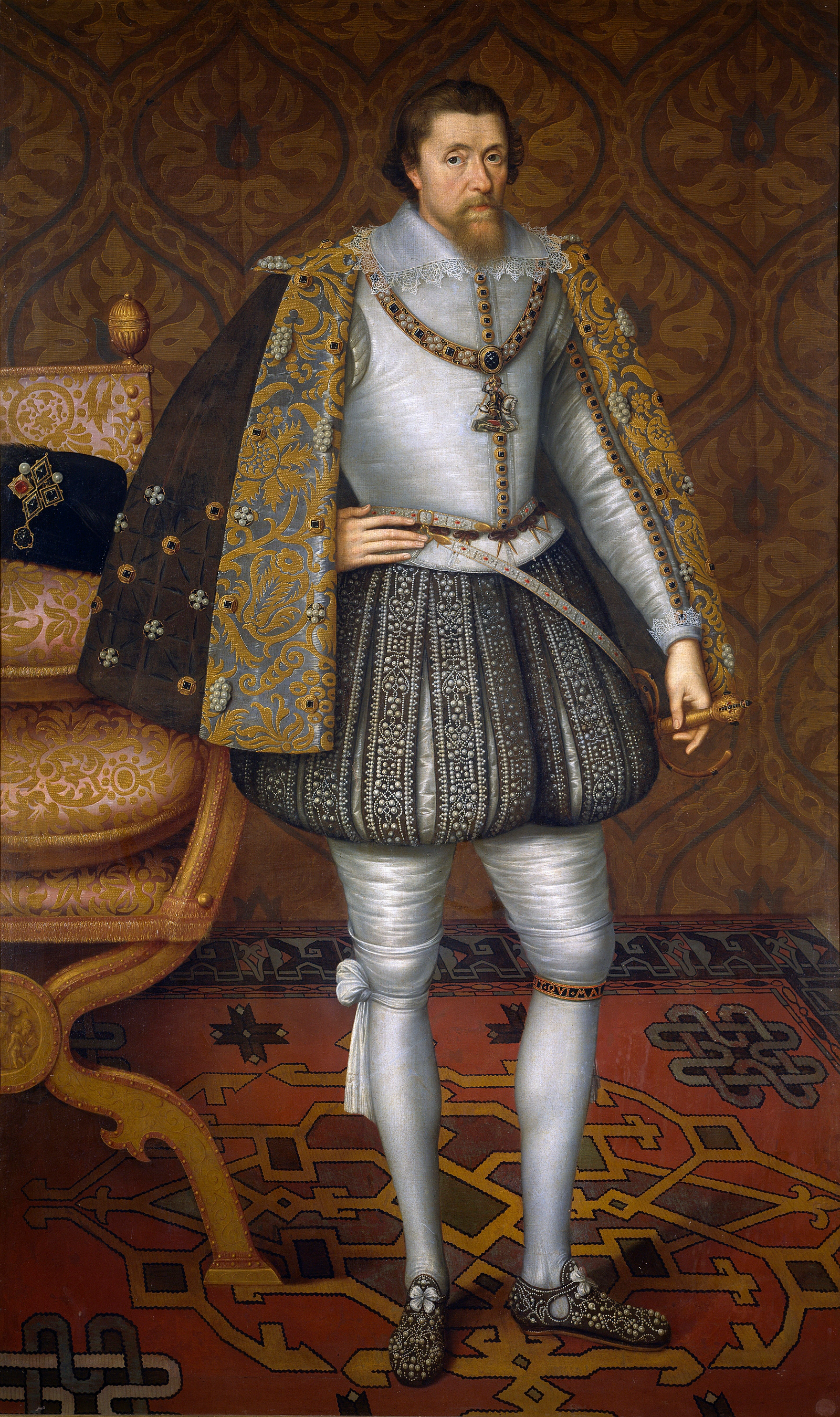
| 3 Quotes | |
| Born as | James VI of Scotland |
| Occup. | Royalty |
| From | Scotland |
| Born | June 19, 1566 Edinburgh, Scotland |
| Died | March 27, 1625 Theobalds, Hertfordshire, England |
| Cause | Natural Causes |
| Aged | 58 years |
| Cite | |
Citation Formats
APA Style (7th ed.)
King james i biography, facts and quotes. (2026, February 21). FixQuotes. https://fixquotes.com/authors/king-james-i/
Chicago Style
"King James I biography, facts and quotes." FixQuotes. February 21, 2026. https://fixquotes.com/authors/king-james-i/.
MLA Style (9th ed.)
"King James I biography, facts and quotes." FixQuotes, 21 Feb. 2026, https://fixquotes.com/authors/king-james-i/. Accessed 6 Mar. 2026.
Early Life and Background
James Stuart was born 19 June 1566 in Edinburgh Castle, the only surviving child of Mary, Queen of Scots, and Henry Stuart, Lord Darnley. Scotland in the 1560s was a kingdom fractured by Reformation aftershocks, clan rivalries, and the pull of foreign powers, and James entered that storm as both symbol and hostage: Darnley was murdered in 1567, Mary was forced to abdicate, and the infant became James VI under a regency that turned kingship into a contested office rather than a sacral inheritance.Raised amid coups and shifting guardians, James learned early that survival depended on reading men as closely as texts. Regents were assassinated, factions fought over his person, and the young king was moved between castles and households for security. The emotional center of his childhood - a mother absent in captivity and later execution - left him both hungry for authority and wary of intimacy, a temperament that would later surface in his dependence on favorites and in his insistence that monarchy must not be reduced to a mere committee.
Education and Formative Influences
James received a rigorous humanist education under George Buchanan and Peter Young, steeped in Latin, rhetoric, theology, and political history, with a sharp edge: Buchanan favored resistance theory and did not spare the boy moral critique. The result was a king who could argue like a scholar and who treated doctrine and statecraft as intertwined crafts. His Protestant identity was sincere yet pragmatic, shaped by Scotland's Kirk politics and by a lifelong ambition to unite the British Isles under one crown and one peace.Career, Major Works, and Turning Points
James assumed personal rule in Scotland in the 1580s, seeking to tame feuding nobles and to press the Kirk into a more episcopal, crown-friendly settlement. In 1603 he inherited the English throne as James I after Elizabeth I died childless, creating the Union of the Crowns and shifting his stage from Edinburgh to London, where he faced a larger, richer, and more combustible political culture. Early hopes of concord collided with the Gunpowder Plot (1605), harsh fiscal realities, and a Parliament jealous of its privileges; his court became synonymous with patronage and the rise and fall of powerful favorites such as Robert Carr and George Villiers. James wrote extensively - Basilikon Doron (1599), a handbook of kingcraft for his son, and The True Law of Free Monarchies (1598), a forceful case for divine-right monarchy - and he authorized the 1611 King James Bible, a cultural act of state that outlasted every policy dispute of his reign.Philosophy, Style, and Themes
James's inner life was defined by a paradox: he craved the steadiness of learned order yet ruled through the improvisations of court politics. He advertised himself as a peacemaker and, in many respects, was - ending the long Anglo-Spanish war and preferring negotiated settlements to crusading zeal - but he also demanded that subjects recognize a metaphysical hierarchy with the king near its summit. His political writings pressed the idea that monarchy was paternal, ordained, and answerable to God more than to assemblies, a position hardened by his childhood experience of being possessed by factions and regents.At the same time, James was not merely a dogmatist; he wanted to be taken seriously as a thinker, and he often spoke like one. “Were I not a king, I would be a university man”. That hunger for intellectual legitimacy helped produce the carefully managed scholarship behind the King James Bible and his penchant for theological disputation. His moral voice could be surprisingly concrete and bodily, as in his attack on tobacco, “Smoking is hateful to the nose, harmful to the brain, and dangerous to the lungs”. , revealing a king who treated vice as both a spiritual and physiological disorder. Yet his social imagination remained sharply stratified, captured in his maxim, “I can make a lord, but only God can make a gentleman”. , a telling admission that titles could be sold or bestowed, but character and breeding - in his view - belonged to a deeper, quasi-divine economy.
Legacy and Influence
James died 27 March 1625 at Theobalds House, leaving a monarchy wealthier in cultural capital than in political harmony, and a son, Charles I, who inherited unresolved tensions over taxation, religion, and the boundaries of royal power. His reign bridged the Renaissance and the coming age of revolution: he advanced a theory of kingship that sharpened later constitutional conflict, yet he also delivered a literary and religious monument in the King James Bible that shaped English prose and Protestant devotion for centuries. Remembered variously as scholar-king, wary tactician, and awkward autocrat, James remains central to the story of how Britain moved from dynastic union toward a modern contest over sovereignty itself.Our collection contains 3 quotes written by King, under the main topics: Wisdom - Learning - Health.
Other people related to King: George Herbert (Poet), Robert Cecil (Public Servant), Lord Chandos (Writer), Barnabe Barnes (Poet)
Source / external links