
Kirsty Coventry Biography Quotes 5 Report mistakes
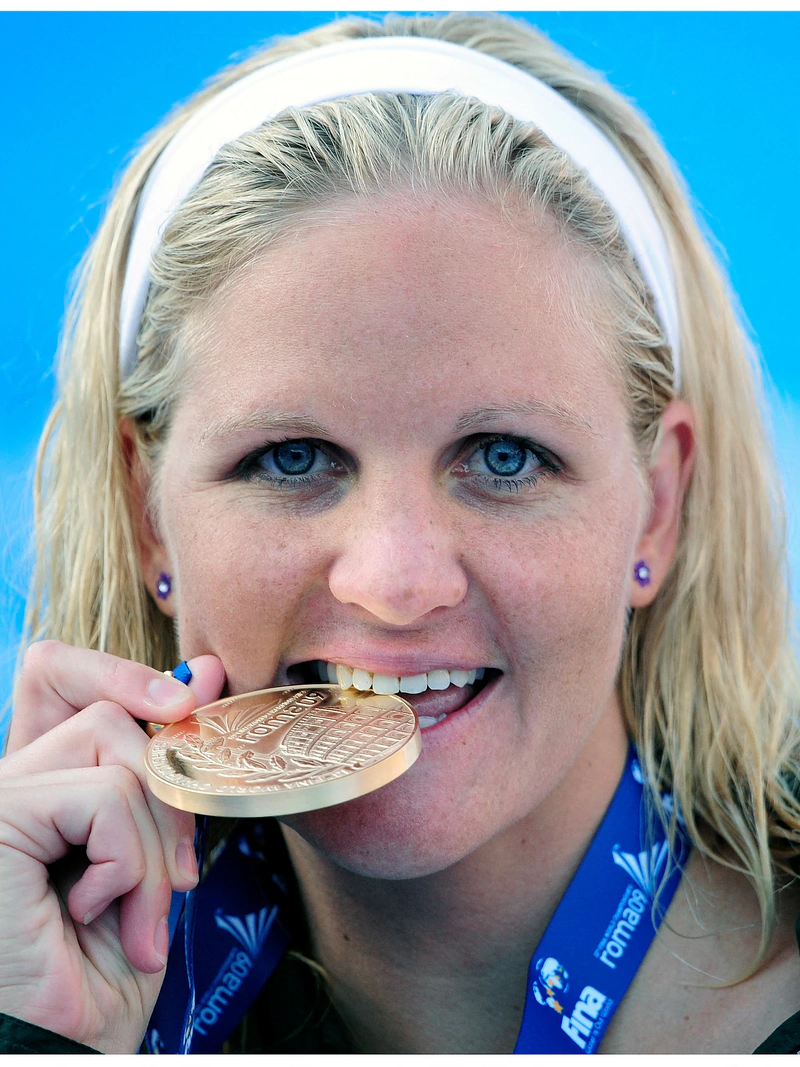
Attr: Reuters
| 5 Quotes | |
| Born as | Kirsty Leigh Coventry |
| Occup. | Athlete |
| From | Zimbabwe |
| Spouse | Tyrone Seward |
| Born | September 16, 1983 Harare, Zimbabwe |
| Age | 42 years |
| Cite | |
Citation Formats
APA Style (7th ed.)
Kirsty coventry biography, facts and quotes. (2026, February 11). FixQuotes. https://fixquotes.com/authors/kirsty-coventry/
Chicago Style
"Kirsty Coventry biography, facts and quotes." FixQuotes. February 11, 2026. https://fixquotes.com/authors/kirsty-coventry/.
MLA Style (9th ed.)
"Kirsty Coventry biography, facts and quotes." FixQuotes, 11 Feb. 2026, https://fixquotes.com/authors/kirsty-coventry/. Accessed 12 Feb. 2026.
Early Life and Background
Kirsty Leigh Coventry was born on September 16, 1983, in Harare, Zimbabwe, in the last decade of Robert Mugabe's early rule - a period when the optimism of post-independence nation-building coexisted with tightening political control. She grew up in a family that valued sport and self-reliance, and like many white Zimbabweans of her generation, her identity was shaped by an everyday sense of living at a crossroads: rooted locally yet aware that opportunity and competition often lay beyond national borders.Swimming became both refuge and proving ground. Harare's pools offered routine, measurable progress, and a kind of fairness that politics could not guarantee. As Zimbabwe entered the turbulence of the late 1990s and early 2000s, with economic pressure and social strain increasingly visible, Coventry's early discipline was forged in a setting where resources were limited and travel costly. That scarcity sharpened her pragmatism: every training block needed to count, and every race was an argument that talent from a small, sanctioned, landlocked country could still matter on the world stage.
Education and Formative Influences
Coventry attended Dominican Convent High School in Harare and emerged as a standout swimmer before moving to the United States on a scholarship to Auburn University, where she trained under coach David Marsh and competed in the NCAA. Auburn's high-performance environment - depth in training groups, scientific support, relentless meet schedules - expanded her sense of what "normal" elite preparation looked like, while also confronting her with the psychological challenge of leaving home and carrying Zimbabwe's expectations abroad. The contrast between Zimbabwe's constraints and American abundance became formative: it did not diminish her origins so much as clarify the deliberate choices required to bridge that gap.Career, Major Works, and Turning Points
Coventry became Zimbabwe's most decorated Olympian and one of the defining backstroke and individual medley swimmers of her era. After competing at Sydney 2000 as a teenager, she announced herself globally at Athens 2004 by winning Olympic gold in the 200-meter backstroke, plus silver in the 100 backstroke and bronze in the 200 IM. Beijing 2008 marked her competitive apex: she defended her 200 backstroke title and added three silvers (100 backstroke, 200 IM, 400 IM), repeatedly pushing world-record pace in a meet dominated by the sport's technological and physiological arms race. Across multiple World Championships she amassed additional medals, sustaining elite relevance through changes in suit regulations and shifting international fields. In the 2010s she gradually transitioned from full-time racing to leadership, serving on the International Olympic Committee Athletes' Commission and later entering Zimbabwean government as Minister of Youth, Sport, Arts and Recreation (appointed in 2018), a move that repositioned her from emblematic athlete to national institution.Philosophy, Style, and Themes
Coventry's swimming was defined by control under pressure: economical backstroke mechanics, a patient first 100 in the 200, and a closing speed that functioned as psychological leverage. Yet her inner life, as expressed in interviews, suggests she guarded herself against the corrosive arithmetic of fame. "I never swam for medals. I just swam to see how fast I could go". Taken seriously, this is less modesty than self-protection - an attempt to relocate motivation from external reward to an internal experiment, where the opponent is time and the self is a laboratory.Ambition, however, was never absent. Coming from Zimbabwe, she understood that merely being excellent locally could still feel like invisibility internationally, and she refused that ceiling: "I didn’t want to be the best in Zimbabwe. I wanted to be the best in the world". The sentence carries the psychology of scale - the will to measure oneself against the largest possible field - and also the loneliness of that choice, because it demands leaving familiar networks and risking failure in front of larger audiences. Her mature outlook kept that ambition from hardening into entitlement: "Success is never final. You have to keep working, keep learning, and keep pushing". That ethic helped her survive the sport's volatility, from the high-gloss Beijing era to the recalibration that followed, and it later informed her administrative posture: sport as a long game, not a single podium.
Legacy and Influence
Coventry's legacy is simultaneously athletic, symbolic, and political. She expanded the map of Olympic possibility for African swimmers and for small federations, proving that world-class performance could be built through strategic migration, elite coaching partnerships, and an unusually resilient competitive temperament. In Zimbabwe she became a rare unifying figure during years of fracture, a story citizens could claim without qualification - not because it solved national problems, but because it offered proof of excellence amid constraint. Her later roles in the IOC and government complicated her public image, exposing her to the compromises and criticisms that surround power, yet they also underscored her enduring influence: she did not merely win races; she helped define what a Zimbabwean sporting life could aspire to become, and what responsibility might follow once the cheering fades.Our collection contains 5 quotes written by Kirsty, under the main topics: Motivational - Sports - Success.
Source / external links