
Kjell Magne Bondevik Biography Quotes 17 Report mistakes
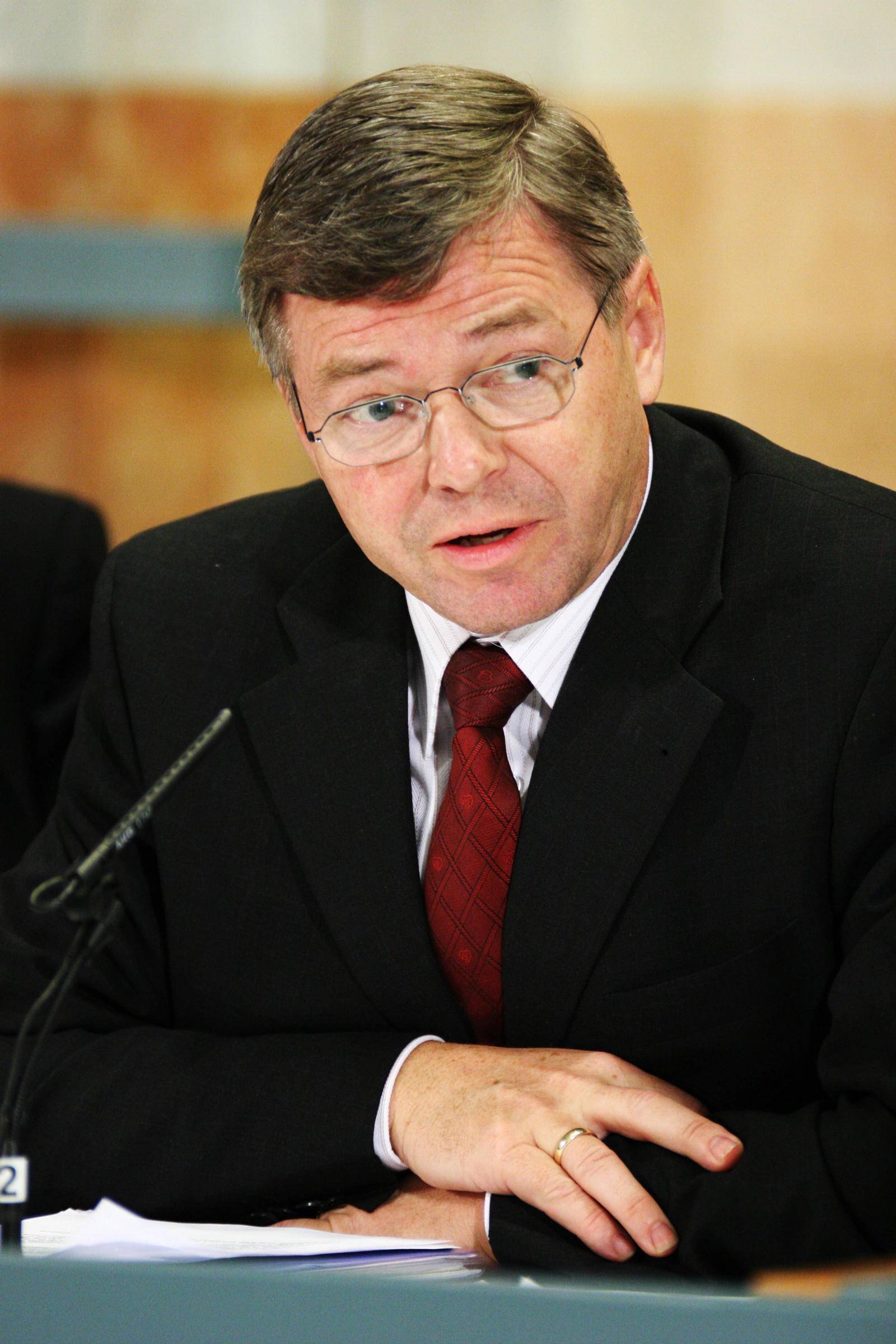
| 17 Quotes | |
| Occup. | Statesman |
| From | Norway |
| Born | September 3, 1947 |
| Age | 78 years |
| Cite | |
Citation Formats
APA Style (7th ed.)
Kjell magne bondevik biography, facts and quotes. (2026, March 16). FixQuotes. https://fixquotes.com/authors/kjell-magne-bondevik/
Chicago Style
"Kjell Magne Bondevik biography, facts and quotes." FixQuotes. March 16, 2026. https://fixquotes.com/authors/kjell-magne-bondevik/.
MLA Style (9th ed.)
"Kjell Magne Bondevik biography, facts and quotes." FixQuotes, 16 Mar. 2026, https://fixquotes.com/authors/kjell-magne-bondevik/. Accessed 26 Mar. 2026.
Early Life and Background
Kjell Magne Bondevik was born on September 3, 1947, in Molde and grew up in postwar western Norway, a region where small communities, seafaring horizons, and Lutheran moral culture still carried enormous weight. He was raised in a family shaped by both religion and public service; his father, Johannes Bondevik, was a schoolman and later a politician, and the household belonged to the broad Norwegian tradition in which faith, civic duty, and modesty were expected to coexist. Bondevik's childhood unfolded during the long social-democratic consolidation of Norway, when the welfare state was expanding and politics was increasingly technocratic, yet local life remained rooted in parish, school, and kinship networks.
That combination mattered. He did not emerge as a charismatic outsider or ideological firebrand, but as a figure deeply formed by the ethics of responsibility. The political culture around him valued consensus over spectacle and seriousness over self-display, traits that would become central to his public identity. Even early on, Bondevik seemed to fit a specifically Norwegian type of leader: restrained in tone, morally alert, suspicious of grandiosity, and convinced that personal integrity was itself a political instrument. His later struggles with pressure and mental health also suggest an inner life marked by conscience and self-scrutiny rather than appetite for domination.
Education and Formative Influences
Bondevik studied theology at the Norwegian School of Theology in Oslo, training for ministry before entering national politics. That education did not make him a pulpit politician so much as a statesman whose language of obligation drew from Christian humanism. He was also formed by the Christian Democratic Party, Kristelig Folkeparti, which in Norway occupied a distinctive space between conservatism and social conscience: family-oriented, ethically serious, skeptical of both market absolutism and radical secularism. The generation that came of age in the 1960s and 1970s had to absorb decolonization, the Cold War, the sexual revolution, and later the oil age; Bondevik's answer was neither nostalgia nor rupture, but an attempt to preserve moral seriousness inside a modern welfare democracy.
Career, Major Works, and Turning Points
Bondevik entered the Storting for the Christian Democrats in the 1970s and rose steadily, serving as Minister of Foreign Affairs from 1989 to 1990. He became party leader and then prime minister twice: first from 1997 to 2000, heading a centrist coalition, and again from 2001 to 2005, leading a center-right coalition in a changed international climate after September 11. His first government fell over a dispute tied to gas-fired power plants, a revealing collision between environmental principle and economic pressure. His second tenure was broader in scope: economic stewardship, welfare-state reform debates, immigration and integration questions, and a more outward-facing human-rights profile. In 1998 he took medical leave after entering a depressive episode, an unprecedented act for a sitting Norwegian prime minister and one that transformed public discussion of mental illness, leadership, and vulnerability. After leaving office he remained active internationally, notably through the Oslo Center for Peace and Human Rights, and in public memory he endured less as a partisan tactician than as a moral-political presence.
Philosophy, Style, and Themes
Bondevik's political philosophy was anchored in the idea that power must be disciplined by service. He distrusted politics understood as tribal combat and repeatedly defined public office in ethical rather than theatrical terms. “We must remember that politics is more than a power game. The core of politics in my view is to serve our citizens, to serve our fellow human beings”. That sentence captures both his strengths and his limits: he could appear earnest to the point of austerity, but the earnestness was real. He believed legitimacy came not from force of personality but from moral credibility, and in a parliamentary culture built on coalitions he treated compromise not as surrender but as democratic realism. “We have to find compromises. That's the way it is in Norway”. In his hands, consensus was not blandness; it was a discipline of coexistence in a small, plural society.
His themes widened further in foreign affairs and human rights. Bondevik linked domestic decency to international obligation, insisting that the state had duties beyond its own immediate interests. “Human dignity is independent of national borders. We must always defend the interests of the poor and the persecuted in other countries”. That was not rhetorical ornament. It reflected a worldview in which Christian ethics, postwar internationalism, and Norway's self-image as a humanitarian actor converged. He also spoke sharply against extremism, terrorism, and the political misuse of religion, revealing a psychology alert to the fragility of civilized norms. Even his public openness about depression fits this pattern: he treated frailty not as disqualifying weakness but as part of truthful citizenship, implicitly arguing that a humane polity must make room for limits as well as ambitions.
Legacy and Influence
Bondevik's legacy rests on a rare synthesis of office, restraint, and moral witness. He helped define the late 20th-century and early 21st-century role of the Norwegian Christian Democrats at a time when European confessional parties were losing coherence, and he demonstrated that a leader could be serious about faith without collapsing politics into sectarianism. His premierships belong to the era when Norway was growing richer through oil while trying to preserve egalitarian and humanitarian ideals; Bondevik personified that tension. He is remembered for coalition craftsmanship, for insisting that ethics remain central to public life, and for destigmatizing mental illness by refusing to conceal his own crisis. In Norwegian history he stands not as a builder of a single grand doctrine, but as a custodian of civic decency - a statesman whose influence lies in the standard of character he set.
Our collection contains 17 quotes written by Kjell, under the main topics: Ethics & Morality - Justice - Kindness - Equality - Peace.
Source / external links