
Klaus Schulze Biography Quotes 24 Report mistakes
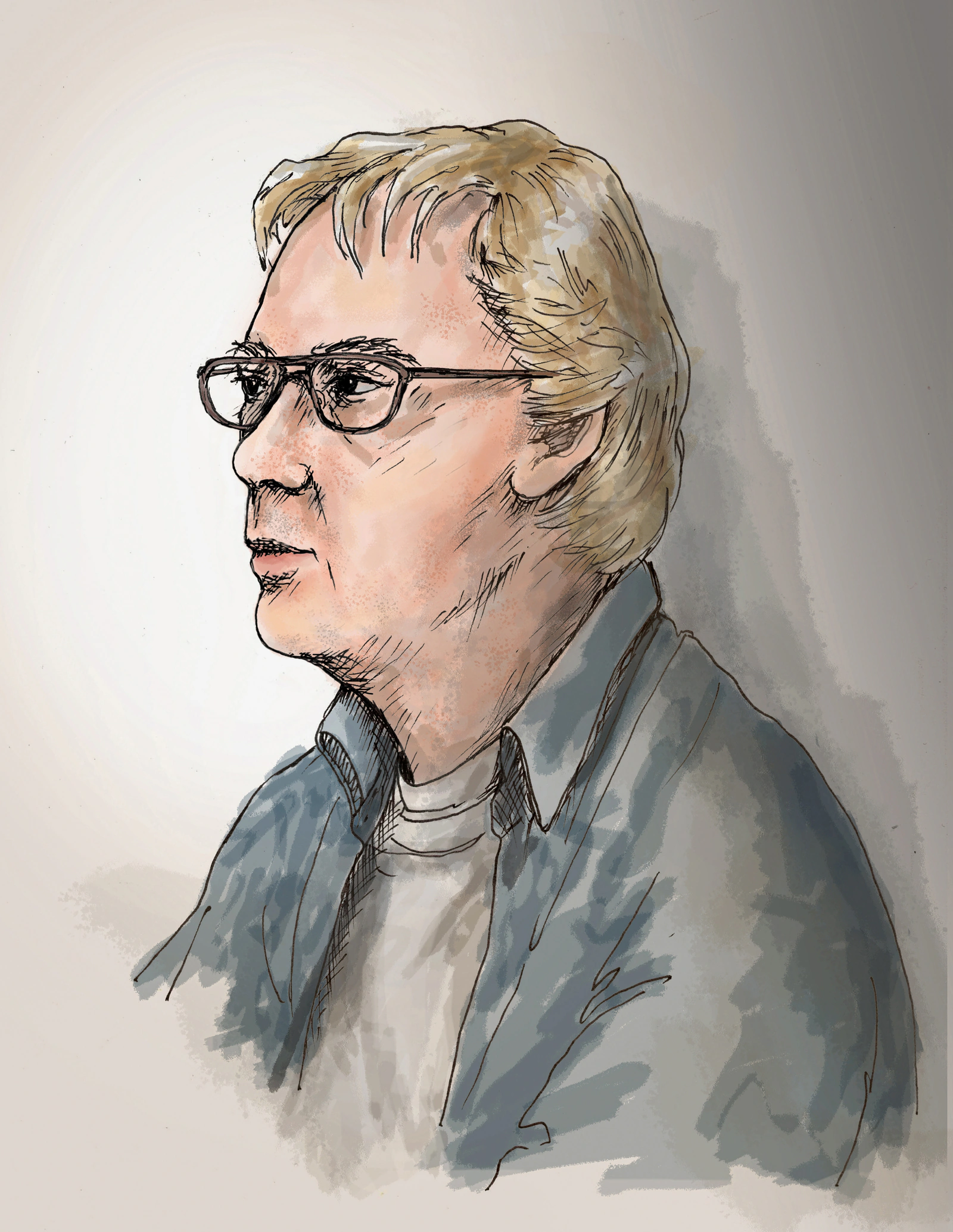
Attr: W.carter, CC BY-SA 4.0
| 24 Quotes | |
| Occup. | Composer |
| From | Germany |
| Born | August 4, 1947 Berlin, Germany |
| Age | 78 years |
| Cite | |
Citation Formats
APA Style (7th ed.)
Klaus schulze biography, facts and quotes. (2026, February 17). FixQuotes. https://fixquotes.com/authors/klaus-schulze/
Chicago Style
"Klaus Schulze biography, facts and quotes." FixQuotes. February 17, 2026. https://fixquotes.com/authors/klaus-schulze/.
MLA Style (9th ed.)
"Klaus Schulze biography, facts and quotes." FixQuotes, 17 Feb. 2026, https://fixquotes.com/authors/klaus-schulze/. Accessed 22 Mar. 2026.
Early Life and Background
Klaus Schulze was born on August 4, 1947, in Berlin, a city still raw from the war and rapidly partitioned into competing futures. That atmosphere of reconstruction and ideological noise mattered: his music would later sound like a private counter-city - long horizons, patient accumulations, and an insistence that meaning could be built from sustained attention rather than slogans. Berlin in the 1950s and 1960s also meant radios, imported records, and a constant seep of new technology, and Schulze grew up at the moment when electronics began leaving laboratories and entering everyday life.
He was drawn early to rhythm and texture rather than conventional songcraft, beginning as a drummer before becoming a composer identified with synthesizers and studio architecture. That shift was less a renunciation of the body than an expansion of what a "band" could be: a single person, surrounded by machines, performing time itself. The inwardness listeners later heard in his long pieces was not escapism so much as a strategy for living inside a pressured era - by turning duration into a refuge.
Education and Formative Influences
Schulze came of age in the late-1960s West German counterculture, absorbing psychedelic rock, improvised music, and the emerging idea that a studio could be an instrument. He acknowledged the common starting point of his generation - “Like everyone else, I was a fan of Pink Floyd in the sixties”. - but he moved quickly toward the German scene that sought its own vocabulary, away from Anglo-American blues structures and toward timbre, repetition, and electronics. The formative influence was not a single conservatory lineage but a live network of clubs, communal experiments, and the new availability of synthesizers, tape manipulation, and sequencers that rewarded curiosity over credential.
Career, Major Works, and Turning Points
His public breakthrough came through the crucible of early German "kosmische" music: brief but consequential stints with Tangerine Dream and Ash Ra Tempel in 1969-1971, followed by a decisive leap into solo work. Albums such as Irrlicht (1972) announced an austere, cinematic scale; Cyborg (1973) and Timewind (1975) refined the slow-evolving form that would become his signature; Moondawn (1976) and the sprawling, live-in-the-studio language of the late 1970s expanded sequencer-driven motion into something symphonic without adopting classical rhetoric. In the 1980s and 1990s he adapted to digital tools, sampling, and changing production norms while maintaining his preference for extended forms, later producing large series and collaborations (including work associated with the Richard Wahnfried name) that treated electronic composition as a lifelong practice rather than a period style.
Philosophy, Style, and Themes
Schulze thought like a builder of environments. The famous duration of his pieces is not indulgence but a psychological method: by staying with a motif long enough, the ear stops hearing "events" and starts hearing weather, gravity, and memory. His attitude toward influence was pragmatic and unsentimental, more like an engineer tracking inputs than a memoirist polishing origins. “We are all part of a tradition, at least we depend on the past”. In his case, that past included rock, minimalism-adjacent repetition, and the European avant-garde interest in sound as material - but he treated tradition as a toolbox, not a shrine.
Just as revealing is his resistance to neat narratives of artistic development: “How did this or that change my music? The only time I have to think about it is when an interviewer asks me that”. The line captures a guarded inner life: the work was done in the doing, and retrospective explanations felt like distortions. Yet the music itself repeatedly circles a few human themes - solitude, the uncanny warmth of machines, and the search for spirit through sound. That is why, even in largely instrumental worlds, he could insist on the primacy of human expression: “The human voice is the first and most natural musical instrument and also the most emotional”. It is a clue to his emotional aim - not to replace humanity with electronics, but to use electronics to frame and intensify human feeling.
Legacy and Influence
Schulze became one of the central architects of Berlin School electronic music, helping define the long-form, sequencer-based composition that shaped ambient, trance-adjacent textures, and generations of film and game scoring. His influence lies not only in specific sounds - arpeggiated pulses, drifting pads, slow harmonic pivots - but in a model of artistic life: the solitary composer as world-maker, using technology to enlarge introspection rather than to chase novelty. When he died in 2022, the catalog he left behind read like a parallel history of postwar European listening, proving that patience, scale, and sonic imagination could turn electronic circuitry into a language of inner weather.
Our collection contains 24 quotes written by Klaus, under the main topics: Art - Music - Long-Distance Friendship - Legacy & Remembrance - Work.
Other people related to Klaus: Steve Winwood (Musician)
Source / external links