
Konrad Lorenz Biography Quotes 12 Report mistakes
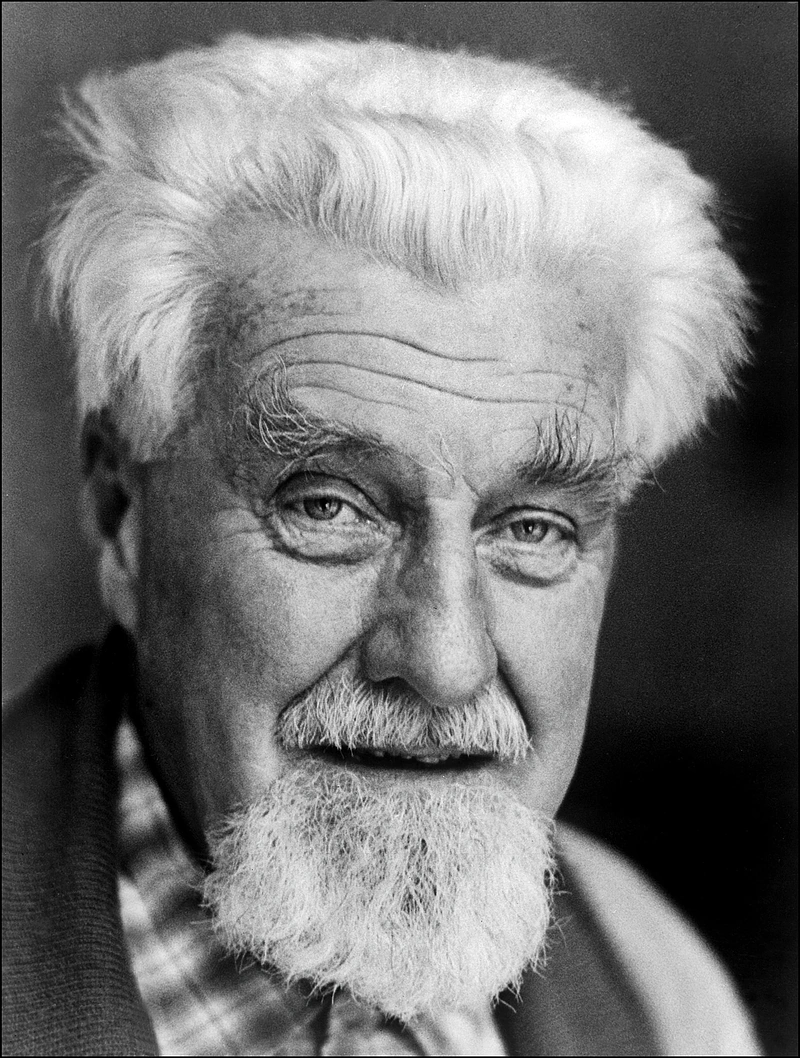
Attr: The Washington Post
| 12 Quotes | |
| Born as | Konrad Zacharias Lorenz |
| Occup. | Scientist |
| From | Austria |
| Born | November 7, 1903 Vienna, Austria-Hungary |
| Died | February 27, 1989 |
| Aged | 85 years |
| Cite | |
Citation Formats
APA Style (7th ed.)
Konrad lorenz biography, facts and quotes. (2026, February 11). FixQuotes. https://fixquotes.com/authors/konrad-lorenz/
Chicago Style
"Konrad Lorenz biography, facts and quotes." FixQuotes. February 11, 2026. https://fixquotes.com/authors/konrad-lorenz/.
MLA Style (9th ed.)
"Konrad Lorenz biography, facts and quotes." FixQuotes, 11 Feb. 2026, https://fixquotes.com/authors/konrad-lorenz/. Accessed 5 Mar. 2026.
Early Life and Background
Konrad Zacharias Lorenz was born on November 7, 1903, in Vienna, Austria, into a cultivated bourgeois world shaped by late Habsburg confidence and impending collapse. His family lived at Altenberg an der Donau, a riverside village whose woods, fields, and waterfowl became his first laboratory. From childhood he kept an unruly menagerie - jackdaws, ducks, dogs, and other animals - and learned to read temperament and intention in posture and movement long before he had a scientific vocabulary for it.World War I and the dissolution of the Austro-Hungarian Empire left his generation with both material insecurity and a hunger for explanatory systems. Lorenz responded not by retreating into abstraction but by doubling down on observable life: animal behavior offered him continuity where politics offered rupture. The private intimacy of raising animals by hand, then watching them act with startling autonomy, seeded a lifelong tension in him between affection and analysis - a tension that later energized both his most elegant insights and his most controversial generalizations.
Education and Formative Influences
Lorenz trained in medicine at Columbia University and at the University of Vienna, earning an M.D. in 1928, but his intellectual allegiance shifted decisively toward zoology; he completed a doctorate in zoology at Vienna in 1933. The emerging field of comparative behavior, the ethological instincts of Oskar Heinroth, and the rigor of Darwinian thinking helped him turn intimate observation into theory. In Altenberg he staged careful, homegrown experiments on imprinting and social attachment in geese and ducks, discovering that early-life bonding followed rule-like patterns that could be described without denying the individuality he saw in each animal.Career, Major Works, and Turning Points
In the 1930s Lorenz joined a European circle that would define modern ethology, including Niko Tinbergen and Karl von Frisch. His wartime entanglement with National Socialism - he joined the Nazi Party in 1940 - remains an indelible moral and interpretive problem, intensified by his service as a military physician and his later captivity as a Soviet prisoner of war from 1944 to 1948. After returning to Austria, he rebuilt his career through research and public writing, publishing influential works such as King Solomon's Ring (1949), On Aggression (1963), and The Waning of Humaneness (1983). In 1973 he shared the Nobel Prize in Physiology or Medicine with Tinbergen and von Frisch for discoveries concerning the organization and elicitation of individual and social behavior, a belated institutional recognition of a discipline he had helped bring into being.Philosophy, Style, and Themes
Lorenz wrote like a naturalist with a storyteller's ear: vivid case studies, humor, and a willingness to risk broad claims in order to provoke better ones. He treated science as a disciplined self-correction rather than a shrine to certainty, insisting that “It is a good morning exercise for a research scientist to discard a pet hypothesis every day before breakfast. It keeps him young”. That line was not mere wit; it reveals a psyche wary of its own seductive narratives, as if his sharpest tool against error was a practiced readiness to lose.At the same time, his work carried a moral ambition: to read human conflict, modern alienation, and cultural breakdown through an evolutionary lens without collapsing ethics into biology. His warning that “We had better dispense with the personification of evil, because it leads, all too easily, to the most dangerous kind of war: religious war”. shows a mind trained to distrust metaphysical scapegoats and to look instead for mechanisms - fear, group bonding, misfiring instincts - that can be studied and mitigated. Yet Lorenz never pretended he was a detached machine; his affection for animals was part of his epistemology, captured in the confession, “The bond with a true dog is as lasting as the ties of this earth will ever be”. That tenderness, braided with suspicion of ideology, explains why he could be both a compassionate observer and, at times, dangerously confident when translating animal models into prescriptions for human society.
Legacy and Influence
Lorenz's enduring influence lies in the framework he helped consolidate: that behavior has evolved, that careful observation in natural settings can reveal lawful patterns, and that animals have inner lives accessible through disciplined empathy. Ethology became a foundation for behavioral ecology, animal cognition research, and parts of psychology, while his popular books shaped public curiosity about imprinting, aggression, and the costs of technological modernity. His legacy is also a cautionary biography - a reminder that brilliant explanatory drive can coexist with political blindness, and that the hardest scientific work may be not only seeing nature clearly, but also seeing oneself, and one's era, with equal candor.Our collection contains 12 quotes written by Konrad, under the main topics: Witty One-Liners - Ethics & Morality - Wisdom - Truth - Deep.
Konrad Lorenz Famous Works
- 1973 The Reverse Side of the Mirror (Book)
- 1963 On Aggression (Non-fiction)
- 1949 King Solomon's Ring (Book)