
Krzysztof Kieslowski Biography Quotes 12 Report mistakes
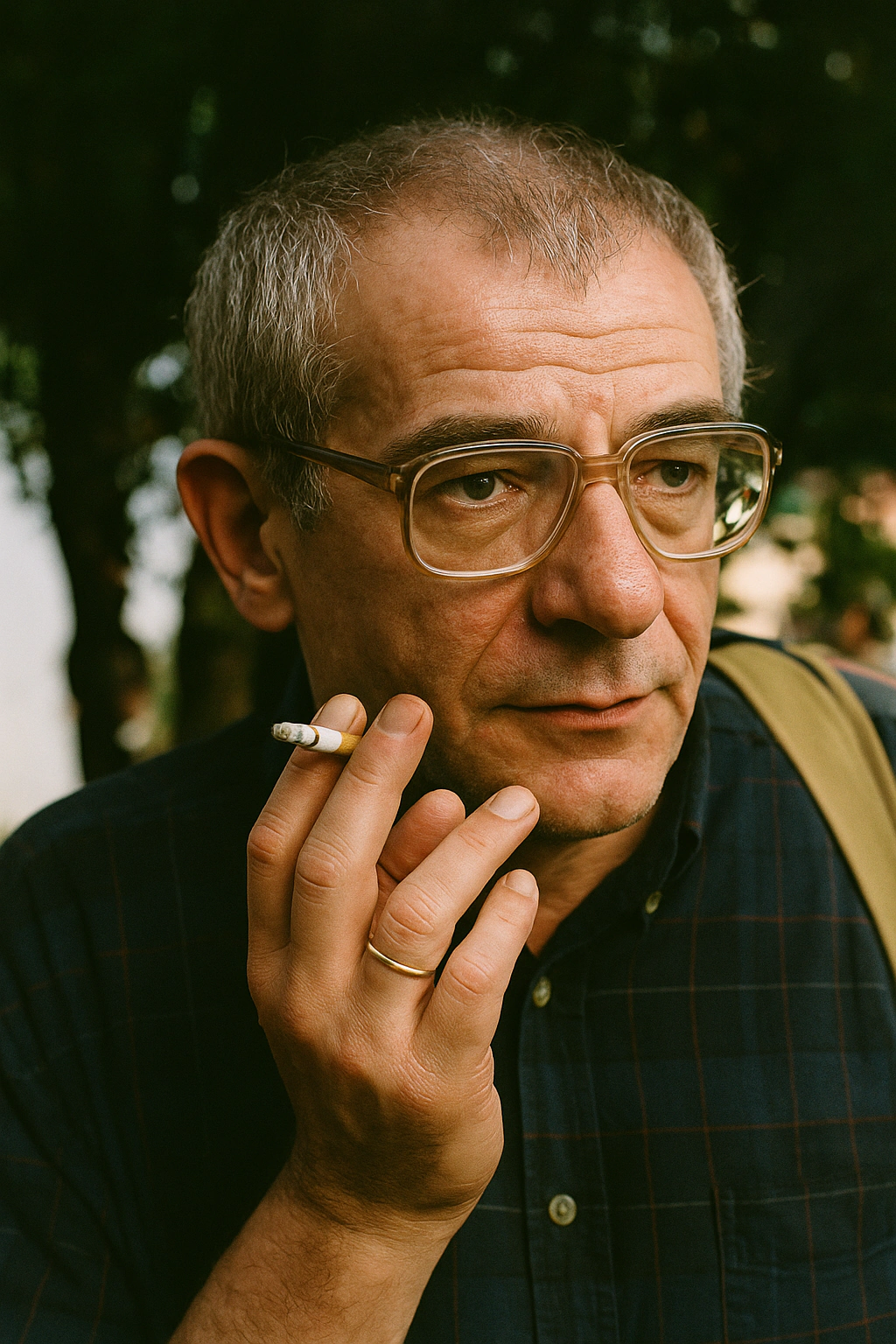
Attr: Alberto Terrile
| 12 Quotes | |
| Born as | Krzysztof Kieślowski |
| Occup. | Director |
| From | Poland |
| Born | June 27, 1941 Warsaw, Poland |
| Died | March 13, 1996 Warsaw, Poland |
| Cause | heart attack |
| Aged | 54 years |
| Cite | |
Citation Formats
APA Style (7th ed.)
Krzysztof kieslowski biography, facts and quotes. (2026, February 11). FixQuotes. https://fixquotes.com/authors/krzysztof-kieslowski/
Chicago Style
"Krzysztof Kieslowski biography, facts and quotes." FixQuotes. February 11, 2026. https://fixquotes.com/authors/krzysztof-kieslowski/.
MLA Style (9th ed.)
"Krzysztof Kieslowski biography, facts and quotes." FixQuotes, 11 Feb. 2026, https://fixquotes.com/authors/krzysztof-kieslowski/. Accessed 24 Mar. 2026.
Early Life and Background
Krzysztof Kieslowski (born Krzysztof Kieslowski) was born on June 27, 1941, in Warsaw, into a Poland being dismantled by occupation, war, and then postwar Stalinization. His childhood was shaped less by a single hometown than by constant movement: his father, a tuberculosis patient, required long stays in sanitaria, and the family followed the rhythm of illness, waiting rooms, and temporary addresses. That early intimacy with fragile bodies and institutional corridors would later return as a visual vocabulary - doors, stairwells, hospitals, queues - places where private fate meets public systems.He came of age under the Polish People's Republic, where the state promised collective stability yet produced a daily atmosphere of surveillance, scarcity, and moral compromise. Kieslowski learned early how ordinary people survive by adjusting their speech, concealing feelings, and making choices in cramped circumstances. That tension between the official story and the inner life became his lifelong subject: not heroic history, but the quiet pressure of history on a person trying to stay decent.
Education and Formative Influences
After early attempts to find a trade, he set his sights on cinema and entered the Lodz Film School, graduating in 1969, in the wake of the political upheavals of 1968 and amid a powerful Polish documentary tradition. Lodz trained him in rigorous observation and montage, and he absorbed the ethical seriousness of Polish film culture - the belief that images could test conscience. Yet he also encountered the limits of representation in an authoritarian society: cameras attracted attention, subjects could be punished for what they revealed, and truth itself had to be negotiated.Career, Major Works, and Turning Points
Kieslowski began as a documentarian, making films that examined institutions and labor with an unblinking eye, including works such as Workers '71 that collided with censorship and state anxiety. Over the 1970s he shifted toward fiction not as escape but as protection - for subjects and for himself - carrying documentary detail into dramatized moral experiments. His breakthrough features, including Camera Buff (1979), Blind Chance (shot 1981, released later), and No End (1985), mapped the psychological cost of politics and the way private life is drafted into public narratives. International recognition came with The Decalogue (1989) and its offshoot A Short Film About Killing (1988) and A Short Film About Love (1988), followed by the European co-productions The Double Life of Veronique (1991) and the Three Colors trilogy - Blue (1993), White (1994), and Red (1994). After completing the trilogy, he announced retirement, exhausted by production and by the emotional demands of his own precision; he died in Warsaw on March 13, 1996, after heart surgery, leaving plans for a new trilogy unrealized.Philosophy, Style, and Themes
Kieslowski filmed conscience at street level. His style favors thresholds - apartment landings, elevators, tram stops, courtrooms - where strangers brush past and lives turn on a small decision. He understood that modern morality is seldom theatrical; it is procedural, bureaucratic, and therefore easy to evade. He distrusted slogans, including those of opposition movements, because he had watched certainty become a weapon. This skepticism produced narratives built from contingencies: an overheard sentence, a delayed bus, a glance that becomes evidence. Even when his later work turns luminous and musical, the glow is never sentimental; it is the light of attention, the insistence that a hidden interior exists behind each face.His psychological core was the belief that the self is not transparent, even to itself. “There are mysteries, secret zones in each individual”. That conviction governs The Decalogue, where ethical principles meet impulses, accidents, and private histories that law cannot measure. Love, in his universe, is not a rescue from chaos but one of its fiercest forms: “To tell you the truth, in my work, love is always in opposition to the elements. It creates dilemmas. It brings in suffering. We can't live with it, and we can't live without it. You'll rarely find a happy ending in my work”. And his late films, often called metaphysical, are better understood as a disciplined struggle with what cannot be proven: “Of course I'd like to get beyond the concrete. But it's really difficult. Very difficult”. He kept the camera close to objects - keys, curtains, a glass of tea - as if the concrete world were the only honest path toward whatever lies beyond it.
Legacy and Influence
Kieslowski helped redefine European art cinema at the moment Eastern Europe was shedding its political borders, proving that films rooted in Polish stairwells and court files could speak to Paris, Zurich, and the wider world without losing specificity. The Decalogue remains a benchmark for episodic storytelling and moral inquiry; Three Colors reshaped how filmmakers use color, music, and coincidence as narrative argument rather than decoration. His influence runs through directors who pursue ethical ambiguity with formal restraint, and through contemporary television that borrows his interlaced fates and quiet cliff edges. Yet his enduring power is intimate: he taught audiences to look for the hidden cost of choices, and to suspect that the most decisive events in a life may occur in silence, just before the door closes.Our collection contains 12 quotes written by Krzysztof, under the main topics: Art - Deep - Knowledge - Reason & Logic - Equality.
Other people related to Krzysztof: Julie Delpy (Actress), Jean-Louis Trintignant (Actor)
Frequently Asked Questions
- Krzysztof Kieślowski: books: His key book is the autobiographical interview volume “Kieślowski on Kieślowski”; his screenplays for Dekalog and Three Colors are also published in book form.
- Blind chance directed by Krzysztof Kieslowski: Blind Chance (1987 international release; shot earlier) is Kieślowski’s film showing three alternate life paths of a man depending on whether he catches a train.
- Krzysztof Kieślowski The Double Life of Véronique: The Double Life of Véronique (1991) is a poetic drama by Kieślowski about two women, one Polish and one French, mysteriously connected across borders and lives.
- Krzysztof Kieslowski pronunciation: In English approximation: “Krzysztof” as “Kshish-toff,” “Kieślowski” as “Kyeh-shlof-ski,” together: “KSHISH-toff kyeh-SHLOF-ski.”
- Krzysztof Kieslowski best movies: Widely praised works include Three Colors: Blue, White, Red, The Double Life of Véronique, Dekalog, Blind Chance, and Camera Buff.
- Krzysztof Kieslowski cause of death: He died from complications following heart surgery, specifically a heart attack after a bypass operation, in 1996.
- Krzysztof Kieślowski movies: His major films include the Three Colors trilogy (Blue, White, Red), The Double Life of Véronique, Dekalog, Blind Chance, Camera Buff, and A Short Film About Love/Killing.
- How old was Krzysztof Kieslowski? He became 54 years old
Source / external links