
Kurt Huber Biography Quotes 7 Report mistakes
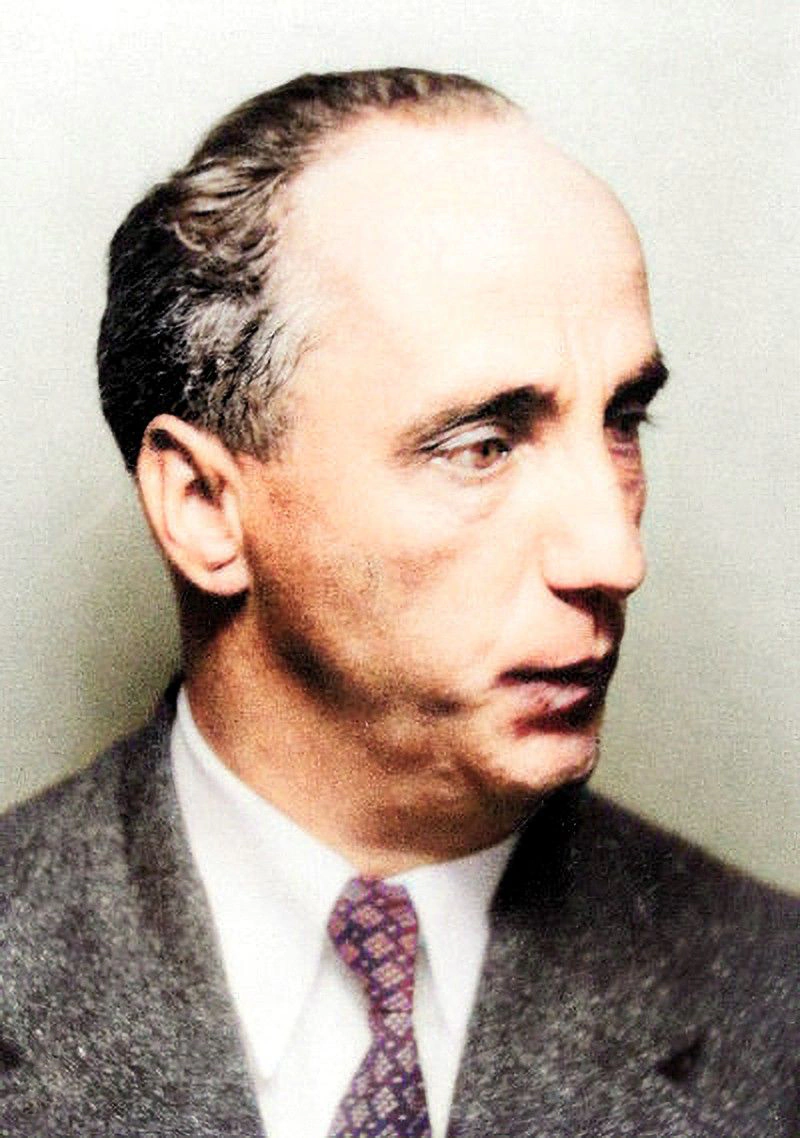
| 7 Quotes | |
| Occup. | Professor |
| From | Germany |
| Born | October 24, 1893 Chur, Switzerland |
| Died | July 13, 1943 Munich, Nazi Germany |
| Cause | Executed |
| Aged | 49 years |
| Cite | |
Citation Formats
APA Style (7th ed.)
Kurt huber biography, facts and quotes. (2026, February 11). FixQuotes. https://fixquotes.com/authors/kurt-huber/
Chicago Style
"Kurt Huber biography, facts and quotes." FixQuotes. February 11, 2026. https://fixquotes.com/authors/kurt-huber/.
MLA Style (9th ed.)
"Kurt Huber biography, facts and quotes." FixQuotes, 11 Feb. 2026, https://fixquotes.com/authors/kurt-huber/. Accessed 27 Mar. 2026.
Early Life and Background
Kurt Huber was born on October 24, 1893, in Switzerland to German parents and grew up largely in Stuttgart, in a Wilhelmine society that prized obedience, learning, and national prestige. Early illness left him with periods of physical fragility, but also with a habit of inward concentration and sustained reading. He came of age as Germany moved from imperial confidence into the strain of World War I, a rupture that sharpened for many educated young men the question of what loyalty to the nation meant when the state demanded unquestioning conformity.The postwar years brought not only economic instability and political radicalization but also a flowering of cultural debate in the Weimar Republic. Huber belonged to a conservative, classically educated milieu, yet he was not drawn to the cynical opportunism that followed the collapse of old certainties. Friends and students later remembered a man of reserve and moral seriousness, attracted to music and philosophy as disciplines of order, and increasingly suspicious of politics as pure power. That suspicion would harden into resistance once the Nazi state made power synonymous with truth.
Education and Formative Influences
Huber studied in Munich, turning to philosophy, psychology, and musicology in an academic world still marked by neo-Kantian rigor and the prestige of German idealism, while also absorbing the newer methods of empirical psychology and historical scholarship. His intellectual formation tied ethics to responsibility rather than sentiment: the scholar was accountable for truth in public life, not merely for erudition. Music, especially the disciplined architecture of the classical tradition, reinforced his belief that freedom was inseparable from form and conscience from self-command.Career, Major Works, and Turning Points
By the 1920s and 1930s Huber had established himself as a university lecturer and then professor at Ludwig Maximilian University of Munich, respected for his teaching and for work that bridged philosophical anthropology, psychology, and the theory and history of music. The Nazi seizure of power in 1933 transformed the university into an instrument of ideological mobilization; the purge of colleagues, the Gleichschaltung of student life, and the criminalization of independent thought forced a decision between professional security and moral truth. In 1942-1943 he became associated with the White Rose circle around Hans and Sophie Scholl and Alexander Schmorell, helping draft and refine leaflets that appealed to reason, Christian conscience, and the honor of German culture against tyranny. After the group was exposed, he was arrested, tried by the Volksgerichtshof under Roland Freisler, and executed by guillotine at Stadelheim Prison in Munich on July 13, 1943.Philosophy, Style, and Themes
Huber understood citizenship as an ethical vocation, not a privilege granted by the state. His resistance did not grow from a taste for clandestine drama but from a professor's insistence that public language must name reality. “As a German citizen, as a German professor, and as a political person, I hold it to be not only my right but also my moral duty to take part in the shaping of our German destiny, to expose and oppose obvious wrongs”. That sentence reveals the psychology of his dissent: he did not imagine himself outside Germany, but inside it, claiming the right to criticize precisely because he belonged. Even in court, when stripped of status and protection, he framed the conflict as one between moral law and a state that had broken faith with its own cultural promises.His style in the leaflets and testimony was measured, admonitory, and pedagogical - aimed at awakening judgment rather than inciting revenge. “What I intended to accomplish was to rouse the student body, not by means of an organization, but solely by my simple words; to urge them, not to violence, but to moral insight into the existing serious deficiencies of our political system”. The target was cowardice disguised as legality: “There is a point at which the law becomes immoral and unethical. That point is reached when it becomes a cloak for the cowardice that dares not stand up against blatant violations of justice”. In that formulation, Huber diagnosed the inner mechanism of tyranny - not only terror from above, but self-exculpation within ordinary people - and he gambled his life on the belief that moral clarity could still pierce propaganda.
Legacy and Influence
Huber's historical significance lies in the rare combination of professional authority and personal risk: a tenured professor who refused to let scholarship become an alibi. After 1945, the White Rose became a central symbol of German civic courage, with Huber representing the university's contested conscience - proof that the tradition of Goethe, Kant, and Bach could not be wholly co-opted by the Third Reich. Schools, streets, and lecture halls later bore his name, but his deeper legacy is ethical: he modeled dissent as disciplined speech, grounded in reason and responsibility, and he left a lasting standard for what it means for intellectuals to oppose a regime that demands silence.Our collection contains 7 quotes written by Kurt, under the main topics: Justice - Freedom - Honesty & Integrity - Kindness.
Source / external links