
Kurt Lewin Biography Quotes 2 Report mistakes
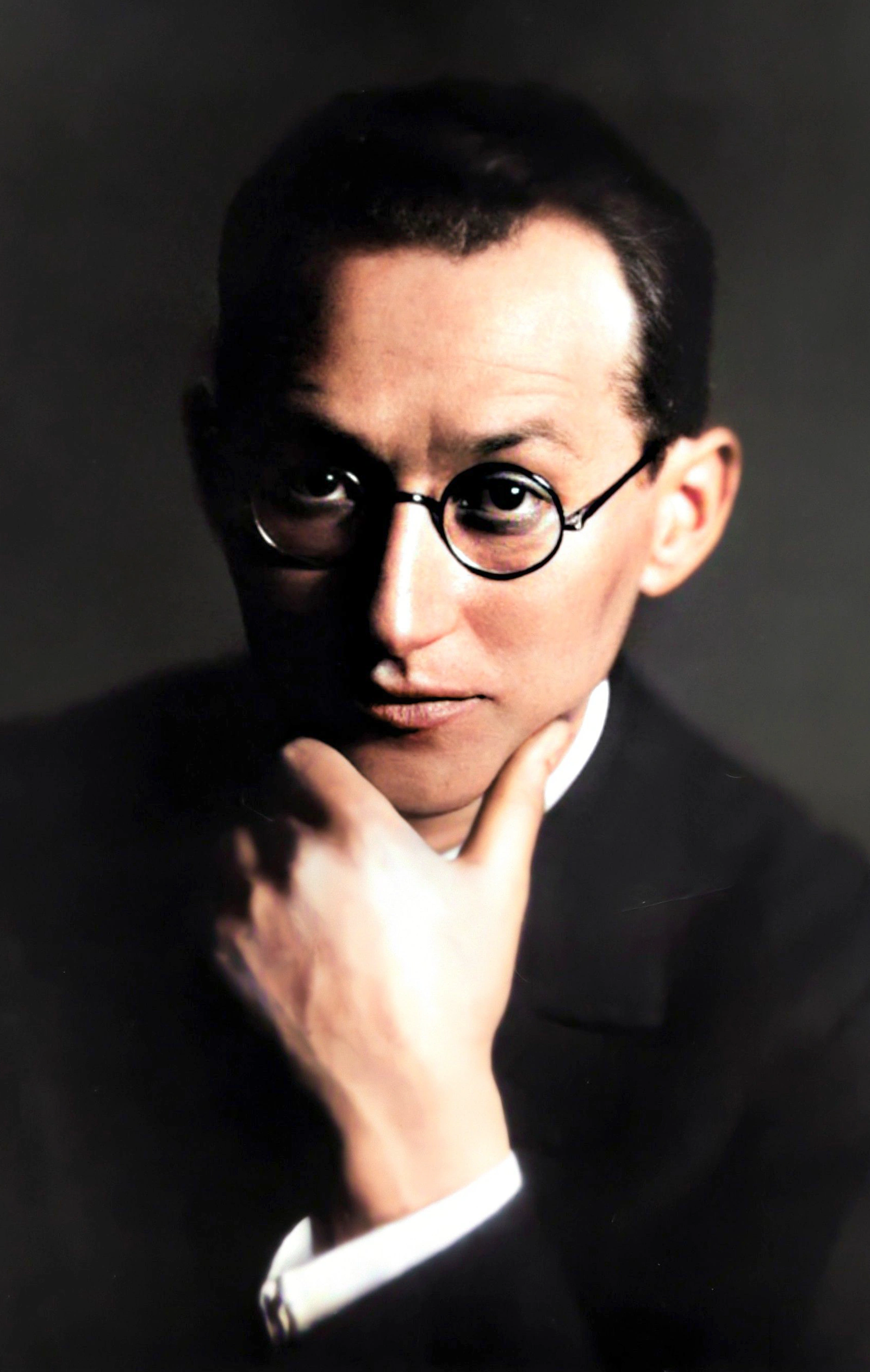
| 2 Quotes | |
| Occup. | Psychologist |
| From | Poland |
| Born | September 9, 1890 Mogilno, Province of Posen, German Empire (now Poland) |
| Died | February 12, 1947 Newtonville, Massachusetts, USA |
| Aged | 56 years |
| Cite | |
Citation Formats
APA Style (7th ed.)
Kurt lewin biography, facts and quotes. (2026, February 11). FixQuotes. https://fixquotes.com/authors/kurt-lewin/
Chicago Style
"Kurt Lewin biography, facts and quotes." FixQuotes. February 11, 2026. https://fixquotes.com/authors/kurt-lewin/.
MLA Style (9th ed.)
"Kurt Lewin biography, facts and quotes." FixQuotes, 11 Feb. 2026, https://fixquotes.com/authors/kurt-lewin/. Accessed 4 Mar. 2026.
Early Life and Background
Kurt Zadek Lewin was born on September 9, 1890, in Mogilno (then in the Prussian Province of Posen, today in Poland) to a Jewish family whose livelihood was tied to the practical rhythms of small-town commerce and agriculture. He grew up in an era when German administration, Polish identity, and Jewish civic life overlapped uneasily, and that early experience of living among shifting borders and competing loyalties sharpened his sensitivity to the forces that bind-and divide-people in groups.In 1905 the family moved to Berlin, a city of rapid industrial expansion and intellectual ferment. For Lewin, Berlin was not only an escape from provincial constraints but also an apprenticeship in modernity: mass politics, urban anonymity, and new scientific ambitions. That atmosphere helped turn him from a young man with wide interests into a thinker preoccupied with the hidden pressures that shape individual conduct, especially under conditions of change.
Education and Formative Influences
Lewin began university studies in Freiburg and Munich and then centered his intellectual life at the University of Berlin, where he earned his doctorate in 1914 under Carl Stumpf; he also absorbed the rigor of German experimental psychology and the philosophical seriousness of the Berlin milieu. World War I interrupted his early career-he served in the German army and was wounded-but the war years deepened his interest in motivation, tension, and goal-directed behavior. In the 1920s he taught and researched in Berlin, drawing from Gestalt psychology (notably the work around Max Wertheimer, Wolfgang Kohler, and Kurt Koffka) and forging a new synthesis: a psychology that treated behavior as a dynamic outcome of person and situation rather than a fixed trait housed inside the individual.Career, Major Works, and Turning Points
Lewin rose as a leading figure in Weimar-era psychology, publishing a stream of theoretical and experimental work on volition, intention, conflict, and what he called a "field" of forces; his major synthesis appeared in Principles of Topological Psychology (1936). The Nazi seizure of power in 1933 forced him to leave Germany; as a Jewish scholar he emigrated to the United States, taking positions at Cornell and then the University of Iowa before establishing the Research Center for Group Dynamics at MIT in 1945. In America his thought became decisively applied: studies of leadership styles (authoritarian, democratic, laissez-faire) with colleagues such as Ronald Lippitt and Ralph White; action research in communities and workplaces; and wartime projects on morale, prejudice, and food habits. Across these turning points-the collapse of Weimar, exile, and total war-Lewin kept translating social crisis into testable questions about how groups can be steered toward healthier norms.Philosophy, Style, and Themes
Lewin wrote like an engineer of the psyche: he wanted concepts that could map pressures, barriers, and pathways in real time. His most famous formula, B = f(P, E), condensed a lifetime conviction that behavior is a function of the person in an environment, not a private essence. That conviction also carried a moral edge. He believed explanation must be inseparable from intervention, captured by his maxim, “If you want to truly understand something, try to change it”. For Lewin, the attempt to alter a pattern-whether a habit, a prejudice, or a group norm-reveals the field forces holding it in place, including the anxieties that make people cling to the familiar even when it harms them.His psychology of motivation treated goals as living structures that generate tension until satisfied, and he watched carefully how aspiration calibrates itself to prior success and failure. “A successful individual typically sets his next goal somewhat but not too much above his last achievement. In this way he steadily raises his level of aspiration”. This was not a bland self-help rule in his hands but a window into inner economy: how hope remains believable, how discouragement collapses effort, and how institutions can design feedback that expands capacity rather than humiliates it. The themes running through his work-conflict, change, leadership, and prejudice-were ultimately about freedom under constraint: the possibility that carefully structured environments can unlock agency without denying the weight of social forces.
Legacy and Influence
Lewin died on February 12, 1947, in Newtonville, Massachusetts, just as his center at MIT was helping professionalize modern social psychology. His influence endures in organizational development and change management, sensitivity training and T-groups, participatory leadership research, and the methodological ethos of action research that joins scholarship to social repair. More quietly, his field-theoretical imagination still shapes how psychologists, educators, and managers talk about systems: not as abstract "contexts", but as dynamic force-fields that can be mapped, negotiated, and redesigned.Our collection contains 2 quotes written by Kurt, under the main topics: Change - Goal Setting.
Other people related to Kurt: Fritz Perls (Psychologist)
Frequently Asked Questions
- Kurt Lewin theory of Personality: Kurt Lewin's theory of personality emphasizes the dynamic interplay between individual needs and the environment, shaping behavior.
- Kurt Lewin change model: Kurt Lewin's change model, also known as the Unfreeze-Change-Refreeze model, describes a process of managing change within organizations.
- Field theory Kurt Lewin example: An example of Lewin's field theory is how workplace behavior changes with shifts in leadership or team dynamics.
- Kurt Lewin contribution to psychology: Kurt Lewin's major contributions include field theory, the change management model, and his work on group dynamics and action research.
- Kurt Lewin social psychology: Kurt Lewin is considered one of the pioneers of social psychology, focusing on group dynamics and how they influence behavior.
- Kurt Lewin theory: Kurt Lewin is known for theories like field theory, group dynamics, and the change model, including unfreezing, changing, and refreezing steps.
- Kurt Lewin field theory: Kurt Lewin's field theory is a psychological framework that considers behavior as a function of the individual and their environment.
- How old was Kurt Lewin? He became 56 years old
Source / external links