
Kyan Douglas Biography Quotes 20 Report mistakes
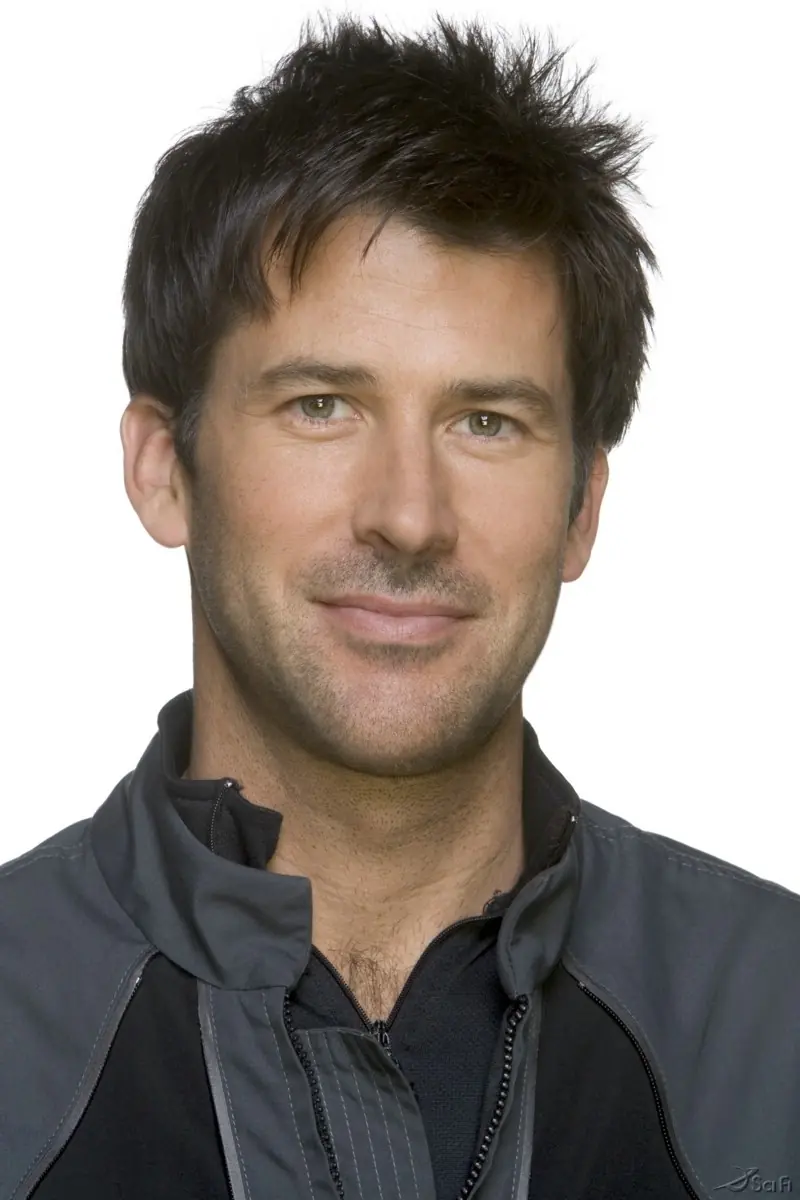
| 20 Quotes | |
| Born as | Hugh Edward Douglas, Jr. |
| Occup. | Celebrity |
| From | USA |
| Born | May 5, 1970 Miami, Florida, United States |
| Age | 55 years |
Kyan Douglas, born Hugh Edward Douglas, Jr. on May 5, 1970, came of age in the United States during a period when media images of masculinity were tightening rather than loosening - the late Cold War years, the AIDS crisis, and a mainstream culture still largely uneasy with openly gay public figures. Long before he became a familiar face in unscripted television, he was learning the social grammar of appearance: how grooming can function as armor, how it can signal belonging, and how quickly it can invite scrutiny when you are perceived as different.
That pressure made him unusually attentive to the small rituals by which people manage identity in public. Friends and later viewers recognized a particular mix: quick humor, a stylist's eye, and a seriousness about dignity. His later on-screen ease with straight men and his insistence on warmth over humiliation read less like a TV persona than a survival skill refined over years - the ability to disarm tension, then use the moment to widen the room for empathy.
Education and Formative Influences
Douglas pursued the trade with the intensity of someone who understood that craft could become freedom. Training in hair and grooming placed him at the intersection of art, service work, and intimate conversation - a setting where people confess insecurities while you literally hold their self-image in your hands. In an era when celebrity stylists were emerging as cultural intermediaries, he absorbed the language of fashion and the psychology of transformation, learning to translate taste into reassurance and to make change feel possible rather than punitive.
Career, Major Works, and Turning Points
His breakthrough arrived with Bravo's "Queer Eye for the Straight Guy" (2003), the early-2000s phenomenon that made the makeover show a national ritual and turned its hosts into shorthand for a new kind of mainstream gay visibility. As the grooming expert, Douglas specialized in changes that were immediate, tactile, and symbolic - a haircut, skincare, the daily disciplines that convert chaos into care. The show's tone, combining humor with directness, placed him inside a larger cultural argument about gender, consumerism, and acceptance; his role often worked as the bridge between surface and self-respect. With later appearances, writing, and advocacy-oriented speaking, he continued to frame grooming as social confidence rather than vanity, keeping a public identity rooted in service rather than spectacle.
Philosophy, Style, and Themes
Douglas' public philosophy turns on a refusal to weaponize aesthetics. He is explicit that the exterior matters, but not as an end in itself: "The externals are important but I'm not interested in superficiality". That sentence is a key to his psychology - the stylist as caretaker, not judge. His humor about taste and grooming is rarely cruel; it functions as a pressure-release valve that lets people hear criticism without shame. The goal is not to manufacture an ideal man, but to remove obstacles that keep someone from showing up fully in his own life.
The deeper theme is compassion as technique. Douglas repeatedly argues that transformation fails when it is driven by panic, self-loathing, or moral condemnation, and succeeds when it is driven by love. "I just don't know that shame and fear need to be our teachers; rather, compassion, understanding, and love should be our guides". This is also why his commentary on addiction and excess lands as concern rather than scolding: "Drugs and alcohol can be so destructive". Underneath the grooming talk is a philosophy of maintenance - caring for the body, the home, and the daily routine as a way of protecting the self, especially for people trained by earlier environments to hide.
Legacy and Influence
Douglas' enduring influence lies in helping reframe the makeover genre from a sneer into a form of public empathy, and in making gay expertise legible to mainstream audiences without requiring gayness to be the entire premise. In the long arc of early-21st-century celebrity, his work helped normalize the idea that men could pursue self-care without surrendering masculinity, and that guidance could be offered without humiliation. If "Queer Eye" opened a door for a wave of lifestyle media, Douglas' particular imprint was the insistence that style is ultimately a language of respect - not a costume, but a tool for living more honestly in public.
Our collection contains 20 quotes who is written by Kyan, under the main topics: Witty One-Liners - Wisdom - Friendship - Funny - Meaning of Life.
Source / external links