
Lance Armstrong Biography Quotes 12 Report mistakes
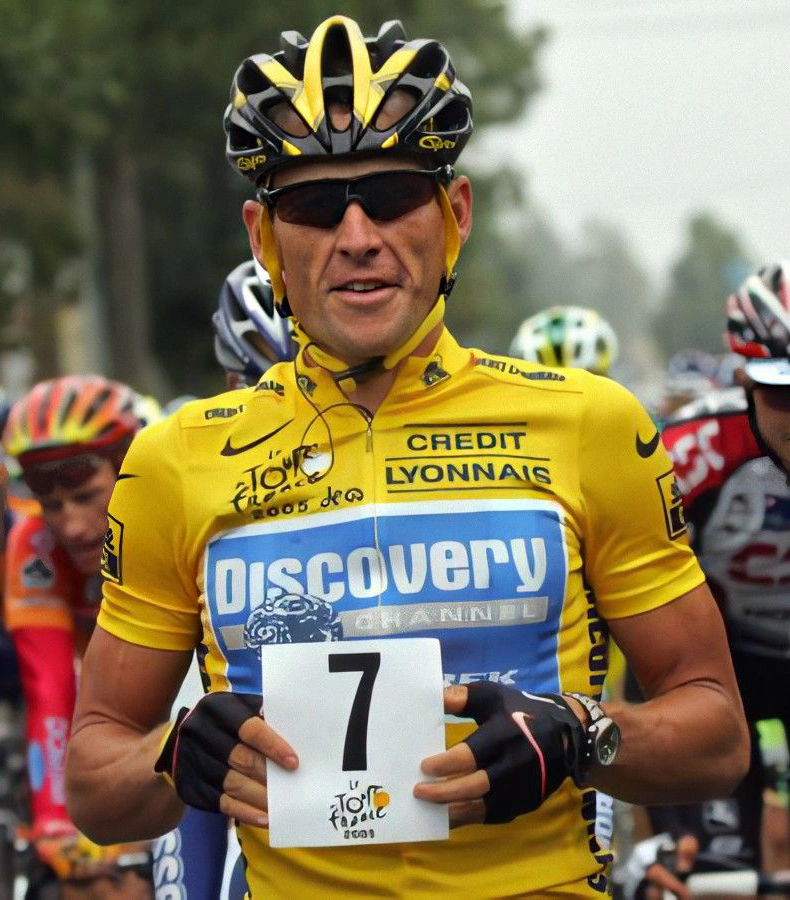
| 12 Quotes | |
| Born as | Lance Edward Gunderson |
| Occup. | Athlete |
| From | USA |
| Born | September 18, 1971 Dallas, Texas, USA |
| Age | 54 years |
| Cite | |
Citation Formats
APA Style (7th ed.)
Lance armstrong biography, facts and quotes. (2026, March 1). FixQuotes. https://fixquotes.com/authors/lance-armstrong/
Chicago Style
"Lance Armstrong biography, facts and quotes." FixQuotes. March 1, 2026. https://fixquotes.com/authors/lance-armstrong/.
MLA Style (9th ed.)
"Lance Armstrong biography, facts and quotes." FixQuotes, 1 Mar. 2026, https://fixquotes.com/authors/lance-armstrong/. Accessed 26 Mar. 2026.
Early Life and Background
Lance Armstrong was born Lance Edward Gunderson on September 18, 1971, in Plano, Texas, and grew up in the car-centric suburbs north of Dallas during the fitness boom and TV-saturated sports culture of late-20th-century America. Raised primarily by his mother, Linda, he absorbed an ethos of self-reliance and competitive striving that fit the era's meritocratic myth - the idea that pain and will could outpace circumstance. He took his stepfather's surname, Armstrong, and began shaping an identity around speed, endurance, and the clean, measurable logic of winning.As a teenager he gravitated to endurance sports: first swimming, then running, and then triathlon, where solitary suffering could be converted into rank and time. Texas heat, long roads, and a youth-sports pipeline that prized toughness helped form his early template: train hard, race harder, never show weakness. Even before cycling became his primary language, he showed a pattern that would define his public life - an intense desire to control outcomes, and an impatience with limits imposed by bodies, rivals, or institutions.
Education and Formative Influences
Armstrong attended high school in the Dallas area but made sport his true curriculum, turning professional in triathlon while still in his teens and soon shifting decisively to cycling, a sport whose European calendar and traditions offered bigger stages and harsher tests. The early 1990s were a transitional period in pro cycling: global sponsorship money increased, training became more scientific, and performance-enhancing drugs circulated with a corrosive normalcy. In that environment, mentorship often meant learning not only tactics and suffering, but also the unspoken rules of survival inside the peloton.Career, Major Works, and Turning Points
After rapid success as a young pro, Armstrong won the 1993 UCI Road World Championship and became a marquee American rider, then faced a decisive rupture in 1996 when he was diagnosed with advanced testicular cancer that had metastasized to his lungs and brain. He underwent surgery and intensive chemotherapy, returned to racing in 1998, and from 1999 to 2005 won seven consecutive Tour de France titles with the U.S. Postal Service team, redefining American interest in cycling and building a powerful personal brand tied to comeback mythology and the Livestrong foundation he launched in 1997. That empire later unraveled: long-running doping allegations culminated in the U.S. Anti-Doping Agency's 2012 case describing a team-wide program; Armstrong was stripped of his Tour titles and banned for life, and in 2013 he admitted to using performance-enhancing drugs in a televised interview. In later years he shifted into media and business, while living with the permanent afterimage of both extraordinary achievement and public disgrace.Philosophy, Style, and Themes
Armstrong's inner life, as revealed through his choices and public language, revolved around suffering as currency and control as salvation. He sold a psychology of endurance - the belief that pain could be mastered, quantified, and weaponized - and he trained as if the body were a negotiable contract. “Pain is temporary. Quitting lasts forever”. The line worked because it offered moral clarity inside an ambiguous sport: if quitting is the only true failure, then any method that avoids it can feel justified, even inevitable. His cancer story intensified that logic, turning survival into a template for dominance and making vulnerability seem like an enemy that had already been defeated once.He also carried an acute sensitivity to judgment, a defensive ear tuned to the loudest skeptic rather than the broadest support. “A boo is a lot louder than a cheer. If you have 10 people cheering and one person booing, all you hear is the booing”. That mindset helps explain both his ferocious race focus and his later combative posture toward critics and accusers - a need to silence the lone boo before it became a chorus. Even his inspirational register had a martial edge shaped by illness and the fear of being dismissed: “Through my illness I learned rejection. I was written off. That was the moment I thought, Okay, game on. No prisoners. Everybody's going down!” The hero narrative and the scorched-earth competitiveness were never separate; they were two faces of the same refusal to be powerless.
Legacy and Influence
Armstrong remains one of the most consequential American athletes of his era because his story contains both the modern sports dream and its disillusionment: a survivor-turned-champion who helped popularize cycling in the United States, raised vast sums and awareness for cancer support through Livestrong, and then became the emblem of professional cycling's doping crisis and the costs of winning at any price. His influence persists in how endurance athletes talk about suffering, how sponsors and fans treat redemption stories, and how anti-doping systems measure accountability - a legacy that is simultaneously inspirational, cautionary, and inseparable from the contradictions of the time that made him possible.Our collection contains 12 quotes written by Lance, under the main topics: Witty One-Liners - Motivational - Never Give Up - Investment - Fear.
Other people related to Lance: Greg LeMond (Athlete)
Source / external links